Cross-Voting Hits INDIA Bloc As NDA-Backed Nathwani Wins Jharkhand Seat, ZPM Makes Rajya Sabha Debut
Cross-Voting Hits INDIA Bloc As NDA-Backed Nathwani Wins Jharkhand Seat, ZPM Makes Rajya Sabha Debut Published By, Last Updated: June 19, 2026, 09:12 IST With
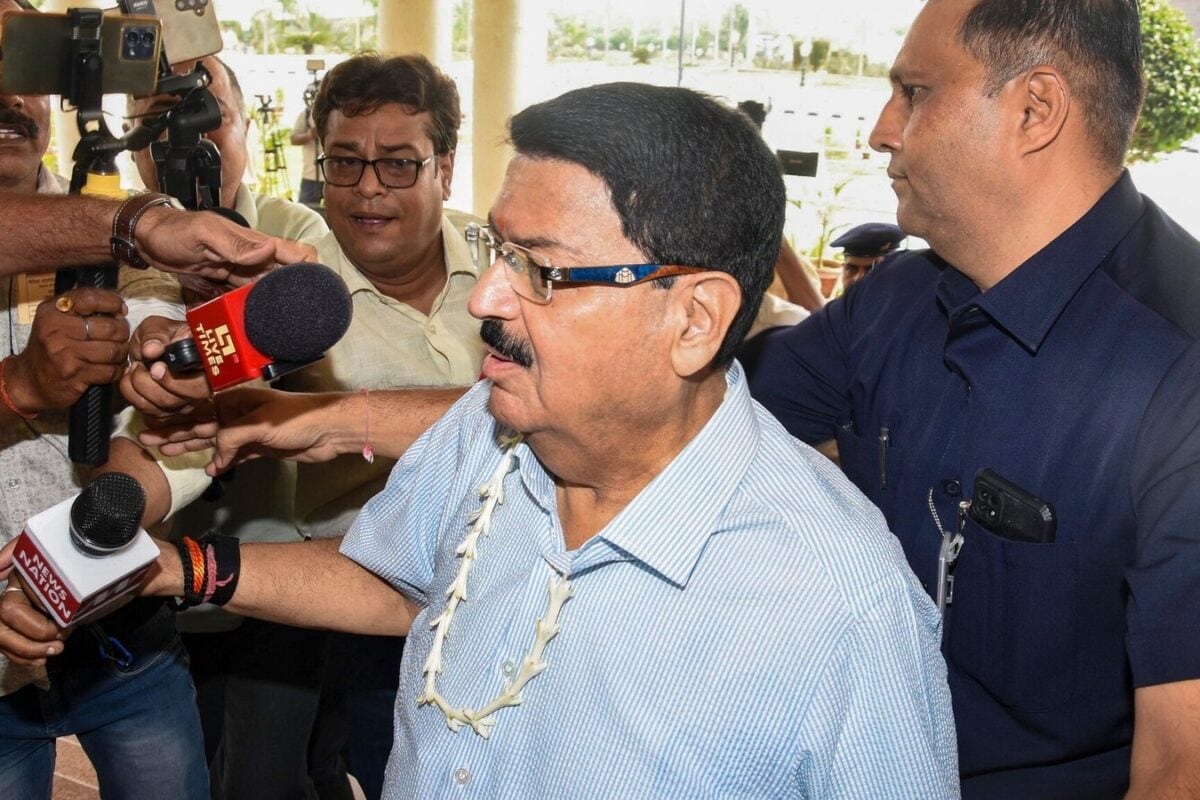
Cross-Voting Hits INDIA Bloc As NDA-Backed Nathwani Wins Jharkhand Seat, ZPM Makes Rajya Sabha Debut Published By, Last Updated: June 19, 2026, 09:12 IST With roughly JMM (29), Congress (17), and supporting MLAs, INDIA bloc’s combined strength was seen as sufficient to ensure both seats. Rapid Read NDA-backed candidate Parimal Nathwani win Rajya Sabha poll from Jharkhand. In the most consequential outcome of the June 18 Rajya Sabha elections, NDA-backed independent candidate Parimal Nathwani won one of the two Rajya Sabha seats from Jharkhand, defeating Congress nominee Pranav Jha in a result that immediately exposed cracks within the INDIA bloc. The second seat went to Jharkhand Mukti Morcha-backed candidate Baidhyanath Ram, meaning the ruling alliance in the state failed to convert its apparent numerical strength in the Assembly into a clean sweep. The outcome came as a shock to opposition leaders, who had expected both seats to be comfortably secured based on their combined legislative numbers. The result from Jharkhand quickly became the defining political story of an otherwise broadly predictable set of Rajya Sabha elections. The INDIA bloc, led in the state by the Jharkhand Mukti Morcha with Congress as a key partner, appeared well-positioned to win both seats. Instead, internal voting behaviour inside the Assembly altered the outcome, turning what was expected to be a straightforward victory into a politically sensitive setback. Cross-Voting And Abstentions The Rajya Sabha election in Jharkhand was effectively decided by preference distribution under the single transferable vote system, where MLAs’ votes are weighted and candidates need a specific quota to win. Based on the Assembly strength, the INDIA bloc was expected to comfortably cross the required threshold for two candidates.
With roughly JMM (29), Congress (17), and supporting MLAs, the bloc’s combined strength was seen as sufficient to ensure both seats. However, the actual voting revealed a different picture. Even a deviation of 4–6 MLAs – through abstention or cross-voting – was enough to disrupt the second seat outcome. Reports indicated that Nathwani benefitted from precisely this kind of fragmentation, where opposition votes did not consolidate behind a single second candidate. This allowed him to overtake the Congress nominee in the final tally, turning what should have been a mathematically secure seat for the INDIA bloc into a loss. As counting progressed, it became increasingly clear that the INDIA bloc had suffered from cross-voting and possible abstentions among its own MLAs. In Rajya Sabha elections, voting is conducted through a secret ballot, which means party whips cannot be strictly enforced in practice, and individual legislators retain the ability to deviate from expected instructions. Reports suggested that the ruling coalition’s internal discipline did not hold uniformly, and that at least a section of MLAs did not vote in line with the INDIA bloc’s expectations. This deviation changed the trajectory of the contest in real time, converting what was assumed to be a numerical advantage into a split result. While the Jharkhand Mukti Morcha managed to retain one seat, the Congress was left empty-handed, intensifying scrutiny over alliance coordination. The defeat of the Congress candidate triggered immediate political unease within the alliance. Congress leaders pointed to what they described as a breakdown in coordination and raised concerns over possible betrayal through cross-voting.
 The BriefWire