A 'New' Delhi Emerging: Census Signals Population At 2.3 Crore, But The Real Story Is The Explosion In Households
A 'New' Delhi Emerging: Census Signals Population At 2.3 Crore, But The Real Story Is The Explosion In Households Written By, Last Updated: June 19
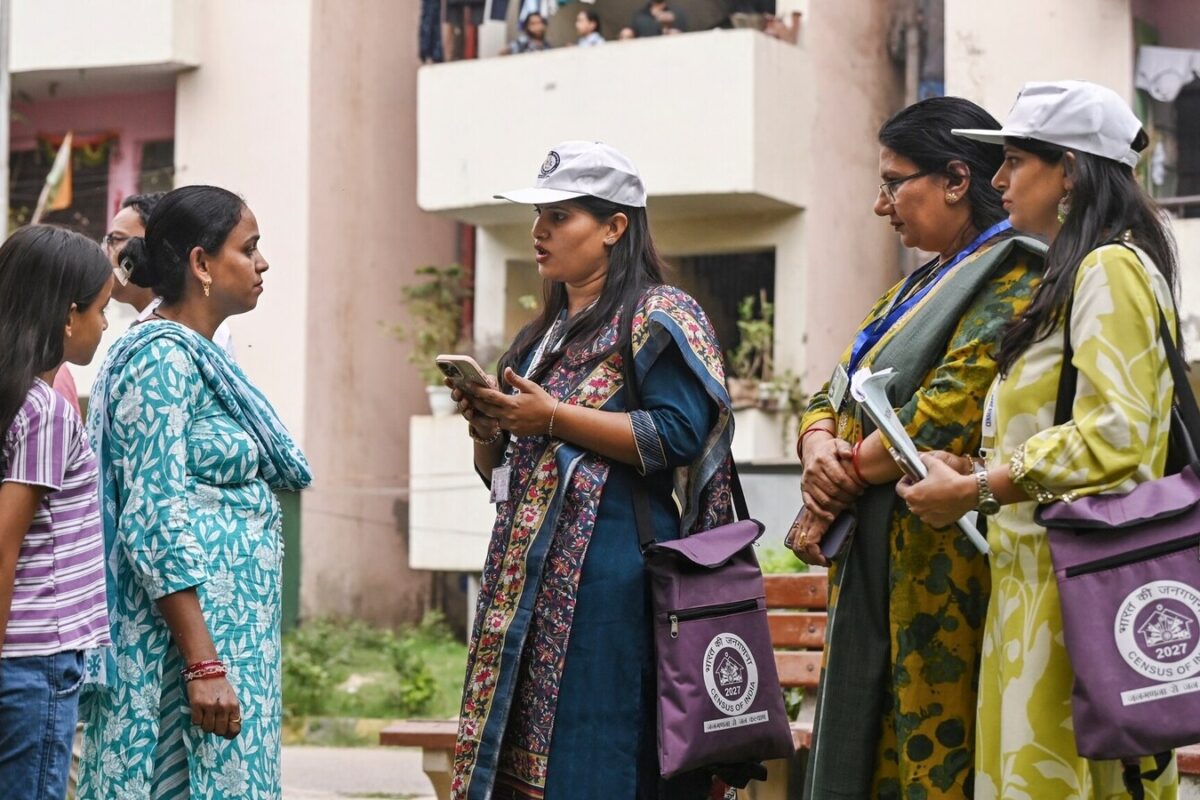
A 'New' Delhi Emerging: Census Signals Population At 2.3 Crore, But The Real Story Is The Explosion In Households Written By, Last Updated: June 19, 2026, 06:21 IST According to data from the House Listing Operations, which concluded in mid-June, this stark divergence points to a major structural shift in the capital’s socio-economic fabric Enumerators conduct house listing and housing census as part of Census of India 2027, in New Delhi. File pic/PTI Provisional figures from the first phase of Census 2027 show that Delhi’s population has climbed to an estimated 2.3 crore, as per reports, marking a substantial 37.5 per cent increase over the past 15 years. However, the initial data underscores a far more dramatic demographic shift: the number of households across the Capital Territory (NCT) has surged at a significantly faster rate than the actual population, jumping by nearly 60 per cent to reach approximately 55 lakh. According to data from the House Listing Operations, which concluded in mid-June, this stark divergence points to a major structural shift in the capital’s socio-economic fabric.
Census officials note that the rapid increase in households relative to population size reflects a steady decline in average family size. The traditional joint family system is increasingly being replaced by smaller nuclear families and single-person households, a trend driven by shifting lifestyle preferences, urban migration, and evolving economic dynamics across the metropolis. North East and South West Lead Major Realignment The digital house-listing exercise, which covered nearly 76 lakh census houses through over 45,000 blocks, also highlighted a massive geographic and demographic realignment across the capital. North East Delhi has emerged as the most populous district with a provisional count of 28.7 lakh residents. Meanwhile, New Delhi district, which encompasses the high-security New Delhi Municipal Council (NDMC) and Cantonment zones, recorded the lowest human footprint, with just 2.4 lakh residents and approximately 63,000 households. Interestingly, while North East Delhi holds the highest overall population, South West Delhi registered the highest density of infrastructure and micro-units, leading the city with 6.2 lakh individual households and over 8.2 lakh census houses.
West Delhi closely followed these shifting frontiers, anchoring 5.9 lakh households. Officials note that a direct district-by-district comparison with the 2011 census remains complex, as administrative boundaries were significantly redrawn over the last decade and a half, expanding Delhi’s administrative map from nine to 13 districts. Groundwork Laid for Full Enumeration Conducted through door-to-door digital mapping, this primary phase aimed to capture critical metrics regarding housing conditions, available assets, and structural utilities before the final citizen headcounts begin. While these early figures provide an essential framework for urban planners, census authorities have clarified that the 2.3 crore figure is strictly provisional. The comprehensive demographic story of the national capital will only be finalised during the high-stakes second phase, known as the Population Enumeration phase, scheduled to commence in February 2027. This upcoming drive will map detailed individual profiles, socio-economic variables, and ultimate population finalities, cementing the statistical baseline for the capital’s infrastructure policy for the next decade.
 The BriefWire