Political philosopher quote of the day: 'Man is born free; and everywhere he is in chains' — Jean-Jacques Rousseau
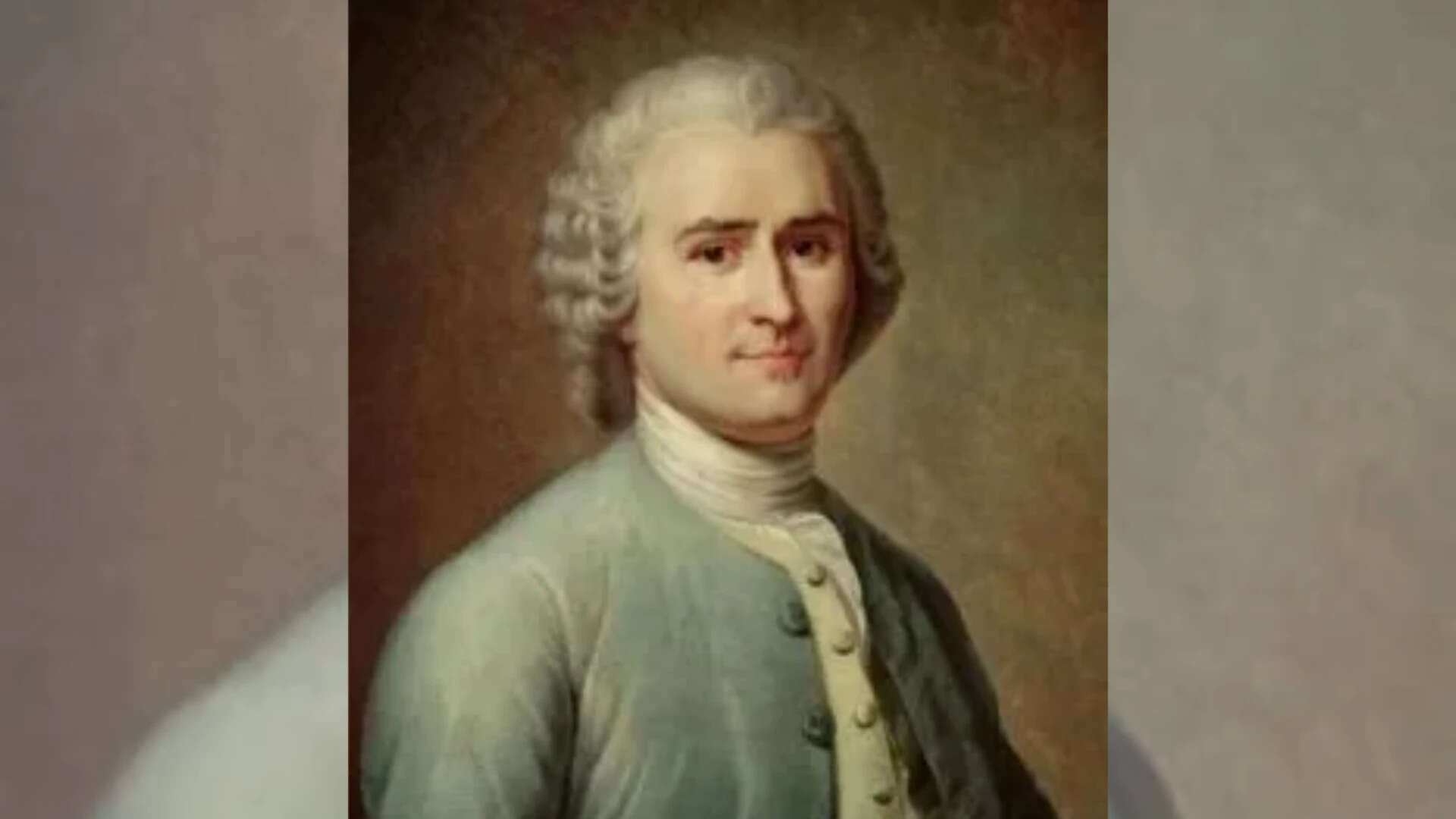
Jean-Jacques Rousseau was born in 28 June 1712 “Man is born free; and everywhere he is in chains. One thinks himself the master of others
Jean-Jacques Rousseau was born in 28 June 1712 “Man is born free; and everywhere he is in chains. One thinks himself the master of others, and still remains a greater slave than they.” The Social Contract How can human beings be free while living under governments, laws and social rules? Who was Jean-Jacques Rousseau? Discourse on the Origin of Inequality Emile The Social Contract What did Rousseau mean by 'chains'? “One thinks himself the master of others, and still remains a greater slave than they.” The Social Contract and the ' general will ' The Social Contract “general will”. Why was the quote so controversial? The Social Contract Why does the quote still matter today? Rousseau's legacy The Social Contract Few opening lines in political philosophy are as famous as this one. Written by Jean-Jacques Rousseau in 1762 as the first sentence of, the quote has survived for more than 260 years because it speaks to a question that every generation must confront:The sentence was not merely a philosophical observation. It was a challenge to the political order of Rousseau's time and remains one of the most influential statements ever written about freedom and power.Jean-Jacques Rousseau (1712-1778) was a Genevan philosopher, writer and composer who became one of the most important thinkers of the European Enlightenment.
Born in Geneva, then an independent republic, Rousseau spent much of his life in France and became known for questioning established authority, social inequality and political power.His major works includeand. Through these writings, Rousseau influenced political theory, education, democratic thought and modern ideas about citizenship. His work later inspired many of the intellectual currents behind the French Revolution.At first glance, the quote seems straightforward. Human beings are born free, but society restricts them.However, Rousseau's argument was more complex.He was not advocating a return to a lawless state of nature. Instead, he was asking why people obey governments and whether political authority can ever be legitimate. He observed that most societies of his time were ruled by monarchs, aristocrats or inherited privilege.People obeyed because of force, tradition or social hierarchy rather than genuine consent.The “chains” therefore represented more than physical restraints. They referred to political domination, unjust institutions and social arrangements that prevent people from exercising genuine freedom.The second half of the quote is often overlooked:Rousseau argued that rulers are not necessarily free either. Those who seek power often become trapped by the very systems they control. Maintaining authority can make them dependent on status, wealth and political control.The central question ofwas simple: if people are naturally free, how can government be justified?Rousseau's answer was the idea of a social contract.
 The BriefWire