Strait of Hormuz: German military prepares for possible deployment
Following the tentative deal with the US, Iran is planning to reopen the Strait of Hormuz. The German Bundeswehr is planning to assist with the
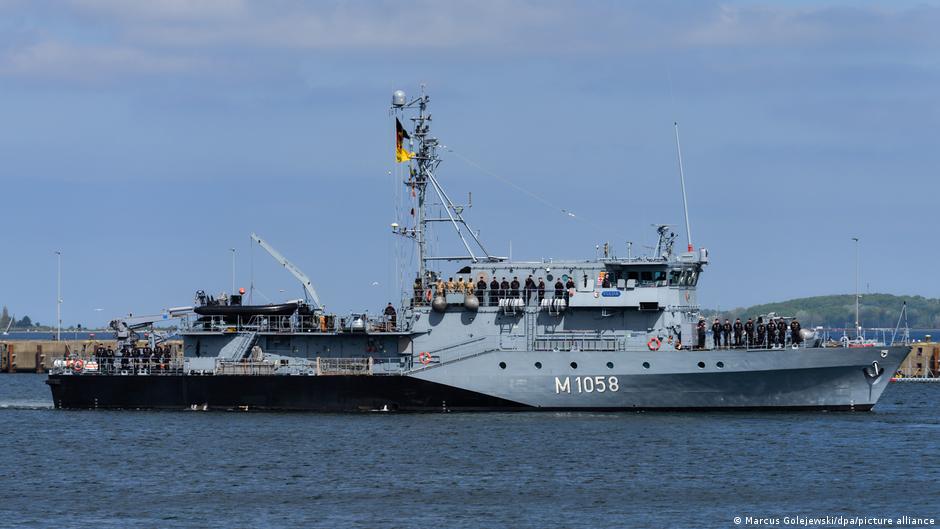
Following the tentative deal with the US, Iran is planning to reopen the Strait of Hormuz. The German Bundeswehr is planning to assist with the mine-clearing. The German military, or Bundeswehr, is preparing for a possible mine-clearing mission in the Strait of Hormuz. The German Defense Ministry announced on Thursday that the minesweeper Fulda and the tender ship Mosel, previously deployed in the eastern Mediterranean, had already passed through the Suez Canal early that morning. The ships are now expected to traverse the Red Sea in five to seven days and then call at the port of Djibouti. Further preparations for the mission will take place there. A total of about 140 soldiers are on board. The German units are being "pre-positioned for a possible mission in the Strait of Hormuz," Defense Minister Boris Pistorius said on Thursday in Brussels. But the emphasis is on "possible," as many questions remain, despite the agreement now signed between the US and Iran. The Defense Ministry said that essential conditions include "a lasting end to hostilities, a basis in international law, and a mandate from the Bundestag." The German parliament, the Bundestag, must approve any armed overseas deployment. Iran-US peace deal leaves many major issues unresolved To view this video please enable JavaScript, and consider upgrading to a web browser that supports HTML5 video As it happens, sea mine clearance is one of the Bundeswehr's strengths. "We do have a lot of practice because as you probably know, the North Sea and the Baltic Sea, are the two sea spaces in the world with the most remains of unexploded devices from two world wars," Johannes Peters, an expert on maritime security at the Institute for Security Policy at the University of Kiel, told DW.
There are, he said, millions of objects in the North Sea and the Baltic Seaunderwatertorturousthenumbership's,,, including mines, ammunition, and other kinds of explosives, which have been lying there for the last 70 years or even longer. The Strait of Hormuz as a strategic point After the Iran war began in late February, the Iranian military effectively blocked the Strait of Hormuz and reportedly began laying sea mines. The blockade had a massive impact on the global transport of oil and liquefied natural gas, leading to a sharp rise in fuel prices across the world. For the strait to once again become a safe maritime trade route, hostilities must cease permanently and the mines cleared. But this is a complicated undertaking: "Sea mines are extremely difficult to detect," said Nitya Labh, an expert on maritime security at the London-based think tank Chatham House. "There are different types, the ones that can flow at the surface of the water, ones that can be anchored to the floor, but float in the middle and detonate whenever they sense or detect a ship nearby," Labh told DW. "And then there are ones that can be placed on the seafloor." That means that even if the mines are located, it could take weeks or months to clear them. Sea mines: Quick to lay, difficult to clear "We don't know the exact amount of mines, and we don't know that certain area where mines may be laid," said Peters.
 The BriefWire