US-Iran deal: Between conflict and compromise
The US and Iran are starting tough negotiations after signing a ceasefire agreement. DW looks at the red lines, and where both sides could agree
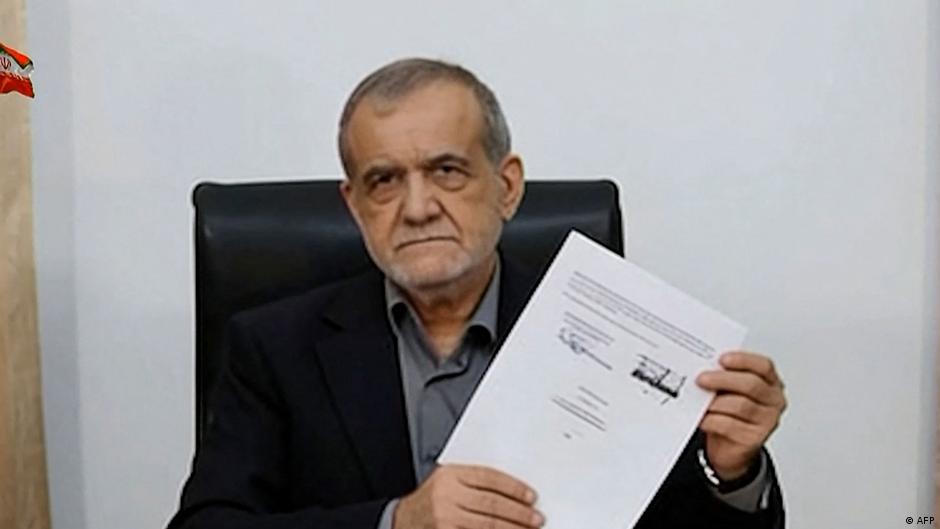
The US and Iran are starting tough negotiations after signing a ceasefire agreement. DW looks at the red lines, and where both sides could agree. On Wednesday evening, the US and Iran signed the so-called "Islamabad Memorandum of Understanding," extending a ceasefire and kicking off a 60-day phase of technical talks during which the key points of contention are to be resolved. The signing was originally scheduled for Friday in Switzerland, but pressure had grown following days of speculation about the details of the agreement. Trump signed the document at the Palace of Versailles outside of Paris after attending the G7 summit hosted by France on Lake Geneva, while Iranian President Masoud Pezeshkian signed it digitally from Tehran. "There appears to be political will on both sides to continue negotiations, which is encouraging," Middle East analyst Fatemeh Aman told DW. "At the same time, the most difficult questions have not yet been settled. For that reason, I would describe the prospects as cautiously positive, but far from certain," said Aman, who has worked at think tanks like the Middle East Institute and the Atlantic Council. Iran's nuclear program — a bone of contention Iran's nuclear program remains one of the central points of contention between Washington and Tehran. Preventing Iran from producing a nuclear weapon has been touted by Trump as one of the primary aims of the attack on Iran he launched along with Israel on February 28. US President Donald Trump holds up the signed agreement with Iran Image: @EmmanuelMacron/AFP The text of the MoU states that the Islamic Republic of Iran reaffirms that it has no intention of manufacturing or acquiring nuclear weapons. The Iranian leadership has consistently and officially maintained this position in the past as well. At the same time, the agreement contains specific provisions regarding the handling of stocks of highly enriched uranium. According to the agreement, both sides intend to clarify the status of the stored enriched materials — in particular, near-weapons-grade uranium enriched to up to 60% — through a mutually agreed-upon mechanism.
The plan calls for the dilution of the stockpiles on site under the supervision of the International Atomic Energy Agency (IAEA). The details are to be set forth in a final agreement. "If the American side now believes that it can simply agree a deal with Iran because they have promised not to build the atomic bomb, then it fails to recognize that they've [the Iranian regime] often made that promise but have repeatedly undermined every agreement," Omid Nouripour, vice president of the German parliament, told DW. Has Iran war harmed nuclear nonproliferation efforts? To view this video please enable JavaScript, and consider upgrading to a web browser that supports HTML5 video Sanctions waivers as a condition for talks It remains to be seen whether a preliminary agreement will allow enough time to fully negotiate this long-standing point of contention, which could take longer than the initial 60-day window for talks. "The central challenge is likely to remain the balance between Iran's nuclear commitments and sanctions relief," said Aman. "Iran will seek meaningful economic benefits and assurances that those benefits can be sustained. The United States, meanwhile, will focus on the scope of Iran's nuclear activities and the mechanisms needed to verify compliance," she added. Lebanon included in a comprehensive ceasefire The MoU also prioritizes the immediate and permanent cessation of hostilities on all fronts, including in Lebanon, by the signatories and their allies. Following the outbreak of the Iran war and the killing of Iranian supreme leader Ayatollah Ali Khamenei, the Lebanon-based militia Hezbollah fired rockets at Israel, joining the war along with its backers in Tehran. Israel responded with airstrikes on targets in Lebanon, and occupying a strip of territory in country's south. Israel, the US most important ally in the region, continues to view an agreement with Iran with skepticism, and is not a signatory. Preventing hostilities between Hezbollah and Israel from derailing negotiations is seen as key. Lebanon remains main stumbling block to Israel-US-Iran peace To view this video please enable JavaScript, and consider upgrading to a web browser that supports HTML5 video Opening Hormuz a first step One aspect of the agreement that is set to have immediate effect is restoring shipping traffic through the Strait of Hormuz, which is a vital step to stabilizing global energy prices.
 The BriefWire