Cuba approves economic reforms amid US pressure
Cuba's Communist Party has signed off on a package of free market reforms. One member called the changes a response to "economic war," while the
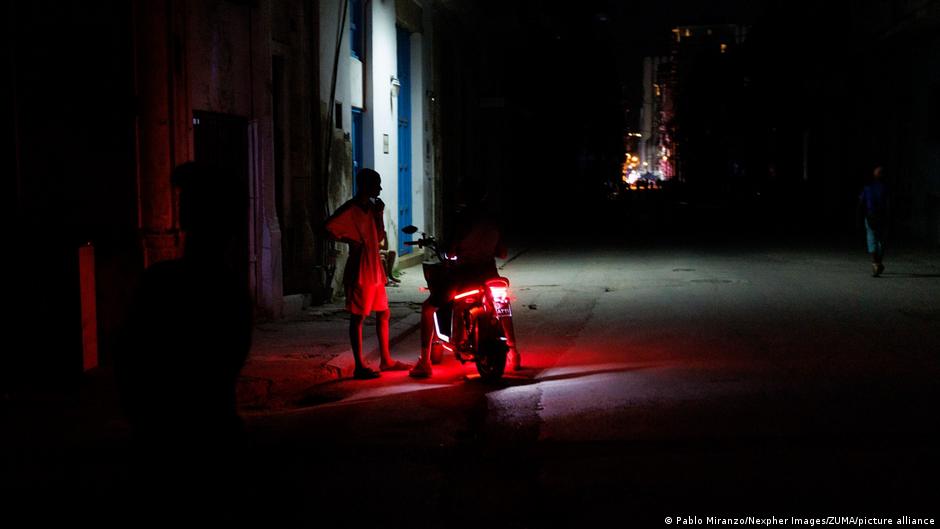
Cuba's Communist Party has signed off on a package of free market reforms. One member called the changes a response to "economic war," while the party said they were not a "deviation" from the socialist project. The Communist Party of Cuba (PCC) on Wednesday approved a package of reforms aimed at opening up more sectors to private investment. The reform process coincides with increased economic pressure from the US and comes amid regular power outages and other resource shortages on the island. The country's president and the first secretary of its only legal political party, Miguel Diaz-Canel, first presented the plans late last week. Cuba faces most severe energy crisis in decades To view this video please enable JavaScript, and consider upgrading to a web browser that supports HTML5 video What did the PCC say as it approved the reforms? The Central Committee of the PCC held an extraordinary plenary session on Wednesday to urgently evaluate the proposals. The party wrote on social media that the changes were "an expression of the logic of development in the historical period," and insisted that they "in no way constitute a deviation from the socialist project." Streets in Havana have gone dark amid a growing economic and energy crisis Image: Pablo Miranzo/Nexpher Images/ZUMA/picture alliance It also repeatedy said that Raul Castro, the 95-year-old brother of revolutionary leader Fidel and still widely seen as at least the symbolic power behind the throne, had been consulted on and approved of the proposals.
Castro participated via video feed but did not attend in person. Castro "fully agrees" with the economic reforms proposed by Diaz-Canel and is "convinced that the best ideas always emerge from collective analysis and even from differences of opinion," PCC Political Bureau member Jose Amado Ricardo Guerra told the assembly. The head of the Committee's ideological department, Yuniaski Crespo Baquero, echoed party messaging in calling the steps a response to "the economic war confronting Cuba." But she also hailed the reforms as "a homegrown, creative, brave and revolutionary response." What might the changes entail? President Miguel Diaz-Canel's proposals, first put forward in a surprise appearance before state media, are not particularly well defined but promise to be fairly far-reaching. Some noteworthy aspects follow 'New actors' should be allowed to operate in the tourism sector, under 'new models' Foreign direct investment (particularly from non-resident Cubans, many of whom live in the US) should be Steps will be taken looking to expand the private sector Reforms will aim to revitalize key sectors like agriculture, foreign trade and real estate Decision-making is to be decentralized, with more 'autonomy' being granted to state-owned companies and local municipalities Cuba on the brink: The end of a revolution? To view this video please enable JavaScript, and consider upgrading to a web browser that supports HTML5 video Why is this happening now?
The response is seen partly as a response to a long-term and gradual economic decline accompanied by rising public disatisfaction in Cuba, punctuated by a severe contraction over the last six years but arguably dating back much further than that. However, this process has been accelerated and exacerbated considerably by increased economic and political pressure from the US since the start of the year. The Trump administration has been demanding sweeping political and economic reforms from Havana, and openly flirting with notions of regime change or some form of intervention akin to its sudden move to abduct and detain Venezuelan President Nicolas Maduro in a military operation. The US has charged Fidel Castro with murder for his alleged role in a plane crash. People are increasingly reliant on battery sources for light and power if they want to work after hours Image: Pablo Miranzo/Nexpher Images/ZUMA/picture alliance Since January, the US has almost completely blocked the flow of oil and petroleum products to Cuba. This has led to international companies operating on the island — not least tourist-related enterporises like hotel chains, shipping lines, airlines and banks — rushing to leave Cuba, perhaps fearing secondary sanctions. The fuel shortages are starting to have a critical impact on agriculture and industry. Power outages and shortages are commonplace in Havana and beyond, with lighting at a premium most nights.
The deteriorating situation has led to rare protests on the island. While they have been mostly small and peaceful — for instance involving people banging on pots and pans, or burning the trash piling up on the streets as collection runs drop out — it's a rare public expression of dissatisfaction with the one-party state. US indicts Cuba's Raul Castro over deadly 1996 plane attack To view this video please enable JavaScript, and consider upgrading to a web browser that supports HTML5 video What happens next? The next step on the path to ushering the changes into law is approval from the Assembly of People's Power (ANPP), the country's unicameral parliament and sole legislative body. It is scheduled to convene to discuss the plan on Thursday. Don't let the algorithm hide the news. If you rely on our team for trusted reporting, please take a moment to select us as a preferred source on Google, so you'll always see our verified news first. Edited by: Zac Crellin
 The BriefWire