How history came to have its first trillionnaire in Elon Musk
The map has become more important than the territory. And the mapmakers are increasingly burning the territory to keep the map warm. The SpaceX IPO
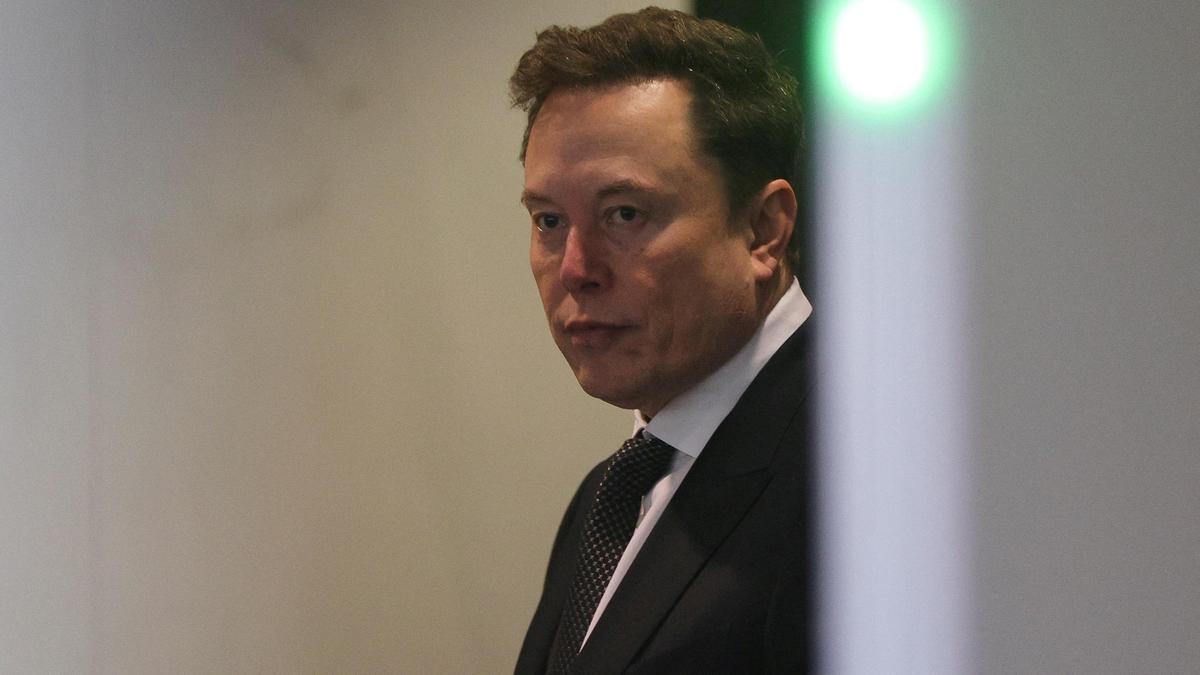
The map has become more important than the territory. And the mapmakers are increasingly burning the territory to keep the map warm. The SpaceX IPO on June 12 ended with Elon Musk becoming the world’s first trillionnaire — a word that still invites a red underline on Google Docs. That word has become because money has changed. It still is a social fiction. But remarkably, the character of the fiction has changed so fundamentally that it is now redrawing the society that holds it. That is, financial markets have become detached from reality, but instead of redefining ‘financial markets’ today, one might have more success redefining ‘reality’ instead. Money, through history, has allowed strangers who did not have shared values to cooperate with each other. Thus price signals replaced trust. It is not an inherent evil: society, and human civilisation more broadly, has crenellated over this mechanism for centuries. However, for most of this time, money was legible. Put differently, the price of something carried information — about scarcity, labour, demand, and so on. Today, price is becoming less informative. People still transact and society labour on but the signals are becoming so corrupted — summiting a new peak with the SpaceX IPO — that the map is finally consuming the territory.
Belief as capital Once upon a time, value was material, then it became transaction. Today, it seems, it has become conceptual. SpaceX is apparently worth $2.1 trillion because of its rocket launch business, its internet service business, and because of something it says it will build decades from now. The $2.1 trillion thus does not represent how things are today but what a small group of supremely wealthy, and almost as powerful, actors believe about the future. And the more these actors invest in this future and lobby governments to draft policies in favour of it, the more the future is likely to manifest. Thus money becomes control. Of course, this is not altogether unprecedented: episodes of collective belief from the railway mania to the dot-com bubble were based on particular visions of the future. The present is distinguished by expectation alone having become valuable, rather than simply reflecting the value of some asset. SpaceX’s two-trillion-dollar valuation does not misread some underlying and obscured reality. It is the reality, and in the only sense that late-stage capitalism recognises. If a belief accrues enough capital, the belief itself becomes valuable. But the present moment is also stranger. Political power increasingly panders to financial scale rather than preceding it. That means once the fiction is sufficiently large, encompassing pensions and public infrastructure, it suffices to protect itself; state optional.
And thus we have narrative capital: the ability to convince a sufficient number of other people of a particular version of the future is now a legitimate means of production. Psychotic break Since money was a fiction of society, and what money means today has changed, surely the effects will backpropagate to society itself. A nurse or a teacher, say, can no longer participate in the narrative economy at the same scale as a software engineer or a venture capitalist — and much less at the scale of someone who owns equity in a narrative about living on Mars. A nurse and a teacher can work harder, upskill themselves, produce more, and still find that their ‘value’ has not increased. And if as a result you do not know what is really real any more, you have it right. It is not a new pathology of the culture. You have finally correctly read the culture itself. If the new monetary system is prepared to reward the construction of narratives over literal production, it will also select for actors who are skilled at generating belief than those skilled at producing goods. Thus what is admired and what is imitated will change. What parents tell children is The Path will change.
The system has after all always propagated its values through whom it holds to be its winners. Ultimately, perhaps for the first time in history, the future has great power over the present. What else can explain rising homelessness and environmental degradation coexisting with the rise of the first trillionnaires other than today’s decisions being made according to what investors expect tomorrow to look like? And if you can make something financially real by generating sufficient consensus, why not apply that principle to other domains? For example, scientific consensus could become just another set of priors to contest and re-narrate. The philosophy the SpaceX IPO stands for is trying to normalise the idea that what is true is only a function of who possesses the force required to assert it. But physical reality is still on our side. Somewhat. A chip-making factory is not a chip-making factory just because Elon Musk has described it as one. That still requires a psychotic break. And one hopes, in these darker times, that the combined forces of human biology and common sense will prevent that from coming to pass. mukunth.v@thehindu.co.in
 The BriefWire