Hormuz Reopening, Down-Blending Of Uranium, No Nukes: Inside The 14 Clauses Of US-Iran Peace Deal
Hormuz Reopening, Down-Blending Of Uranium, No Nukes: Inside The 14 Clauses Of US-Iran Peace Deal Published By, Last Updated: June 18, 2026, 07:49 IST The
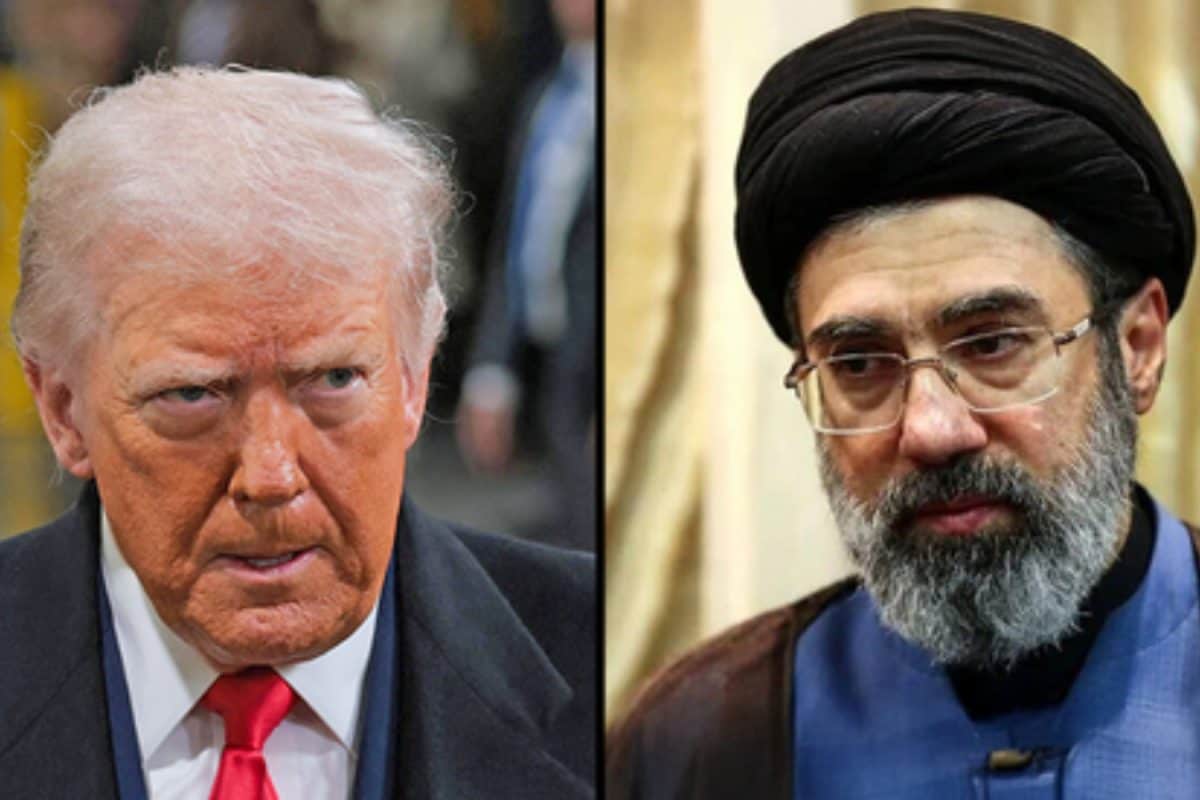
Hormuz Reopening, Down-Blending Of Uranium, No Nukes: Inside The 14 Clauses Of US-Iran Peace Deal Published By, Last Updated: June 18, 2026, 07:49 IST The MoU contains several significant commitments - from a permanent halt to hostilities and reopening of Hormuz to sanctions relief and fresh limits on Iran's nuclear programme. Rapid Read US President Donald Trump and Iran's Supreme leader Mojtaba Khamenei (Photos: AFP) After weeks of speculation, the United States and Iran have officially signed their much-awaited peace memorandum, releasing the full 14-point text that lays out how the two long-time adversaries intend to end the latest conflict and move towards a broader settlement. The document, signed by US President Donald Trump on the sidelines of the G7 Summit in France, is not a final peace treaty. Instead, it serves as a roadmap that triggers a 60-day negotiating window during which both countries will attempt to convert the memorandum into a legally binding agreement. Yet, despite being an interim deal, the memorandum contains several significant commitments – from a permanent halt to hostilities and reopening the Strait of Hormuz to sanctions relief and fresh limits on Iran’s nuclear programme. Here’s what the agreement actually says. 1. The War Ends Immediately The very first clause declares an immediate end to military hostilities between the United States and Iran, extending the ceasefire to all theatres of conflict, including Lebanon. Both sides pledge not only to stop military action but also to refrain from threatening or using force against one another in the future. The United States also commits to issuing all necessary licences and permits required to implement the ceasefire. 2. Respect For Sovereignty The agreement commits both countries to respecting each other’s territorial integrity and political independence. For nations that have spent decades accusing each other of interference, this clause attempts to establish a basic diplomatic principle before tackling more contentious issues.
3. America Will Lift Its Naval Blockade One of Washington’s biggest concessions is the commitment to end its naval blockade against Iran in the Strait of Hormuz. The memorandum also states that US military assets deployed specifically for the conflict will be withdrawn as part of implementing the agreement. 4. Hormuz Must Reopen Perhaps the most globally significant provision concerns the Strait of Hormuz. Iran agrees to restore unrestricted commercial shipping through one of the world’s most critical oil routes. The agreement also commits both countries to work together to ensure safe maritime navigation in the region. This could help stabilise global energy markets after months of disruption. 5. A $300 Billion Reconstruction Promise The United States says it will support the establishment of a reconstruction and development fund worth around $300 billion for Iran. The money is intended for rebuilding infrastructure and supporting economic recovery after the conflict. However, access to these funds depends on Iran meeting its commitments under the agreement and any future final deal. 6. Sanctions Will Be Phased Out Washington agrees to begin removing sanctions imposed on Iran, including unilateral US sanctions and measures backed by international bodies. But there is an important caveat. The memorandum does not provide an immediate blanket lifting of sanctions. Instead, it says the timeline will be negotiated as part of the final agreement, making sanctions relief conditional on future progress. 7. Iran Reaffirms It Will Not Build Nuclear Weapons One of the deal’s central pillars is Iran’s commitment that it will never develop nuclear weapons. Unlike previous diplomatic language that often focused on limiting enrichment, this clause explicitly reaffirms a ban on pursuing nuclear arms. 8. Enriched Uranium Will Be Neutralised, Not Destroyed Rather than eliminating its enriched uranium stockpile, Iran agrees to down-blend it under the supervision of the International Atomic Energy Agency (IAEA).
Down-blending reduces highly enriched uranium into material unsuitable for weapons while allowing it to remain available for peaceful civilian nuclear purposes. This distinction is considered one of the most debated parts of the agreement because critics argue it leaves Iran with retained nuclear infrastructure, while supporters say it provides a realistic path to verification. 9. No Escalation During The Next 60 Days Until negotiations conclude, both countries agree not to worsen the situation. Iran will avoid expanding nuclear activities, while the US agrees not to impose new sanctions beyond existing measures. The aim is to preserve the current status quo while diplomats negotiate a permanent settlement. 10. Iran Can Resume Oil Exports The United States commits to issuing sanctions waivers that would allow Iran to restart oil exports and related banking transactions during implementation. Given Iran’s dependence on oil revenues, this could provide a significant economic lifeline if the agreement progresses as planned. 11. Frozen Iranian Assets Could Be Released The memorandum also opens the door for Iran to regain access to frozen overseas assets. Like other economic concessions, this will happen in stages and depends on compliance with the agreement. 12. A Joint Monitoring Mechanism Will Be Created The agreement establishes an implementation mechanism to oversee compliance. This body will monitor whether both sides fulfil their commitments and help resolve disputes during implementation. 13. Only Some Issues Are Settled For Now Despite its broad scope, the memorandum deliberately leaves several issues unresolved. Once implementation begins and key commitments are verified, negotiations will continue on the remaining provisions to produce a comprehensive final agreement. 14. The Final Deal Will Need UN Approval The memorandum concludes by stating that any permanent agreement will ultimately be endorsed through a binding resolution of the UN Security Council.
That would give the final settlement international legal backing rather than leaving it as a bilateral political understanding. The memorandum marks the biggest diplomatic breakthrough between Washington and Tehran in years, but it is not the end of the process. Many of its most consequential promises – including permanent sanctions relief, access to reconstruction funds, and a comprehensive nuclear settlement – remain conditional on successful negotiations over the next 60 days. For now, the agreement accomplishes three immediate objectives: it halts active hostilities, seeks to restore commercial shipping through the Strait of Hormuz, and creates a diplomatic framework to tackle one of the world’s most enduring geopolitical rivalries. Whether it evolves into a lasting peace will depend on implementation, verification, and the willingness of both sides to honour the commitments they have now signed. News18 Newsletter Handpicked stories, in your inbox A newsletter with the best of our journalism submit About the Author Pragati Ratti Pragati is a News Editor at news18.com. Having headed the Business and Viral sections, Pragati now ideates, writes and edits long-form features and articles on national and global affairs. She ensures... Read More First Published: June 18, 2026, 07:42 IST News world Hormuz Reopening, Down-Blending Of Uranium, No Nukes: Inside The 14 Clauses Of US-Iran Peace Deal Disclaimer: Comments reflect users’ views, not News18’s. Please keep discussions respectful and constructive. Abusive, defamatory, or illegal comments will be removed. News18 may disable any comment at its discretion. By posting, you agree to our Terms of Use and Privacy Policy Loading comments...
 The BriefWire