74 villages locked in standoff as Panchana Dam dispute escalates in Rajasthan
The waters of the Panchana Dam, eastern Rajasthan's largest earthen dam, have once again become the centre of a major dispute. What began as an
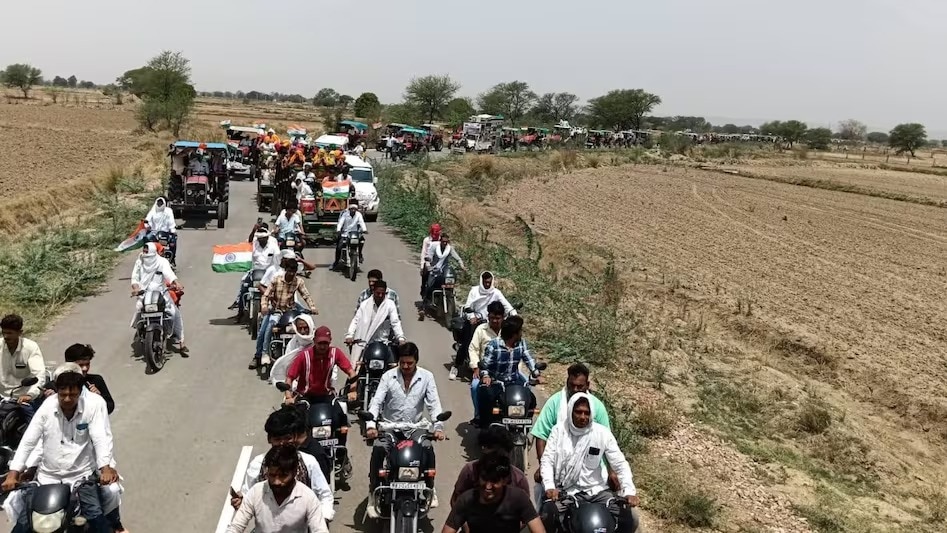
The waters of the Panchana Dam, eastern Rajasthan's largest earthen dam, have once again become the centre of a major dispute. What began as an irrigation issue has now evolved into a complex social, political and legal conflict. The situation has reached a point where the dam's water is neither reaching farms as intended nor resolving the long-standing grievances of farmers who have been fighting for what they consider their rightful share. Read Full Story On one side, residents of 39 villages have been guarding the dam for the past month to prevent the release of water. On the other, farmers from 35 villages are staging protests, demanding that water be released into irrigation canals in accordance with a High Court order. Both sides claim legitimacy, deepening the standoff. 39 VILLAGES GUARDING DAM, 35 VILLAGES WANT WATER RELEASE Farmers from villages located in the submergence zone have been camping near the Panchana Dam since May 16. Under the banner of the Panchana-Gudla Sangharsh Samiti, residents of 39 villages have maintained round-the-clock vigil at the site. Their argument is that large tracts of their land were submerged during the construction of the dam, giving them the first right over its water.
They allege that while they lost their land for the project, they never received the irrigation benefits that were promised at the time. Meanwhile, farmers from the command area have been protesting for the past 10 days in Khandip village, located on the border of Karauli and Gangapur City. These farmers argue that they regularly received canal water between 1992 and 2005 and therefore cannot be deprived of their share now. They are demanding the immediate release of water into the canal network, citing a May 2026 High Court directive and warning that continued delays could severely affect agriculture. HIGH COURT INTERVENTION YET AGAIN In May 2026, the High Court directed the Rajasthan government to release water from the Panchana Dam into the command-area canals without delay. However, this is not the first time the judiciary has stepped in. Over the past two decades, courts have intervened in the dispute on three separate occasions. Despite repeated orders, little has changed on the ground, with successive governments struggling to implement a lasting solution. The agitation in Khandip is being led by Congress MLA Ramkesh Meena. He has accused the government of failing to implement the court's directions despite clear orders.
He has warned that if the government fails to present a concrete roadmap by June 27, protesters will launch a rail blockade agitation on June 28. TRACKING THE CONFLICT The origins of the dispute are linked to the Gujjar agitation of 2006. Villages whose lands were submerged by the dam began demanding priority rights over the water, arguing that they had made the greatest sacrifice for the project. Since then, water has not been released regularly into the irrigation canals. At present, dam water is largely released only once a year during the Shri Mahavirji fair for religious purposes through the Gambhir River. Notably, the Panchana Dam was originally conceived as a flood-control project. The irrigation command area was linked to it later. In 2010, the then government sanctioned Rs 13 crore for a lift irrigation scheme aimed at supplying water to affected villages. However, more than a decade later, the project remains unimplemented, adding to the frustration of displaced communities. TALKS UNDERWAY: RAJASTHAN GOVERNMENT Rajasthan Agriculture Minister Kirori Lal Meena has described the issue as serious and said he has discussed it with the Chief Minister. According to the minister, nearly 9,985 hectares of agricultural land remain deprived of irrigation, affecting more than 1.25 lakh people.
He argued that failure to release water despite court orders is causing significant economic losses to farmers. Minister of State for Home Jawahar Singh Bedham said the government is in continuous dialogue with all stakeholders and is working towards a fair resolution. He maintained that no farmer would be treated unfairly and said discussions are being held with local representatives, village elders and community leaders to arrive at a consensus-based solution. MORE THAN JUST A WATER DISPUTE The Panchana conflict is increasingly being viewed as more than a fight over irrigation. Many observers see it as reflecting broader social and political tensions, particularly between sections of the Gujjar and Meena communities. Both sides, however, insist that their struggle is solely about farmers' rights and access to water. For now, the Panchana Dam dispute remains one of Rajasthan's most contentious rural issues, placing the government under pressure to balance competing claims while preventing the situation from escalating further. Ends
 The BriefWire