Lebanon: 12 children killed, maimed daily despite truce between Hezbollah and Israel
Key takeaways The humanitarian situation in Lebanon remains fragile and needs immense and severe despite the recent US-Iran agreement and subsequent signs of regional de-escalation
Key takeaways The humanitarian situation in Lebanon remains fragile and needs immense and severe despite the recent US-Iran agreement and subsequent signs of regional de-escalation. Here are some highlights from the latest flash update from the UN relief agency, OCHA: Returns remain limited and cautious despite reduced amount of hostilities despite reduced amount of hostilities Israeli airstrikes and seven renewed displacement orders covering 37 localities across the South and Nabatieh governorates triggered additional displacement between 12 and 14 June across the South and Nabatieh governorates triggered additional displacement between 12 and 14 June 3,798 deaths and 11,781 injuries since 2 March: Lebanese Public Health Ministry since 2 March: Lebanese Public Health Ministry 131,200 internally displaced persons remain in 644 collective shelters remain in 644 collective shelters Aid efforts reached over 1.1 million people through water and sanitation services and 13.6 million meals delivered through water and sanitation services and 13.6 million meals delivered 2026 Lebanon Flash Appeal only 32.7 per cent funded, with approximately $209.6 million received against $639.9 million requested Since hostilities escalated between Israel and Hezbollah militants in southern Lebanon on 2 March, 247 children have been killed and 992 injured, an average of 12 children killed or maimed every day, according to the agency.
“For more than three months, children in Lebanon have lived through experiences no child should ever endure,” UNICEF country representative in Lebanon, Marcoluigi Corsi, said in a statement issued on Wednesday following the 15 June announcement that the United States and Iran had reached agreement on a Memorandum of Understanding. “We hope that this ceasefire will be indeed a real ceasefire because since the declaration of the previous one, violence against children and the conflict hasn’t really stopped,” he told UN News. ‘Where is humanity?’ Widespread destruction has scarred large parts of the country, affecting homes, schools and essential services, including water, sanitation and hygiene systems, further compounding already severe humanitarian needs and dealing a devastating blow to children living through the bombings and violence. Corsi said a meeting with teenaged girl at a UNICEF-supported hospital remains “stuck in my mind and my heart”. “Collateral damage” from an attack included the deaths of her father and three brothers, leaving her mother alive and the girl in a coma, he said, recalling the first two questions she asked him while she was recovering: Where is humanity?
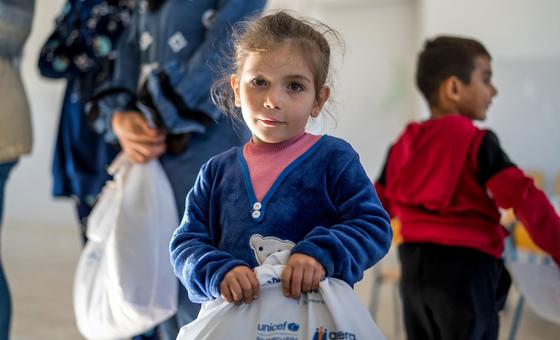
Where is a sense of justice? “Those are tough questions coming from a 14-year-old child that you cannot answer,” he said. “No child should go through that nightmare.” Mass displacement, childhood disrupted More than 770,000 children are experiencing heightened distress from repeated exposure to violence, loss and displacement, with many unable to return home because of ongoing fighting and the threat of unexploded ordnance, Mr. Corsi’s statement declared. “Behind these staggering figures are lives cut short or forever changed, and families facing profound loss, trauma, and uncertainty,” he wrote. “Many have fled their homes multiple times, witnessed violence first-hand, lost loved ones and seen their schools, communities and sense of safety shattered.” But, the numbers alone cannot convey the full scale of the crisis, he explained. “Beyond those killed and maimed, an entire generation of children has seen its childhood disrupted,” he stated. “Their sense of safety, one that every child needs to grow and thrive, remains profoundly undermined.” “The scale of physical and psychological harm we are witnessing is unacceptable, and children continue to pay a terrible price for this conflict,” the UNICEF representative said, urgently calling for a sustained cessation of violence.
The true cost of this crisis will not only be measured in lives lost today, but in the opportunities missed tomorrow. Give children a chance Children must be protected from further harm and schools, hospitals, water systems and other civilian infrastructure urgently safeguarded, Mr. Corsi implored. Moreover, humanitarian access must be ensured and international law must be respected. “Most importantly, Lebanon’s children must be given the chance not only to survive this crisis, but to recover from it and reclaim the future that conflict has placed at risk.” Stay tuned to UN News this Wednesday when the UN Secretary-General releases his latest report on children and armed conflict at 8pm New York time.
 The BriefWire