The Great Cat Escape? 'Missing' Bengal Tiger Caught On Camera In Himachal Pradesh's Sirmaur
The Great Cat Escape? 'Missing' Bengal Tiger Caught On Camera In Himachal Pradesh's Sirmaur Written By, Last Updated: June 17, 2026, 18:18 IST Experts believe
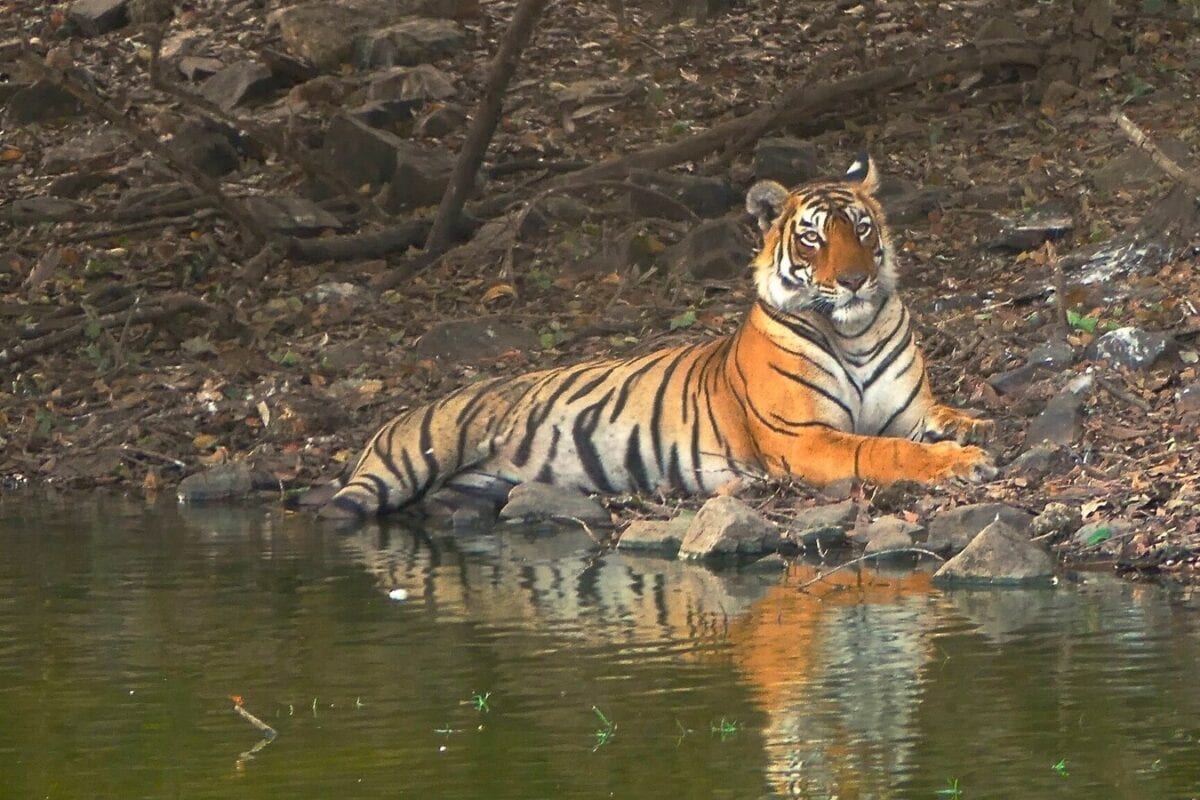
The Great Cat Escape? 'Missing' Bengal Tiger Caught On Camera In Himachal Pradesh's Sirmaur Written By, Last Updated: June 17, 2026, 18:18 IST Experts believe this is a missing female tiger that has remained completely undocumented within Uttarakhand’s nearby Rajaji Park for nearly a year The unexpected presence of the endangered Bengal tiger, which is afforded the highest legal protections under Schedule I of the Wildlife (Protection) Act, has revitalised local environmental strategy. Representational pic/AP The startling discovery of a Royal Bengal tiger in the Khara forest block of Sirmaur district has prompted an immediate high-alert coordination strategy between the forest departments of Himachal Pradesh and Uttarakhand. The mature big cat was captured on a tree-mounted camera trap, providing the first concrete photographic proof of a tiger’s presence in this specific geographical zone. The breakthrough comes after months of unverified claims by local residents in the neighbouring Tokka and Lie villages, who had consistently reported large predator indicators, including seeing distinct clusters of vultures circling over deep forest sections. Following the initial photographic capture, a specialised team of wildlife experts and tracking squads cordoned off a 500-hectare search radius to analyse the tiger’s residency pattern.
Field investigators quickly discovered extensive fresh pug marks, territory urine markings, and deep claw marks on sal and teak trees, confirming the apex predator has actively frequented the area for several days. What makes the sighting highly critical for interstate wildlife coordinators is the strong possibility that this individual is a missing female tiger that has remained completely undocumented within Uttarakhand’s nearby Rajaji Park for nearly a year. Ecological Corridor Integrity Facilitates Apex Predator Movement Wildlife biologists from Rajaji Park are scheduled to visit the Khara forest block to inspect the site and run a comprehensive comparative stripe-pattern analysis against their historical database to verify the animal’s exact lineage. Conservationists point out that the forest landscapes of Paonta Sahib share a contiguous ecological corridor with Uttarakhand and Haryana. Experts note that recent infrastructure designs, including the newly operational elevated stretches of the Delhi-Dehradun Expressway, are significantly facilitating safer interstate wildlife movement across the delicate Shivalik foothills by bypassing high-traffic surface barriers. Because an adult tiger typically commands a territory of roughly 20 square kilometres, natural resource pressures frequently prompt individuals to disperse into adjoining, prey-rich landscapes.
The dense vegetation and sal canopies of Paonta Sahib offer an ideal refuge, particularly given the local abundance of natural prey species like sambar, nilgai (blue bull), and various ungulates. Preemptive Safety Measures Instituted to Mitigate Conflict While local authorities report that the tiger is currently staying four to five kilometres away from prominent human habitations—effectively minimising the immediate risk of human-wildlife conflict—the regional forest division has taken swift preemptive steps. Assistant Conservator of Forests Aditya Sharma confirmed that field teams have officially sensitised the nomadic Gujjar and Gaddi shepherd communities, who move through these sectors seasonally with livestock, advising them to completely bypass the specific Khara block. Concurrently, a dedicated monitoring task force has been formed to supervise the expanding camera-trap grid. The unexpected presence of the endangered Bengal tiger, which is afforded the highest legal protections under Schedule I of the Wildlife (Protection) Act, has revitalised local environmental strategy. Senior forest administrators are already utilising the concrete sighting to initiate preliminary discussions to formally push for declaring the contiguous Paonta Sahib landscape a protected tiger reserve, ensuring long-term access to central habitat protection funds.
News18 Newsletter Handpicked stories, in your inbox A newsletter with the best of our journalism submit About the Author Pathikrit Sen Gupta Pathikrit Sen Gupta is a Senior Associate Editor with News18.com and likes to cut a long story short. He writes sporadically on Politics, Sports, Global Affairs, Space, Entertainment, And Food. He tra... Read More First Published: June 17, 2026, 18:18 IST News india The Great Cat Escape? 'Missing' Bengal Tiger Caught On Camera In Himachal Pradesh's Sirmaur Disclaimer: Comments reflect users’ views, not News18’s. Please keep discussions respectful and constructive. Abusive, defamatory, or illegal comments will be removed. News18 may disable any comment at its discretion. By posting, you agree to our Terms of Use and Privacy Policy Loading comments...
 The BriefWire