I Want To Break Free: Sanctioned Iranian Supertankers Exit US Navy Blockade In Hormuz
I Want To Break Free: Sanctioned Iranian Supertankers Exit US Navy Blockade In Hormuz Published By, Last Updated: June 17, 2026, 17:59 IST Three Iranian
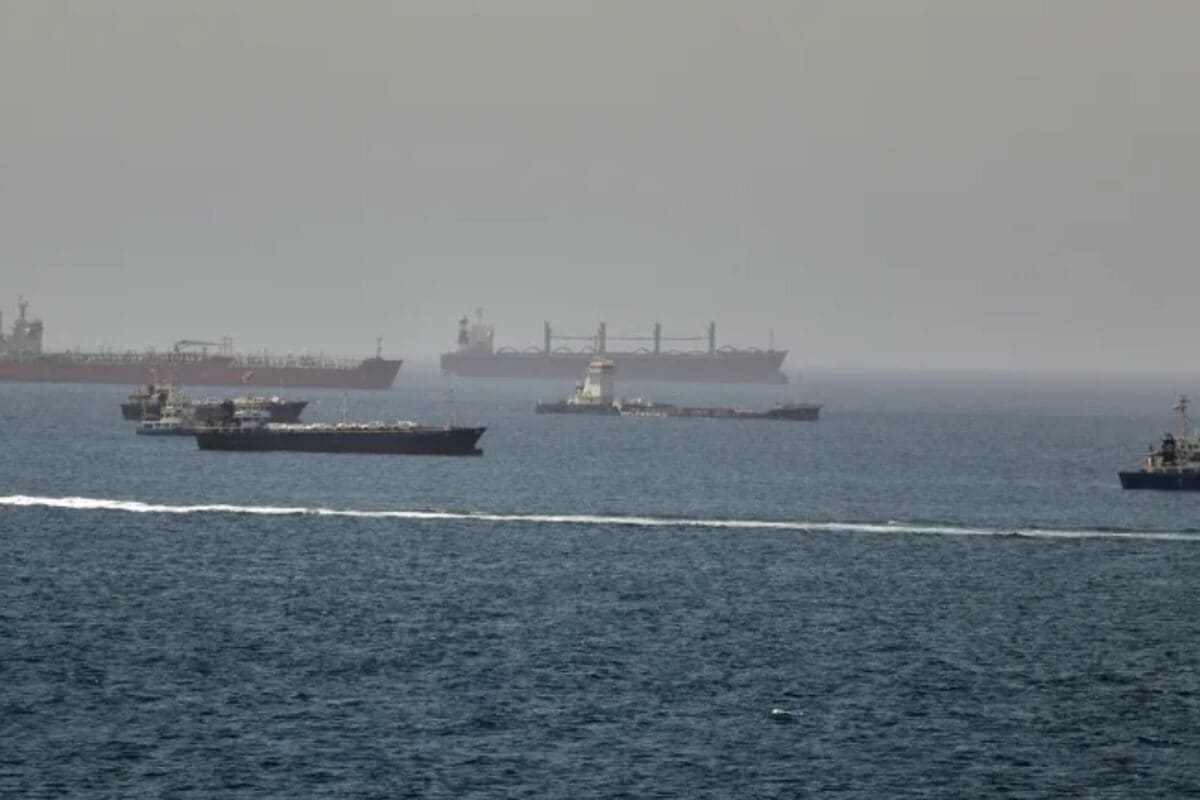
I Want To Break Free: Sanctioned Iranian Supertankers Exit US Navy Blockade In Hormuz Published By, Last Updated: June 17, 2026, 17:59 IST Three Iranian tankers carrying nearly 5 million barrels of crude have cleared the US Navy blockade at Hormuz for the first time in two months ahead of Friday's Geneva signing. Rapid Read Tankers and cargo vessels are seen in the Gulf of Oman, along shipping routes linking the Strait of Hormuz and the Arabian Sea, Tuesday, June 16, 2026. (Image Courtesy: Associated Press) Three Iranian tankers carrying close to five million barrels of crude oil cleared the US Navy blockade perimeter in the Strait of Hormuz this week, the first outbound shipments in two months, as the shipping industry braced for a formal US-Iran peace deal signing in Geneva on Friday. Two supertankers, Diona and Hero 2, both owned by the Iranian Tanker Company and both under US sanctions, passed through the blockade line carrying a combined 3.8 million barrels of Iranian crude, according to shipping data from analytics firm Kpler.
A third Iran-linked tanker carrying one million barrels cleared the perimeter on Wednesday. The context is rather relevant here. Washington and Tehran signed a Memorandum of Understanding on Monday to end nearly four months of conflict. A formal signing ceremony is scheduled for Friday in Geneva. The Wall Street Journal reported Tuesday that the United States will allow Iran to resume oil and fuel sales immediately upon signing, in exchange for Tehran’s commitment to curb its nuclear programme. Sanctions waivers covering Iran’s oil exports are expected to follow. “Their apparent departure from the blockade suggests that other Iranian-trading tankers are also preparing to resume trading," said Michelle Wiese Bockmann, senior maritime intelligence analyst at Windward. The Hormuz strait, through which roughly a fifth of global oil supply passed before the war, has been effectively shut for the duration of the conflict. US forces blockaded Iranian ports, while Iran targeted vessels linked to nations it deemed adversarial, stranding hundreds of ships and tightening global energy markets for months. The maritime industry is watching the exits with a good deal of scepticism.
Lloyd’s List Intelligence said the sector is treating the development “with something closer to wary disbelief than celebration." Insurers are holding war-risk premiums firm, demanding “solid evidence" that the waterway will remain safe. A client note from Lloyd’s analysts on Tuesday described the anticipated reopening as “a fragile reprieve rather than a return to normality." Some very large crude carrier owners are positioning for a first-mover advantage. Dozens of VLCCs are sailing from the South China Sea and across the Indian Ocean toward UAE ports, where at least 30 ships were already anchored as of Wednesday, per Windward. But most owners are holding back. Tim Wilkins, managing director of tanker association Intertanko, said the US Navy had reminded the industry that “nothing has changed and will not until the agreement is signed." The backlog is significant. Kpler estimates 118 laden tankers could exit the region within 15 days of a signed deal, though analysts expect the post-deal surge to be a single discrete event rather than a durable return to normal traffic volumes.
“Most shipowners appear to be cautiously awaiting more details before planning new transits of the Strait of Hormuz," said Niels Rasmussen, chief shipping analyst at BIMCO. “They will seek reassurance that transits are not only permitted but also safe before sending their ships through the strait." News18 Newsletter Handpicked stories, in your inbox A newsletter with the best of our journalism submit About the Author Anoshito Banerjee Anoshito Banerjee is a digital journalist at CNN-News18, specialising in Indian foreign policy, global diplomacy, South and West Asian geopolitics, and strategic affairs. His reporting spans hard news... Read More Location: Tehran, Iran First Published: June 17, 2026, 17:59 IST News world I Want To Break Free: Sanctioned Iranian Supertankers Exit US Navy Blockade In Hormuz Disclaimer: Comments reflect users’ views, not News18’s. Please keep discussions respectful and constructive. Abusive, defamatory, or illegal comments will be removed. News18 may disable any comment at its discretion. By posting, you agree to our Terms of Use and Privacy Policy Loading comments...
 The BriefWire