Hardliners, Reformists And IRGC: How Iran’s Power Blocs View The Deal With US
Hardliners, Reformists And IRGC: How Iran’s Power Blocs View The Deal With US Published By, Last Updated: June 17, 2026, 15:24 IST The agreement has
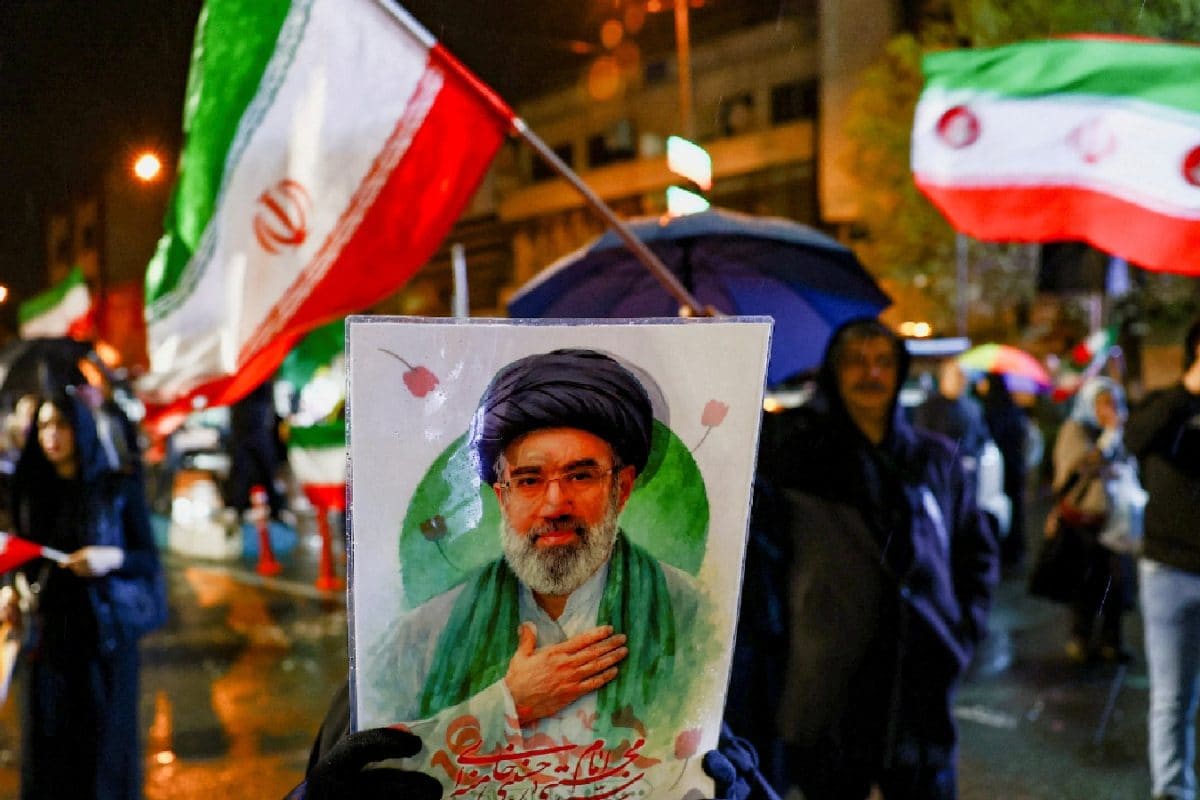
Hardliners, Reformists And IRGC: How Iran’s Power Blocs View The Deal With US Published By, Last Updated: June 17, 2026, 15:24 IST The agreement has split Iran’s establishment between those demanding continued resistance and those prioritising stability, sanctions relief and survival. Rapid Read A woman holds a poster depicting Iran’s Supreme Leader Mojtaba Khamenei during an anti-U.S. and anti-Israeli rally. (IMAGE: REUTERS/File) The US-Iran memorandum of understanding may have stopped the fighting, but it has opened a political battle inside Iran over how far it should compromise, what it must preserve and who will control the deal’s implementation. The agreement is expected to be signed in Switzerland on Friday. Hardliners have denounced it as surrender, while the government, reformists and pragmatic figures in the security establishment argue that a settlement is necessary to avoid prolonged war and economic collapse. Where Does Mojtaba Khamenei Stand? Supreme Leader Mojtaba Khamenei has neither publicly endorsed nor rejected the deal. He has not appeared in public since reportedly being wounded in the February 28 air strike that killed his father, Ayatollah Ali Khamenei. His position has instead been conveyed through written statements attributed to him. These have focused on maintaining control over the Strait of Hormuz and protecting Iran’s nuclear and missile programmes as “national assets" that must not be surrendered. His silence has allowed rival factions to interpret his position differently. The ultraconservative Keyhan newspaper suggested that Khamenei’s failure to mention the nuclear programme since taking office could mean Tehran considers the matter closed. “We are at a critical juncture in the history of the West Asia region, so there is no room for weakness or error, and no one has the right to undermine or, God forbid, surpass the red lines of the supreme leader," Keyhan wrote. The deal’s progress despite Khamenei’s absence has also fuelled speculation that a more collective power structure is emerging around senior political, military and security officials. Parts Of The IRGC Backing The Deal The Islamic Revolutionary Guard Corps (IRGC) remains central to Iran’s power structure despite losing several senior officials during the war. Its leaders have repeatedly said Iran is prepared to resume military operations, but have largely avoided directly attacking the agreement.
Their main concern appears to be ensuring that Tehran does not abandon Hezbollah, the Houthis and other members of the “axis of resistance". Esmail Qaani, commander of the Quds Force, also backed Parliament Speaker Mohammad Bagher Ghalibaf and other negotiators after they came under attack from hardliners. Ghalibaf, a former IRGC commander, represents the pragmatic conservative wing. He has argued that Iran cannot militarily destroy the US or Israel because they are much stronger, but may still secure a beneficial agreement by preserving gains made during the conflict. The Supreme Security Council has also endorsed the understanding. Its secretary, IRGC General Mohammad Bagher Zolghadr, had earlier insisted that Tehran would not retreat, but the council ultimately ratified and announced the deal. This suggests that influential sections of the security establishment see diplomacy not as reconciliation with Washington, but as a tactical step to protect the system. Why Hardliners Oppose The Agreement The strongest opposition has come from the Paydari Front and figures associated with Saeed Jalili. This camp has long opposed engagement with the West and presents itself as a defender of the principles of the 1979 revolution. Its members argue that Iran must not make major concessions on its nuclear programme, should retain control over Hormuz and must eventually force US troops out of the region. They are also deeply hostile to US President Donald Trump, whom they hold responsible for supporting the war that killed Ayatollah Ali Khamenei and for ordering the 2020 assassination of Quds Force commander Qassem Soleimani. Hardline lawmaker Mahmoud Nabavian warned that accepting the agreement would effectively turn Iran into “a colony of the United States". He also criticised provisions related to Hormuz, arguing that they would weaken one of Tehran’s most important strategic levers. The backlash has spilled into the streets. Protesters in Tehran demanded the resignations of Foreign Minister Abbas Araghchi and Ghalibaf, chanting: “Ghalibaf, Araghchi — what about my Leader’s blood?" Some demonstrators called for their execution, while opponents launched a “we will not accept" campaign. Hardline media have amplified the criticism. Keyhan has portrayed the agreement as capitulation, while Khorasan has described it as a temporary pause rather than peace.
Other conservative outlets have argued that Iran must remain prepared for renewed conflict. Can The Hardliners Stop The Deal? Despite the backlash, analysts believe hardliners are unlikely to derail the agreement. Arash Azizi, an Iran analyst and author, argues that the Islamic Republic is shifting towards a more pragmatic, though still authoritarian, collective leadership focused on regime survival. “They are authoritarian and they’re thugs, to be clear. But they care about keeping their own economic interests, which means social peace as much as they can, and which means deals with the US," Azizi told Iran International. The inability of Jalili’s faction to block the agreement may be as important as its criticism. It indicates that real decision-making power may currently lie with a grouping centred on Ghalibaf, the IRGC leadership and the Supreme Security Council. Similar opposition emerged during negotiations for the 2015 nuclear agreement, when hardliners attacked then-President Hassan Rouhani and Foreign Minister Mohammad Javad Zarif. Why Pezeshkian And Reformists Support It President Masoud Pezeshkian’s government has lost influence as hardline institutions have gained greater control over security policy. Even so, Pezeshkian remains the legal head of the Supreme Security Council and supports negotiations. He has said Iran needs to end the damaging state of “no war, no peace" with the US. Foreign Minister Abbas Araghchi has also backed a settlement that protects Iranian interests and delivers sanctions relief. Reformists and moderates, including former Presidents Hassan Rouhani and Mohammad Khatami and former Foreign Minister Javad Zarif, have supported the diplomatic process. Although largely sidelined from power, they argue that ending hostilities and reopening the economy are essential to prevent deeper instability. “Now is the time for the united support of the people – both supporters and critics of the system – to unite in supporting the negotiations and the negotiators, and to move towards an agreement, lasting peace, and a life free from fear and war," Khatami said. Reformist and moderate outlets, including Shargh, Etemad and Khabar Online, have presented the agreement as an effort to end the war, ease economic pressure and restore stability. Some supporters argue that it may be better for Iran than the 2015 accord because Tehran has retained strategic leverage, particularly over the Strait of Hormuz.
Could The Bigger Fight Begin After Sanctions Relief? A deeper conflict could emerge if sanctions relief releases resources for Iran. Moderates and government officials are likely to press for reconstruction and economic recovery. Hardline sections of the IRGC may instead demand that funds be used to rebuild Iran’s military, nuclear capabilities and regional network. “There will be those who want to use resources toward economic rebuilding, but there will be a very hardened IRGC contingent … who are going to want to rebuild their military, rebuild the nuclear program, and rebuild the terror apparatus," Jason Brodsky, policy director at United Against Nuclear Iran, told Iran International. That struggle may determine whether the agreement produces a lasting shift in Iranian policy or merely gives Tehran time to restore its strategic strength. For now, Iran’s factions appear united on one objective: preserving the Islamic Republic. Hardliners believe survival requires resistance and minimal concessions. Pragmatic conservatives see a limited deal as necessary to avoid a war Iran may not be able to sustain. Reformists and moderates see diplomacy and economic reopening as the only viable route to stability. News18 Newsletter Handpicked stories, in your inbox A newsletter with the best of our journalism submit About the Author Karishma Jain Karishma Jain, Chief Sub Editor at News18.com, writes and edits opinion pieces on a variety of subjects, including Indian politics and policy, culture and the arts, technology and social change. Follo... Read More First Published: June 17, 2026, 15:24 IST News world Hardliners, Reformists And IRGC: How Iran’s Power Blocs View The Deal With US Disclaimer: Comments reflect users’ views, not News18’s. Please keep discussions respectful and constructive. Abusive, defamatory, or illegal comments will be removed. News18 may disable any comment at its discretion. By posting, you agree to our Terms of Use and Privacy Policy Loading comments...
 The BriefWire