Death Knell For Quad? Why Pentagon's Move To Drop 'Indo' From Pacific Command Has India Watching
Death Knell For Quad? Why Pentagon's Move To Drop 'Indo' From Pacific Command Has India Watching Published By, Last Updated: June 17, 2026, 14:56 IST
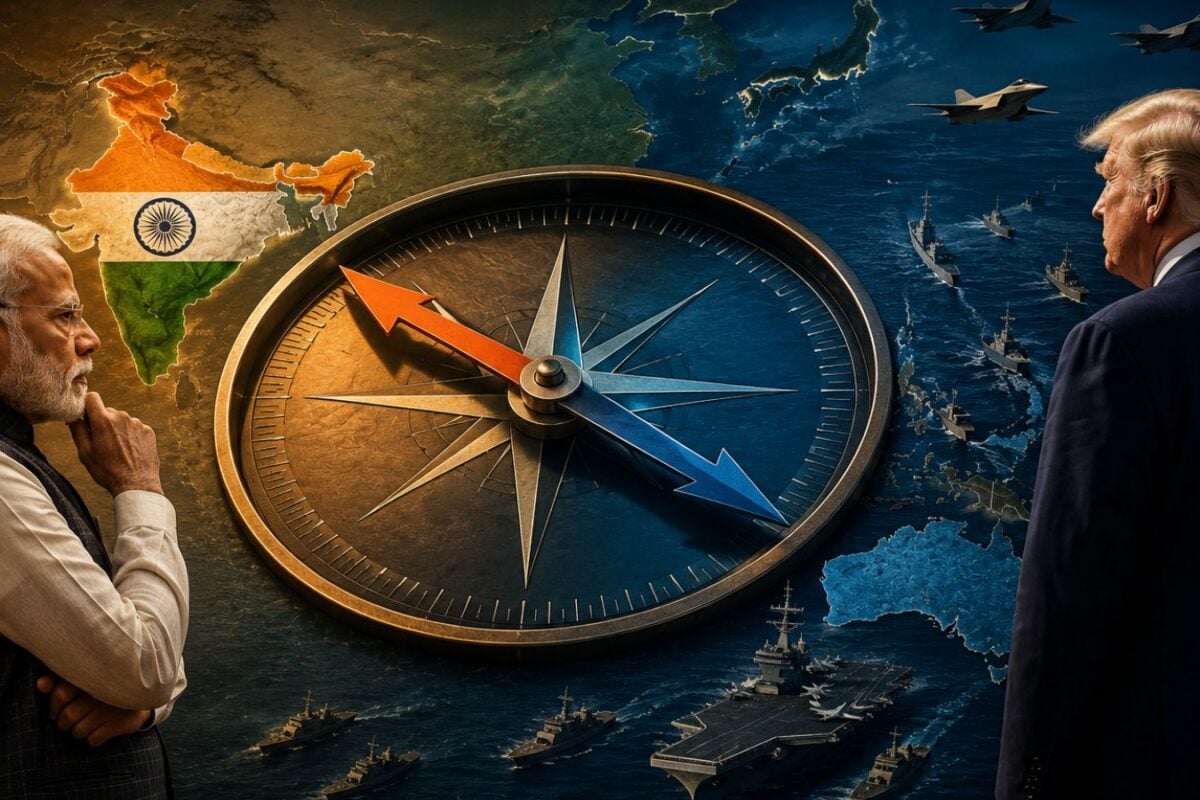
Death Knell For Quad? Why Pentagon's Move To Drop 'Indo' From Pacific Command Has India Watching Published By, Last Updated: June 17, 2026, 14:56 IST The symbolism has sparked unease in India because the original renaming was never just about geography; it was about strategy Rapid Read Dropping “Indo” risks creating the impression that India is no longer as central to US strategic messaging as it was during the first Trump administration. (AI-Generated Image) When Congress MP Shashi Tharoor reacted to the Pentagon’s decision to drop “Indo" from the name of its largest military command, he did so with a pointed question—“One more nail in the coffin of the Quad?" The remark came after the United States announced that the US Indo-Pacific Command (USINDOPACOM) would once again be known as the US Pacific Command (USPACOM), reversing a high-profile 2018 decision that had elevated India’s role in American strategic thinking. One more nail in the coffin of the Quad? Shashi Tharoor (@ShashiTharoor) June 17, 2026 American officials insist the change is merely about “restoring legacy" and does not alter the command’s responsibilities. Yet the symbolism has sparked unease in India because the original renaming was never just about geography; it was about strategy. Why The Word ‘Indo’ Was Added In 2018, then US Defence Secretary Jim Mattis announced that the Pacific Command would become the Indo-Pacific Command.
At the time, the Pentagon explicitly said the move recognised the growing connectivity between the Indian and Pacific Oceans and India’s increasing importance in American strategic calculations. The change was widely interpreted as a signal that India had become central to Washington’s vision for Asia. The term “Indo-Pacific" soon became the organising principle behind the Quad, the four-country grouping comprising India, the United States, Japan and Australia. The message was clear: the security of the Indian Ocean and the Pacific Ocean could no longer be separated, and India would be a key player in balancing China’s rise. Why Critics See A China Signal The concern among some strategic observers is not the name change itself but what it may reveal about Washington’s evolving priorities. Over the past year, there have been growing signs that the Trump administration is exploring a more transactional relationship with Beijing amid economic pressures and multiple global crises. US President Donald Trump’s meeting with his Chinese counterpart Xi Jinping had grabbed eyeballs last month and shone the spotlight on their growing friendship, even if no concrete decisions were made. Against that backdrop, dropping “Indo" risks creating the impression that India is no longer as central to US strategic messaging as it was during the first Trump administration. For countries such as India, Japan and Australia, symbolism matters because it often foreshadows larger policy shifts.
If “Indo-Pacific" was the language of balancing China, critics ask whether a return to “Pacific Command" signals a narrowing of that ambition. Beginning Of The End For The Quad? Probably not. The Quad today is much larger than a military command’s name. It has evolved into a framework covering maritime security, critical technologies, supply chains, infrastructure, cyber security and diplomatic coordination. Regular leaders’ summits and foreign ministers’ meetings continue to provide institutional momentum. More importantly, the strategic reasons that led to the Quad’s revival have not disappeared. China remains the dominant security concern for all four members, and none of them has signalled any intention to walk away from the grouping. That is why even many analysts who find the Pentagon’s move puzzling stop short of describing it as a fatal blow to the Quad. Why India Is Watching Closely The bigger concern for New Delhi is what the move says about India’s place in American strategy. The original Indo-Pacific concept elevated India from being a regional power in South Asia to being a central pillar of the US-led security architecture in Asia. Removing “Indo" does not automatically change military deployments, defence agreements or intelligence cooperation. But it does raise uncomfortable questions. Is Washington simply restoring an old military designation? Or is it subtly moving away from the strategic framework that gave India a starring role in American thinking about Asia?
For now, there is no evidence of any concrete rollback in defence cooperation. The Pentagon continues to work closely with India, and military engagement remains extensive. Yet in geopolitics, symbols often matter because they reveal how governments want the world to see their priorities. That is why a single word has suddenly become the subject of such intense debate. News18 Newsletter Handpicked stories, in your inbox A newsletter with the best of our journalism submit About the Author Apoorva Misra Apoorva Misra is a News Editor at News18.com with a keen interest in politics and current affairs. She loves uncovering fresh angles and telling stories through long-form features and explainers. Foll... Read More First Published: June 17, 2026, 14:51 IST News explainers Death Knell For Quad? Why Pentagon's Move To Drop 'Indo' From Pacific Command Has India Watching Disclaimer: Comments reflect users’ views, not News18’s. Please keep discussions respectful and constructive. Abusive, defamatory, or illegal comments will be removed. News18 may disable any comment at its discretion. By posting, you agree to our Terms of Use and Privacy Policy Loading comments...
 The BriefWire