India Actually Qualified For A FIFA World Cup - And Then Walked Away. Here's What Really Happened
India Actually Qualified For A FIFA World Cup - And Then Walked Away. Here's What Really Happened Published By, Last Updated: June 17, 2026, 12:13
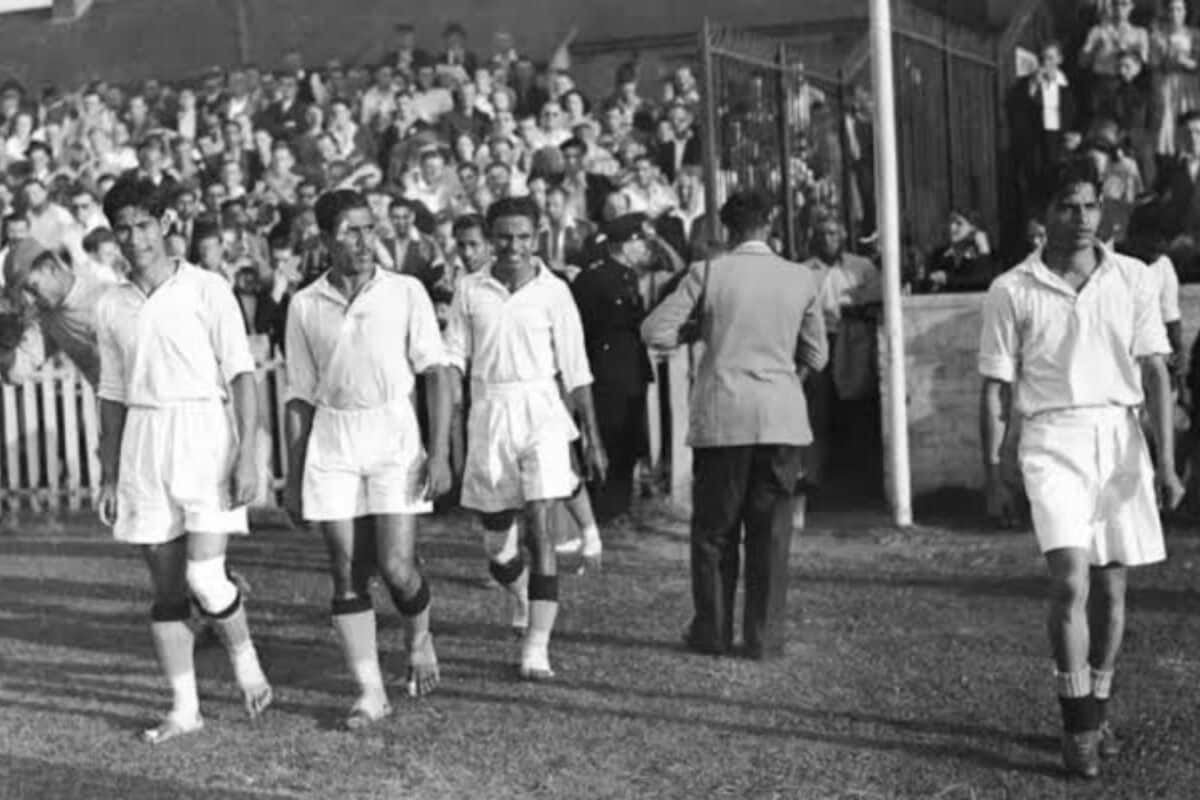
India Actually Qualified For A FIFA World Cup - And Then Walked Away. Here's What Really Happened Published By, Last Updated: June 17, 2026, 12:13 IST India qualified for the 1950 FIFA World Cup after Asian withdrawals but pulled out, citing costs and logistics, missing a chance that might have changed Indian football history. Rapid Read India in their first International football match (AIFF/X) For decades, Indian football fans have grown up hearing that India never qualified for the FIFA World Cup. While technically true in terms of participation, the full story is far more intriguing. In fact, India did qualify for the 1950 FIFA World Cup in Brazil, only to withdraw before the tournament began. The episode remains one of the most debated chapters in Indian sporting history and continues to fuel discussions about what might have happened had the team taken the field on football’s biggest stage. How India ‘Qualified’ For World Cup? India’s route to the 1950 World Cup was highly unusual. The qualification process in Asia was heavily affected by withdrawals in the aftermath of World War II. Teams including Burma, Indonesia and the Philippines pulled out of the qualifiers, leaving India as the only remaining nation in their group.
As a result, India secured a place in the tournament without playing a single qualifying match. At the time, Indian football was in a promising phase. Under the guidance of coach Syed Abdul Rahim, the national team was beginning to establish itself as a competitive force in Asia. Talented players such as Sailen Manna, Ahmed Khan and Mewalal were emerging, and football enjoyed immense popularity in cities like Kolkata, Hyderabad and Bangalore. Yet despite earning a World Cup berth, India never made the journey to Brazil. Why India Did Not Play World Cup? One of the most widely circulated explanations is that FIFA refused to allow Indian players to compete barefoot. Many Indian footballers were indeed accustomed to playing without boots, and this story has become part of football folklore. However, historians and football researchers have since pointed out that the reality was far more complex. Financial difficulties played a major role. The cost of travelling from India to Brazil in 1950 was enormous, and the national federation lacked sufficient resources to fund the trip. There were also logistical challenges associated with the lengthy voyage.
In addition, the World Cup did not carry the same prestige it enjoys today. For Indian football administrators, events such as the Olympics were often regarded as more important and as offering greater visibility. The federation eventually informed FIFA that India would not participate. Their withdrawal opened the door for another nation to take their place in the tournament. Biggest Mistake In Indian Football History? The decision remains one of the great “what if" moments in Indian sporting history. While there is no guarantee India would have made a significant impact in Brazil, participation alone could have transformed the trajectory of football in the country. Exposure to elite international competition might have accelerated development, attracted greater investment and inspired future generations. Instead, the opportunity slipped away. India went on to enjoy success in Asia during the 1950s and 1960s, including a gold medal at the 1951 Asian Games and another at the 1962 Asian Games, but a World Cup appearance never materialised. More than seven decades later, India still awaits its FIFA World Cup debut. Yet the story of 1950 serves as a reminder that the nation once stood on the threshold of football’s grandest stage.
Qualification was achieved, the opportunity was real, and for a brief moment, India was part of World Cup history before choosing not to take part. The rest, as they say, is history. News18 Newsletter Handpicked stories, in your inbox A newsletter with the best of our journalism submit About the Author Ritayan Basu Ritayan Basu, Senior Sub-Editor, Sports at News18.com. Has been covering domestic and and international football for over a decade. Has played and covered badminton. Ocassionally writes cricket conten... Read More First Published: June 17, 2026, 12:13 IST News sports football India Actually Qualified For A FIFA World Cup - And Then Walked Away. Here's What Really Happened Disclaimer: Comments reflect users’ views, not News18’s. Please keep discussions respectful and constructive. Abusive, defamatory, or illegal comments will be removed. News18 may disable any comment at its discretion. By posting, you agree to our Terms of Use and Privacy Policy Loading comments...
 The BriefWire