Where Did Monsoon Go? Why A Rare June Pause In Central And Western India Has Weathermen Worried
Where Did Monsoon Go? Why A Rare June Pause In Central And Western India Has Weathermen Worried Published By, Last Updated: June 17, 2026, 11:57
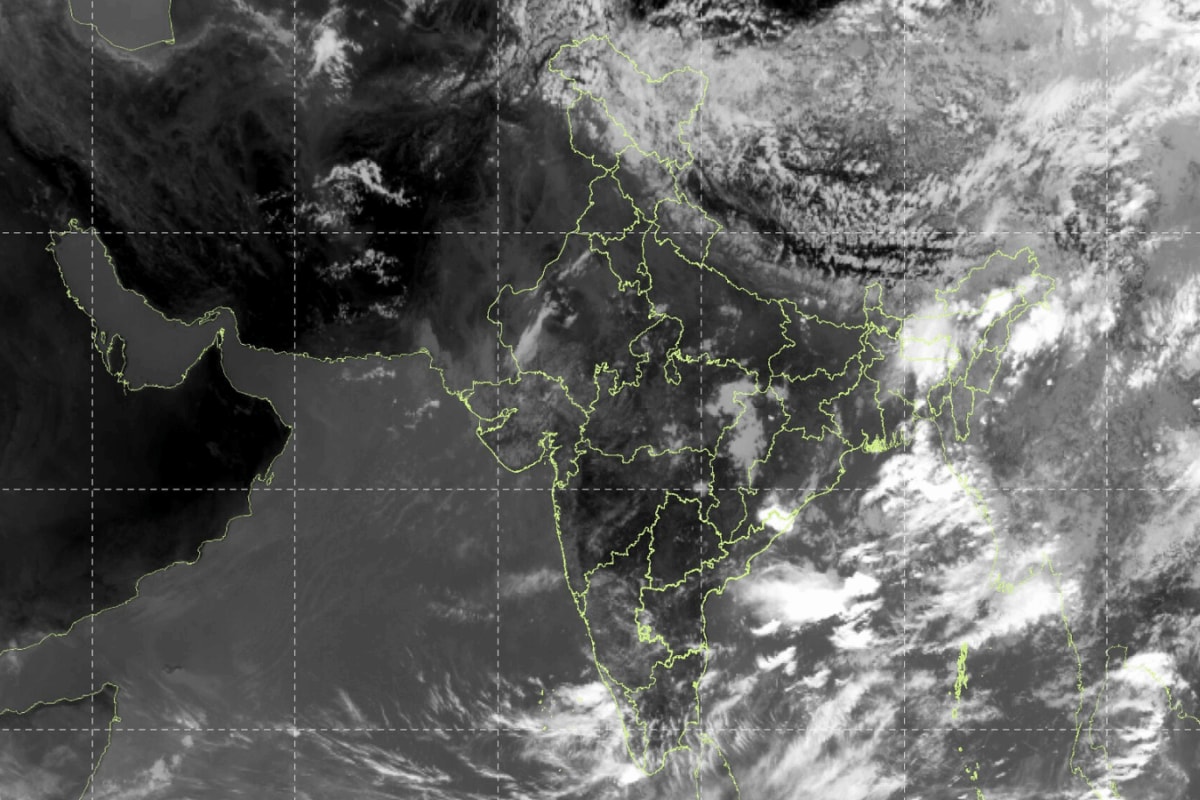
Where Did Monsoon Go? Why A Rare June Pause In Central And Western India Has Weathermen Worried Published By, Last Updated: June 17, 2026, 11:57 IST Fresh satellite images show large parts of central, western and peninsular India are missing the dense cloud bands normally associated with an active monsoon. Rapid Read The satellite map on the IMD website shows almost no clouds over central and northwestern India. (Image: IMD) Just days ago, India’s southwest monsoon appeared to be racing ahead of schedule. Today, satellite images are showing something entirely different: vast swathes of the country with barely any monsoon cloud cover. Fresh imagery from European weather satellite Meteosat, US weather agency NOAA and ISRO’s INSAT-3DS satellite has revealed an unusual picture for mid-June – large parts of central, western and peninsular India are missing the dense cloud bands normally associated with an active monsoon. The images have become the most visible symbol of what meteorologists are calling a significant pause in the monsoon’s advance. The slowdown has already translated into worrying numbers on the ground. According to the India Meteorological Department (IMD), Central India recorded a rainfall deficit of around 65 per cent between June 4 and June 16, making it the worst-hit meteorological region in the country. Several districts across Maharashtra, Madhya Pradesh, Chhattisgarh and adjoining areas have received little or no meaningful monsoon rainfall during a period that is crucial for kharif sowing. A Monsoon That Started Strong The current pause is particularly striking because the season began with remarkable speed. The southwest monsoon officially reached Kerala on June 4, three days later than the normal onset date of June 1.
Within days, it advanced rapidly over large parts of southern India, the Arabian Sea and the Bay of Bengal region. By the second week of June, the monsoon had covered Kerala, Tamil Nadu, Karnataka, Goa, parts of Maharashtra, Telangana, Andhra Pradesh, Odisha, West Bengal, Bihar and much of the Northeast. Then, it stalled. Weather reports indicate that the monsoon’s northern and western advance has remained largely frozen for over a week. In Maharashtra, the monsoon has been stuck around the Solapur region since June 8. Vidarbha, which usually expects monsoon arrival by around June 15, is still waiting, while parts of Uttar Pradesh are now expected to receive monsoon five to ten days later than normal. Where Is Monsoon Now? As of mid-June, monsoon has covered most of southern India and eastern India but has struggled to push deeper into central and northwestern parts of the country. The delay is being felt across Vidarbha, large parts of central Maharashtra, sections of Madhya Pradesh, and parts of north India. Lucknow, which normally sees monsoon onset around June 23, is expected to receive it only towards the end of June or early July. Similar delays are being watched in neighbouring regions of Uttar Pradesh and central India. Meteorologists currently expect the next significant phase of monsoon advancement only during the latter half of June if favourable weather systems develop over the Bay of Bengal. Why Has Monsoon Suddenly Slowed? The biggest reason is the absence of strong low-pressure systems over the Bay of Bengal. Normally, June witnesses the formation of low-pressure areas that act as engines for monsoon circulation. These systems pull moisture inland and help the monsoon move westward and northward.
This year, such systems have largely been missing. At the same time, the monsoon trough – the low-pressure belt that supports widespread rainfall across northern and central India – has remained weak. Meteorologists have also pointed to western disturbances over north India, which have disrupted the normal monsoon flow. The El Nino Effect Another factor looming over the season is El Nino. The IMD has warned that moderate-to-strong El Nino conditions are expected during the June-September monsoon season. Historically, El Nino years tend to suppress rainfall over India by weakening the moisture-bearing circulation that drives the monsoon. The Indian Ocean Dipole, another important climate driver, is currently expected to remain neutral, offering little support to offset El Nino’s influence. Why Are Some Parts Of India Still Getting Rain? The apparent contradiction is because not all rain during June comes from an active monsoon. Several parts of eastern India, the Northeast and even pockets of central India have continued to receive scattered showers due to local thunderstorms, moisture-laden troughs and regional weather systems. For example, rainfall reported recently in Nagpur and parts of Vidarbha was linked to local convective activity and moisture incursions rather than a fully established monsoon current. Similarly, the Northeast continues to receive substantial rainfall because of its proximity to the Bay of Bengal branch of the monsoon and favourable local topography. This explains why some regions are reporting rain even while national satellite images show a striking absence of widespread monsoon cloud cover. Should India Be Worried Yet? Monsoon rainfall is rarely uniform. India’s rain season often alternates between active and weak phases. Large deficits in June have been erased before by strong rainfall episodes in July.
What concerns meteorologists this time is the combination of factors: stalled monsoon advance, weak cloud cover visible from space, a 65 per cent rainfall deficit across central India, and the emergence of El Nino conditions. For farmers, the next two weeks will be critical. Crops such as paddy, soybean, cotton and pulses depend heavily on timely June and early July rainfall. If the monsoon revives by late June, sowing losses can still be minimised. If the dry spell extends into July, concerns over agriculture, reservoirs and water availability could intensify. For now, India’s monsoon has not disappeared. But satellite images showing an unusually cloud-free subcontinent in the middle of June are a reminder that the country’s most important weather system has suddenly hit the brakes, and millions are waiting for it to start moving again. News18 Newsletter Handpicked stories, in your inbox A newsletter with the best of our journalism submit About the Author Pragati Ratti Pragati is a News Editor at news18.com. Having headed the Business and Viral sections, Pragati now ideates, writes and edits long-form features and articles on national and global affairs. She ensures... Read More First Published: June 17, 2026, 11:57 IST News explainers Where Did Monsoon Go? Why A Rare June Pause In Central And Western India Has Weathermen Worried Disclaimer: Comments reflect users’ views, not News18’s. Please keep discussions respectful and constructive. Abusive, defamatory, or illegal comments will be removed. News18 may disable any comment at its discretion. By posting, you agree to our Terms of Use and Privacy Policy Loading comments...
 The BriefWire