G7 vows new Russia sanctions amid optimism for Ukraine peace
G7 leaders, such as German Chancellor Merz, are sounding more upbeat about the push for peace in Ukraine. The G7 is looking to hit Russia
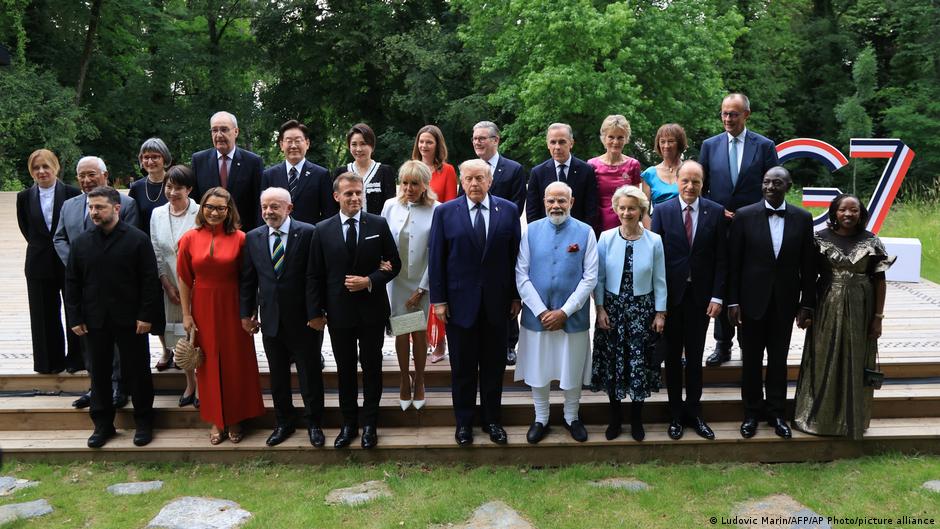
G7 leaders, such as German Chancellor Merz, are sounding more upbeat about the push for peace in Ukraine. The G7 is looking to hit Russia with new energy sanctions as the Strait of Hormuz is expected to reopen. The leaders of the Group of Seven (G7) vowed to increase pressure on the Russian economy in a statement published on Wednesday morning. "To support and accelerate this new momentum, we agree to increase the delivery of air defense capacities, additional systems and interceptors, and long-range capabilities," the leaders' statement read. The leaders committed to increasing "the pressure on the Russian war economy. In this context, we will strengthen our sanctions, including those on the oil and gas sectors." "We consider this the right moment to proceed with additional measures, as President Trump has delivered a deal that we support in reopening the Strait of Hormuz," the statement continued. The statement rounded out the upbeat sentiment that played out on Tuesday when the leaders of the G7 kicked off their first official agenda, discussing Ukraine at the top of the meeting. Emmanuel Macron, the host of this year's meeting, had made clear that Ukraine was top of the G7 agenda by inviting Ukrainian President Volodymyr Zelenskyy as a special guest to the summit.
Zelenskyy and Macron at the G7 summit Image: Yoan Valat/EPA/AP Photo/picture alliance The Trump administration had been occupied with the war in Iran in the last few months. But even before that, his administration had left the job of supporting Ukraine to European allies, with the EU having measured up to the task. The EU is now the biggest financial donor to Ukraine. Zelenskyy and Trump met informally at the summit Image: Ukrainian Presidential Press Service/AFP EU leaders receive some welcome news from Trump Trump said on Tuesday that sanctions on Russia that were eased during the Iran war to help lower oil prices can go back in place as more oil moves through the Strait of Hormuz. Trump also said "Russia should make a deal" to end its war against Ukraine, adding that he was going to do "whatever I can." That was welcome news for European leaders who had come well prepared to tackle questions surrounding support for Ukraine. The top questions at the start of Tuesday, as DW Brussels Bureau Chief Katharina Kroll, were these: How much would Trump support efforts to increase pressure on Russia to finally enter serious peace negotiations?
And how much would Trump acknowledge that there can be no peace deal without the Europeans? Though Trump's comment was welcome news, those questions were still to be answered. G7 leaders at the meeting on Tuesday Image: Dominique Jacovides-Pool/SIPA/picture alliance Trump also said Ukraine war 'has no impact on us' Trump told reporters that "we have nothing to do with" Russia's war against Ukraine. "It has no impact on us, other than we sell weapons" to Ukraine, he said. "We’re thousands of miles away." He said the Iran conflict would soon be "in the rear view," but he was still for now "focused on Iran." EU chief Ursula von der Leyen and Germany's Friedrich Merz express optimism But European leaders expressed optimism given there was some momentum back again on the Ukraine front. The president of the European Commission, Ursula von der Leyen, said on Tuesday the "tide is turning for Ukraine." "The situation in 2026 is very different from 2025. Ukraine is bravely holding the frontline. Russia's fatigue is openly showing," she wrote. DW's Kroll said what she'd been hearing from German government sources was that the G7 agreed that Russia was under heavy pressure and that Ukraine’s situation had clearly improved.
Ukraine's drone warfare, such as its ability to launch long-range drones as it did when it targeted a military facility in St. Petersburg earlier this month, is one major reason that has helped it reverse Russia's gains, experts say. Merz said on Tuesday he had seen Trump in a cooperative mood, telling reporters on Tuesday that "I have a certain optimism that Europeans and Americans [will] do everything to end this war." Merz noted that the US president had no problem with European nations being involved in future peace talks between Ukraine and aggressor Russia. Russia has also continued to fire hundreds of drones and dozens of missiles at Ukraine's biggest cities, with strikes having damaged one of Ukraine's most significant religious and cultural sites overnight into Monday. Material from the Associated Press news agency contributed to the report. Edited by: Wesley Dockery
 The BriefWire