Satellite Images Show How US Is Using An Iranian Smuggling Tactic For Oil Transfer Near Hormuz
Satellite Images Show How US Is Using An Iranian Smuggling Tactic For Oil Transfer Near Hormuz Published By, Last Updated: June 17, 2026, 08:35 IST
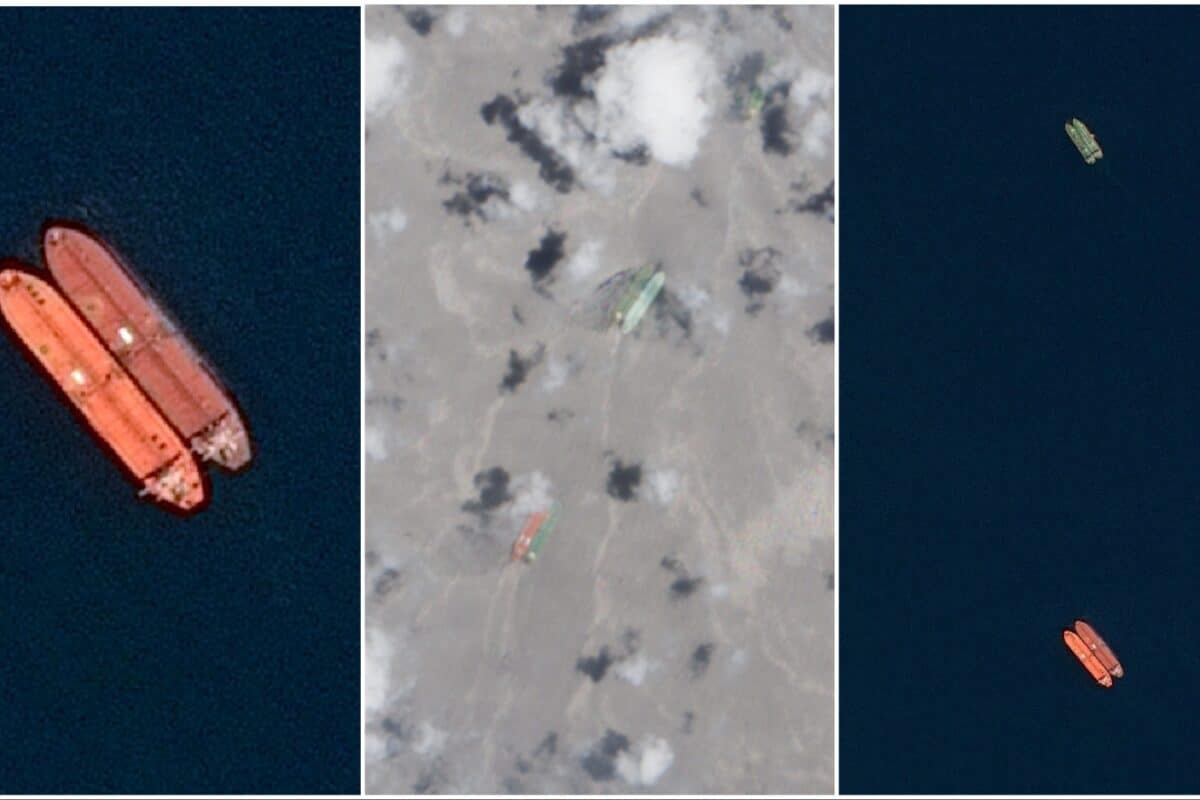
Satellite Images Show How US Is Using An Iranian Smuggling Tactic For Oil Transfer Near Hormuz Published By, Last Updated: June 17, 2026, 08:35 IST Satellite images reviewed by Reuters show a surge in offshore oil transfers near Hormuz, with at least 116 ships involved and an estimated 90 million barrels moved since May. Satellite images show activity in the Gulf of Oman (Reuters) New satellite imagery reviewed by Reuters has revealed the growing scale of a secretive offshore oil transfer operation near the Strait of Hormuz, highlighting a sharp increase in ship-to-ship transfers that the news agency says are being overseen by the United States military to keep Gulf energy exports flowing amid regional tensions. According to Reuters, satellite images taken between May 2 and June 11 show a sprawling network of tankers conducting offshore oil transfers at two locations, one off Fujairah in the United Arab Emirates and another near Oman’s port of Sohar. The imagery offers a visual contrast to normal shipping activity in the region, showing multiple pairs of vessels positioned side by side for extended periods while cargo is transferred between ships.
Reuters reported that on June 9, satellite images showed 12 pairs of ships operating simultaneously in the Gulf of Oman, including eight pairs off Sohar and four near Fujairah. The activity appeared to peak on June 11, when satellite imagery captured 17 pairs of vessels carrying out transfers simultaneously across the two sites. The news agency said at least 116 ships have participated in the operation since early May. The imagery also sheds light on the activity surrounding a US Apache helicopter that was shot down by Iran on June 9. The report mentioned that satellite images from that day showed six pairs of tanker ships clustered in a small area off Sohar. Four sources, including a former US official familiar with the incident, were quoted as saying that the Apache had been involved in the broader mission. However, the report said it could not independently determine the helicopter’s specific role in the transfer operation. A US defence official was quoted as saying that no Central Command forces were participating in an offshore ship-to-ship oil transfer operation.
The operation emerged after Iran effectively closed the Strait of Hormuz in response to the US-Israeli war, disrupting one of the world’s most important energy corridors. Reuters said the transfers are being conducted near the exit of the strait, allowing crude oil, condensate and petroleum products to continue reaching international buyers despite restrictions on normal shipping routes. Drawing on more than a dozen satellite images and shipping data from LSEG and Kpler, the report estimated that at least 90 million barrels of crude oil and petroleum products may have moved through the offshore transfer network since early May. While significant, the report noted that the volume remains small compared with the roughly 20 million barrels that passed daily through the Strait of Hormuz before the conflict. The report said participating tankers travel to designated meeting points before reaching the strait, maintaining distances of around 3,000 to 4,000 metres between vessels. Once beyond an area claimed by Iran, they move alongside larger recipient tankers, often Very Large Crude Carriers (VLCCs), where transfers lasting between 24 and 40 hours take place.
Satellite imagery reviewed by Reuters showed repeated rendezvous between vessels during the period under examination. News18 Newsletter Handpicked stories, in your inbox A newsletter with the best of our journalism submit About the Author Vani Mehrotra Vani Mehrotra is the Deputy News Editor at News18.com. She has more than 10 years of experience in national and international news and has previously worked on multiple desks. First Published: June 17, 2026, 08:35 IST News world Satellite Images Show How US Is Using An Iranian Smuggling Tactic For Oil Transfer Near Hormuz Disclaimer: Comments reflect users’ views, not News18’s. Please keep discussions respectful and constructive. Abusive, defamatory, or illegal comments will be removed. News18 may disable any comment at its discretion. By posting, you agree to our Terms of Use and Privacy Policy Loading comments...
 The BriefWire