A Message Without Naming Names: Decoding PM Modi's 'Safety Of Seafarers' Remarks At G7
A Message Without Naming Names: Decoding PM Modi's 'Safety Of Seafarers' Remarks At G7 Published By, Last Updated: June 17, 2026, 08:16 IST Addressing the
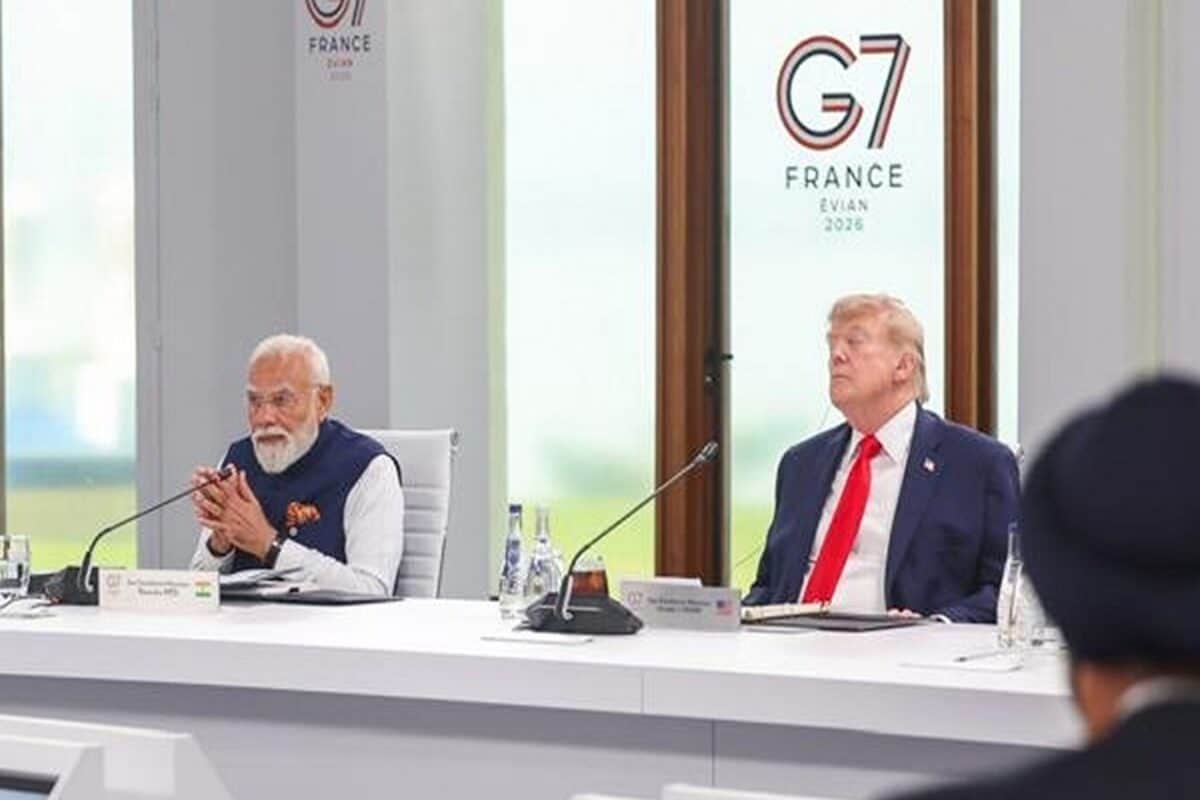
A Message Without Naming Names: Decoding PM Modi's 'Safety Of Seafarers' Remarks At G7 Published By, Last Updated: June 17, 2026, 08:16 IST Addressing the outreach session at G7, PM Modi framed maritime security as a global concern rather than a bilateral dispute. Rapid Read Prime Minister Narendra Modi on Tuesday underscored the importance of "trust" in building international partnerships. while speaking at G7 Summit. (Image: ANI) Prime Minister Narendra Modi did not mention the United States. He did not refer to the deaths of three Indian sailors by name. Nor did he directly accuse any country of endangering merchant shipping. Yet when PM Modi spoke about protecting seafarers and securing maritime routes at the G7 outreach session in France on Tuesday, the message was hard to miss. The remarks came barely days after three Indian sailors were killed in a US military strike on a merchant tanker off the coast of Oman, an incident that prompted India to summon the US chargé d’affaires and issue a formal diplomatic protest. It also came with US President Donald Trump seated among the leaders listening to the proceedings. PM Modi and Trump were seen greeting each other warmly and shaking hands on the sidelines of the summit, underscoring the delicate balance India was attempting to maintain – expressing concern while preserving a crucial strategic partnership. What PM Modi Said At G7 Summit Addressing the outreach session, PM Modi framed maritime security as a global concern rather than a bilateral dispute. He said the world must ensure that maritime routes remain secure and that seafarers can carry out their responsibilities “without fear".
He also stressed that trust is becoming the world’s most valuable strategic asset and called for collective efforts to preserve stability and security. “It is our responsibility to ensure the safety of the seafarers who connect all nations through global maritime trade. We must ensure that maritime routes remain secure and that seafarers can perform their duties without fear," PM Modi said during the session titled “Forging New Partnerships and Rebuilding International Solidarity." The wording was measured. There was no naming and shaming. But the timing and context gave the statement significance. The backdrop was one of the most serious maritime incidents involving Indian nationals in recent years. On June 10, the tanker MT Settebello, carrying 24 Indian crew members, was struck off the Omani coast during US military operations linked to Washington’s blockade of Iran-linked shipping. Twenty-one sailors were rescued, but three Indians lost their lives. The deceased were: Patnala Suresh, Chief Engineer, Aditya Sharma, Deck Cadet, and Shivanand Chaurasia, Engine Fitter. The attack on MT Settebello was not an isolated incident. There were three attacks on three merchant vessels carrying Indian crew members in a span of just three days near Oman. The vessels were identified as MT Marivex, MT Settebello and MT Jalveer. India reacted strongly. The Ministry of External Affairs summoned the senior-most US diplomat in New Delhi and lodged a demarche – a formal diplomatic communication expressing serious concern and protest. New Delhi demanded an end to attacks on merchant vessels and called for dialogue and diplomacy. Against that backdrop, Modi’s G7 remarks were inevitably viewed through the prism of the seafarers’ deaths.
The Art Of Saying Something Without Naming Anyone This is hardly the first time India has chosen strategic ambiguity over direct confrontation. Indian diplomacy has long relied on carefully crafted public messaging, especially when dealing with powerful partners or sensitive geopolitical situations. During The Russia-Ukraine War Perhaps the most famous example came in September 2022 when PM Modi, standing beside Russian President Vladimir Putin at the Shanghai Cooperation Organisation summit, remarked that “today’s era is not of war". The statement did not explicitly criticise Russia, nor did it endorse Western positions. Yet it was interpreted globally as India’s strongest public expression of discomfort with the conflict. PM Modi’s Remarks At The UN On Terrorism At the UN General Assembly in 2022, PM Modi said: “The need of the hour is for the world, for the UN, to take concrete action against those who support, nurture and finance terrorism." Pakistan was not named. But the statement came amid India’s long-running accusations that Islamabad supports cross-border terrorism. Indian diplomats often use this formulation at the UN rather than directly naming Pakistan from the podium. Why PM Modi Avoided Directly Naming The US The United States remains one of India’s most important strategic partners. The two countries cooperate extensively on defence, technology, trade, intelligence sharing and Indo-Pacific security. India and the US are also in the middle of signing the most sought-after trade deal that could define the future of ties between the two countries. A direct public rebuke of Washington at the G7 could have overshadowed broader discussions and complicated ongoing engagements. At the same time, remaining completely silent after the deaths of Indian sailors would have invited criticism at home.
The result was a familiar diplomatic middle path: protest through official channels, issue a demarche, and then use a global platform to emphasise principles rather than directly target a country. More Than A Speech About Ships Viewed in isolation, PM Modi’s call for secure maritime routes may appear routine. Maritime security is a standard talking point at international forums. But speeches are often defined by context. Days earlier, three Indian sailors had died. Three merchant vessels carrying Indian crew had come under attack in quick succession. India had formally protested to Washington. And then, before a gathering that included Trump, PM Modi spoke about protecting seafarers and ensuring they could work without fear. PM Modi never named the United States, and he did not have to. News18 Newsletter Handpicked stories, in your inbox A newsletter with the best of our journalism submit About the Author Pragati Ratti Pragati is a News Editor at news18.com. Having headed the Business and Viral sections, Pragati now ideates, writes and edits long-form features and articles on national and global affairs. She ensures... Read More First Published: June 17, 2026, 08:16 IST News explainers A Message Without Naming Names: Decoding PM Modi's 'Safety Of Seafarers' Remarks At G7 Disclaimer: Comments reflect users’ views, not News18’s. Please keep discussions respectful and constructive. Abusive, defamatory, or illegal comments will be removed. News18 may disable any comment at its discretion. By posting, you agree to our Terms of Use and Privacy Policy Loading comments...
 The BriefWire