From 18% To Zero: How Two Young Lawyers Killed Pakistan's Period Tax
From 18% To Zero: How Two Young Lawyers Killed Pakistan's Period Tax Written By, Last Updated: June 17, 2026, 01:21 IST Legal reformers and reproductive
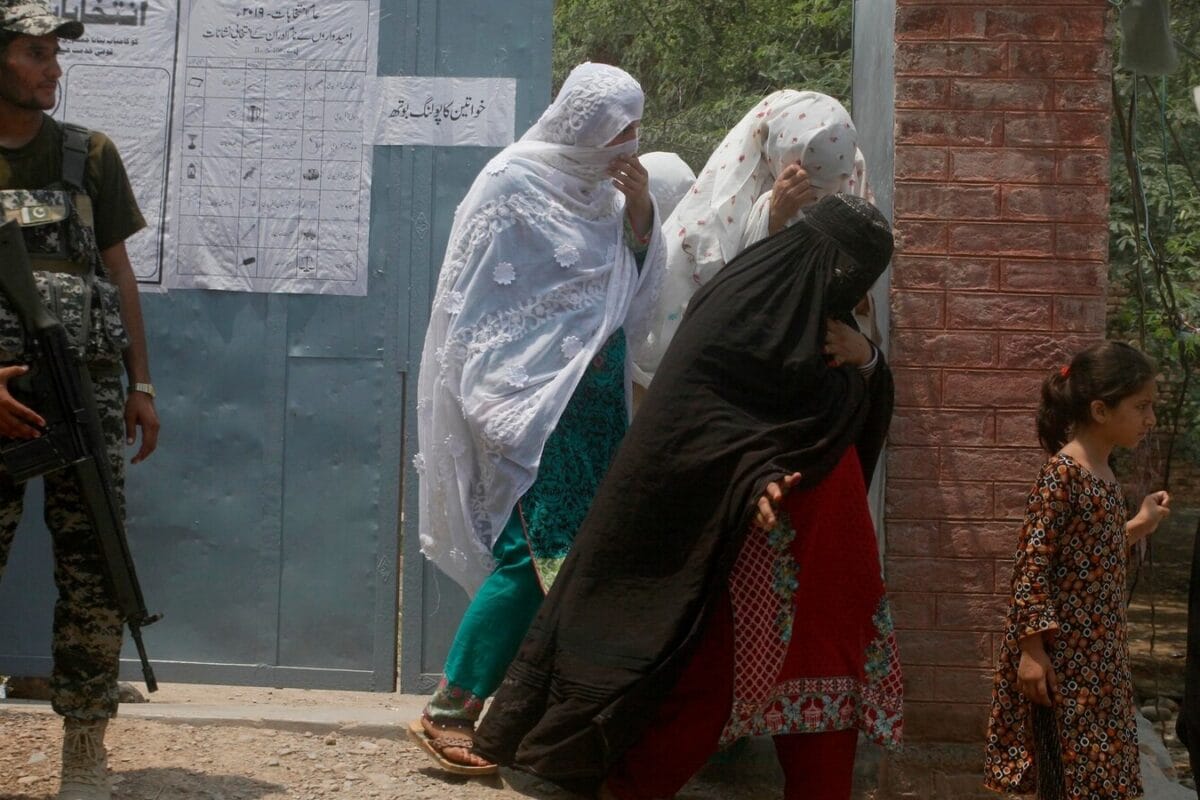
From 18% To Zero: How Two Young Lawyers Killed Pakistan's Period Tax Written By, Last Updated: June 17, 2026, 01:21 IST Legal reformers and reproductive justice advocates spent years challenging the classification of essential menstrual hygiene products as taxable luxury items According to verified data compiled by UNICEF and WaterAid, a staggering 88 per cent of women and adolescent girls across Pakistan currently do not use commercially manufactured sanitary pads. Representational pic/AP The Pakistani government has announced the complete removal of the 18 per cent General Sales Tax (GST) on women’s sanitary products and contraceptives. Unveiled by Finance Minister Muhammad Aurangzeb as a core component of the federal budget for the 2026-27 financial year, the sweeping tax exemption will formally come into effect at the start of the new fiscal cycle on July 1. Information Minister Attaullah Tarar confirmed the legislative change in the Assembly, explicitly characterising the long-overdue removal of the controversial “pink tax" as a vital measure designed to provide immediate economic relief to families grappling with rampant inflation. The policy shift represents a monumental triumph for legal reformers and reproductive justice advocates who have spent years challenging the classification of essential menstrual hygiene products as taxable luxury items.
The breakthrough is widely credited to a landmark constitutional petition filed before the Lahore High Court by twenty-five-year-old lawyer Mahnoor Omer, alongside counsel Ahsan Jehangir Khan, which argued that taxing biological necessities directly violated Article 25 of the Constitution of Pakistan prohibiting discrimination on the basis of sex. Parallel legal campaigns, including a subsequent petition filed in the Sindh High Court, successfully generated an intense national discourse that forced state legislators to reassess their revenue-collection frameworks. Confronting the Severe Reality of Period Poverty Beyond the financial implications, reproductive rights organisations have hailed the absolute removal of the tax for its immense symbolic value in dismantling ubiquitous social taboos. For generations, the stigma surrounding sexual health and menstruation has kept reproductive hygiene entirely off Pakistan’s formal policy agenda. Activists note that codifying this exemption in the national budget serves as an official state acknowledgement that menstrual care is a non-negotiable matter of human dignity, health, and basic educational access for women rather than a commercial indulgence. However, grassroots organisations caution that legislative tax cuts are merely the first step in a protracted battle against deeply entrenched period poverty. According to verified data compiled by UNICEF and WaterAid, a staggering 88 per cent of women and adolescent girls across Pakistan currently do not use commercially manufactured sanitary pads.
Instead, the overwhelming majority—particularly within impoverished rural communities and the lowest economic wealth brackets—are forced to rely on unhygienic old rags, cloth, or improvised alternatives. With a standard pack of commercial pads costing between 450 and 600 rupees, essential hygiene remains an impossible expense for millions of households surviving on average monthly incomes of just 33,000 rupees. Demands Grow for Full Import Tariff Scrapping While the United Nations Women agency and local non-profits like Mahwari Justice have celebrated the zero-rated sales tax, the wider legal and structural battle remains far from over. Strategic analysts point out that local manufacturing plants remain heavily dependent on imported raw materials, which continue to incur separate, prohibitive customs duties and luxury levies that push the total tax burden on final products close to 40 per cent. Concurrently, the elimination of the 18 per cent tax on contraceptives is being positioned by the administration as a critical public health strategy to combat the nation’s alarming population growth rates. As the country transitions into the new fiscal year, civil society groups are actively pressing the federal government to establish strict retail price monitoring mechanisms to ensure that manufacturers pass the full benefit of the tax cuts directly to consumers, while simultaneously advocating for free distribution networks in schools, public transport hubs, and rural healthcare clinics.
News18 Newsletter Handpicked stories, in your inbox A newsletter with the best of our journalism submit About the Author Pathikrit Sen Gupta Pathikrit Sen Gupta is a Senior Associate Editor with News18.com and likes to cut a long story short. He writes sporadically on Politics, Sports, Global Affairs, Space, Entertainment, And Food. He tra... Read More First Published: June 17, 2026, 01:21 IST News world From 18% To Zero: How Two Young Lawyers Killed Pakistan's Period Tax Disclaimer: Comments reflect users’ views, not News18’s. Please keep discussions respectful and constructive. Abusive, defamatory, or illegal comments will be removed. News18 may disable any comment at its discretion. By posting, you agree to our Terms of Use and Privacy Policy Loading comments...
 The BriefWire