‘You can’t die here’: Why this French coastal town issued a bizarre death ban rule that stunned the world
Why Le Lavandou in France issued a “death prohibited” rule The Lavandou Cemetery Plan in France was halted Le Lavandou, France, “death prohibited” order sparks
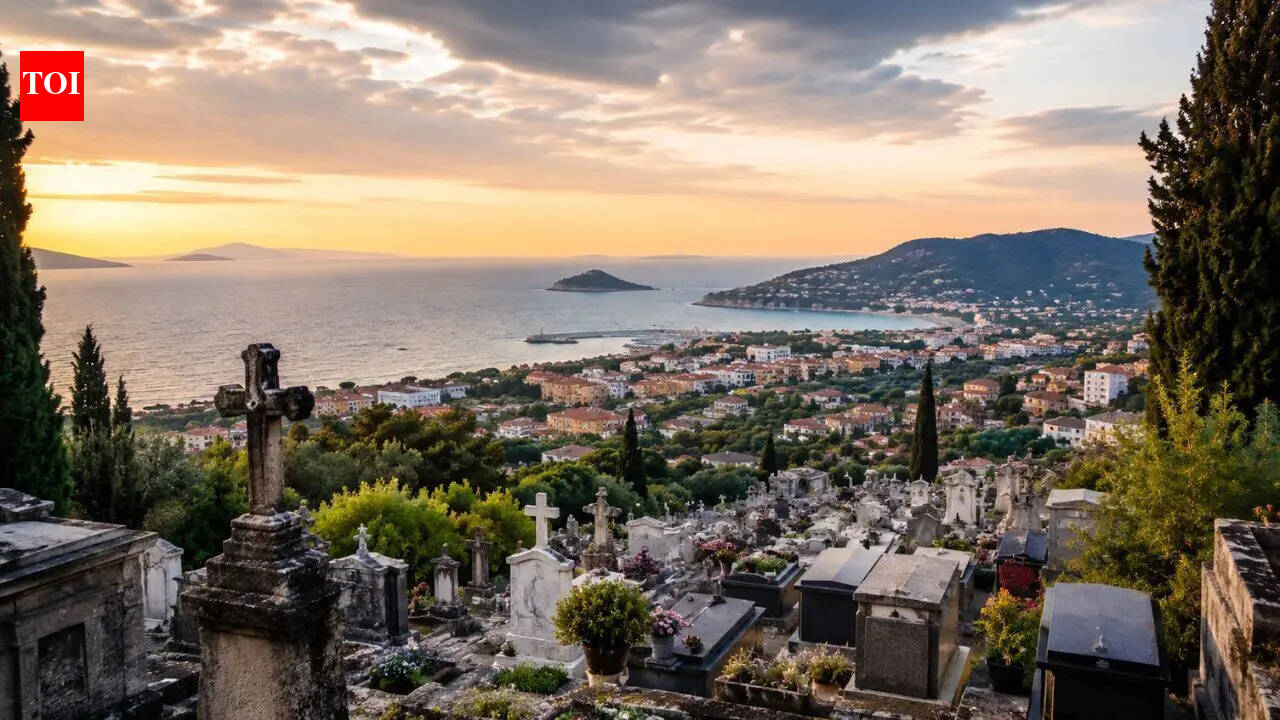
Why Le Lavandou in France issued a “death prohibited” rule The Lavandou Cemetery Plan in France was halted Le Lavandou, France, “death prohibited” order sparks mixed public reaction and debate France’s long relationship with crowded cemeteries The idea sounds like something lifted from satire rather than municipal policy. Yet for years, a handful of French towns became known for issuing decrees that appeared to forbid residents from dying within their boundaries. The orders attracted international attention because of their obvious impossibility. Death, after all, does not wait for administrative approval.Behind the headlines, however, sat a much less absurd problem. Several local authorities found themselves facing an increasingly awkward reality: there was nowhere left to bury people. Cemeteries had filled up, expansion projects had stalled, and legal obligations remained unchanged. What looked like a joke from a distance was, in some places, a public expression of frustration from officials who felt trapped between bureaucracy, land restrictions and the practical demands of caring for the dead.The Mediterranean town of Le Lavandou became one of the best-known examples. As reported by the BBC, Its cemetery had reached capacity, leaving local authorities with very few options when residents died.Existing plots were occupied, available concessions had disappeared, and finding room for new burials was becoming increasingly difficult.The issue was not merely administrative.
French municipalities carry responsibilities when deaths occur within their territory, particularly in cases where families cannot arrange a burial themselves. A shortage of space, therefore, created a situation where civic duties collided with physical reality.The mayor at the time chose an unusual way to draw attention to the problem. A decree announcing that death was effectively prohibited within the commune generated headlines far beyond the region. Few people believed it was intended literally.Long before the decree gained attention, the town had been searching for a solution. Plans were developed for a new burial site overlooking the Mediterranean. Supporters viewed the project as a practical response to a growing shortage of graves.The proposal soon ran into opposition. Environmental groups argued that the chosen location formed part of a protected coastal landscape. What municipal leaders regarded as suitable land for a cemetery was seen by others as an area deserving stronger preservation measures. The disagreement eventually moved into the courts.Judges sided against the development, ruling that the location fell within a category of protected natural space where construction should not proceed.
The decision effectively halted the project and left the town without the expansion it had hoped for.The argument exposed a tension that appears in many parts of France. Local authorities often face pressure to protect natural environments while also providing housing, infrastructure and public services. In Le Lavandou, those competing priorities met in an unexpectedly sensitive area: burial space.Public reaction to the order was mixed. Some treated it as political theatre. Others saw it as a legitimate criticism of a system that offered few immediate solutions.The practical difficulties became impossible to ignore when local officials struggled to find burial arrangements for people who died within the commune. Reports from the period described residents helping one another by offering unused space within family vaults, an act that reflected both community solidarity and the depth of the shortage.Such arrangements could ease individual situations but could not solve the underlying problem. Municipal responsibilities remained, while the available land did not increase. For local authorities, the decree served as a way of forcing attention onto an issue that rarely enters public debate until a crisis emerges.The pressures facing Le Lavandou were unusual in presentation but far from unique.
Questions about burial space have existed in France for generations.Large cities began confronting the issue long before the modern era. During the nineteenth century, rapid urban growth placed increasing demands on cemetery infrastructure. Around Paris, new burial grounds were established beyond the historic centre as existing sites struggled to accommodate rising populations.The challenge has never been purely about population numbers. The structure of French burial concessions has played an important role. For many decades, families could obtain rights that lasted indefinitely. These perpetual concessions meant that plots often remained reserved for generations. Even when graves appeared abandoned or rarely visited, they frequently remained unavailable for new use.The result was a gradual reduction in the number of spaces that could return to circulation.
 The BriefWire