Why women's inheritance reform has stalled across Arab world
Sharia-based inheritance laws continue to disadvantage millions of women across the Middle East. What could prompt real change for the next generation of girls? The
Sharia-based inheritance laws continue to disadvantage millions of women across the Middle East. What could prompt real change for the next generation of girls? The death of her husband pushed 60-year-old Moroccan widow Meryem into a deep crisis. Speaking with Moroccan magazine Egalite Mag in February, she said it wasn't just the sadness over her loss that has made her feel vulnerable. "I find myself alone, facing his family, treated like an enemy even though I built this life with him for 30 years," she said, asking that her last name not be published for fear of retaliation from her late husband's family. Meryem's husband had made a point of providing for her future by purchasing an apartment in her name. But shortly after his death, his relatives claimed in court that the property belonged to them, according to one of the Sharia-based inheritance rules, taasib. Under taasib, in cases where a deceased man leaves daughters but no sons, male relatives inherit substantial portions of the estate alongside the daughters and widow. Eventually, a Moroccan court ruled in Meryem's favor. Her husband had legally and indisputably transferred the apartment to her during his lifetime, which is permitted under Islamic inheritance law. "It's the only thing I have left, and I rent it out for a modest income," said Meryem, adding that all other assets — a car, bank accounts — remain tied up in inheritance disputes. Over the years, Moroccan women have pushed for legal changes as part of the ongoing family code reform launched by King Mohammed VI [FILE: March 2015] Image: Fadel Senna/AFP "We regularly see cases where the husband dies and the wife has to move out of the couple's marital home because the property must be divided among the heirs," said Dörthe Engelcke of the Max Planck Institute for Foreign and International Private Law in Hamburg.
"If widows were allowed to continue living in their marital homes, it would be an incredibly significant change," she told DW, adding that "it would contribute greatly to the social stability of the surviving wives." 'Many women are denied their full inheritance' While governments across the Middle East and North Africa have expanded women's rights in areas such as domestic violence protection, family law and legal autonomy, inheritance reform remains one of the region's most sensitive issues, according to rights advocates and legal scholars. "In general, sons continue to receive twice the inheritance share of daughters because — so the reasoning goes — unlike daughters, sons are expected to provide financially for their families," said Elham Manea, an adjunct professor at the University of Zurich and author of the 2011 book "The Arab State and Women's Rights: The Trap of Authoritarian Governance." "In practice, however, this assumption increasingly does not reflect social reality," she told DW, adding that "many women are denied their full inheritance while also receiving little or no economic support from male relatives." A further argument against changes to inheritance laws is that if women inherited land on equal terms with men, assets may effectively pass outside the family through marriage, said Manea. "Regardless of its empirical validity, this concern has historically played an important role in shaping resistance to reform." In her view, another deeply rooted reason is that the perceived lack of legitimacy of many Arab regimes has led rulers to rely on alliances with conservative tribal, religious or Islamist actors as part of broader strategies of political survival. "As a result, progress has been gradual, not because reform is impossible, but because it is intertwined with questions of regime stability, political legitimacy and state-society relations," she said.
"Family law is not merely a legal issue; it is deeply political." Women's activists are now better organized, but observers warn this won't be enough to push for change Image: Dobiey/Caro/picture alliance Amel Hammami, a Warsaw-based Tunisian law expert and Mideast observer, highlighted the two different sets of rules in the Quran. "Religious rules govern the relationship between Allah and people, and they cover devotions such as prayer, pilgrimage and fasting," she said. "These rules are irrevocable and immutable." However, the second set of rules governs relations between people, such as inheritance law, family law and penalties, Hammami said. In her view, modifying inheritance law does not contradict the Quran, rather, it is consistent with Islam's aims of justice and human emancipation. Progress on women's rights slow across Middle East Meanwhile, other laws that discriminate against women are increasingly being called into question or have already been subject to change. Tunisia, the United Arab Emirates, Jordan, Bahrain, Saudi Arabia and Morocco have all enacted reforms expanding women's legal autonomy, though the scope and impact of those changes vary widely from country to country. Saudi Arabia, in particular, has sharply curtailed its male guardianship system since 2019. In Tunisia, men and women are legally recognized as equal citizens, and both are legally responsible for their families' expenses. In Syria, Rafif Jouejati, deputy chair of the Syrian Liberal Party, intends to push for inheritance law reform, she told DW in December. And in Egypt, a reform of the family law framework, which includes divorce and custody, is currently under discussion. In Morocco, women's rights activists are pushing for changes as part of the ongoing reform of the family code, a process launched by King Mohammed VI in his July 2022 Throne Day speech that emphasized strengthening women's rights.
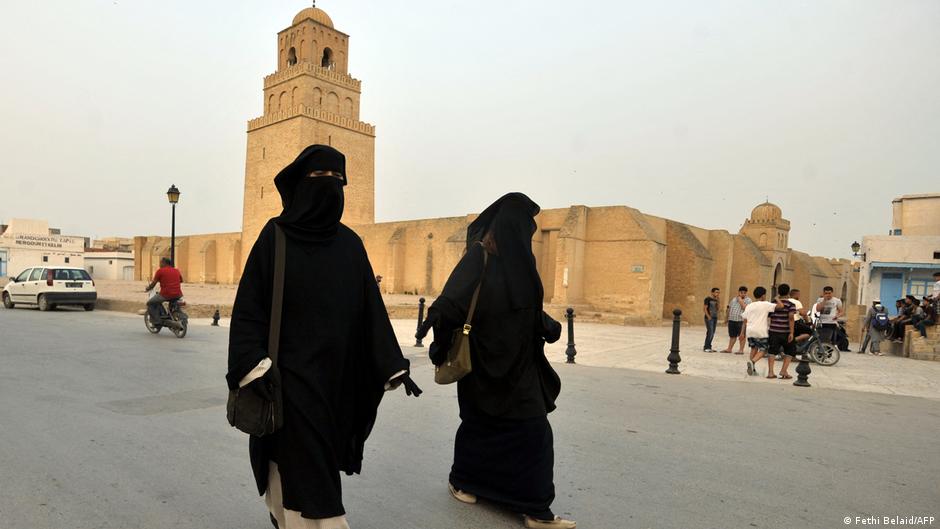
According to Moroccan media reports, one proposal would protect the marital home from being divided among heirs after a spouse's death. Hope for the next generation "There are good reasons to expect continued pressure for change," said Manea. "Younger generations are generally more educated, and women's groups and movements across the region have become increasingly organized and assertive in demanding legal reform and greater equality." With a very young population across the Middle East, calls for a change to inheritance laws will becoming even more frequent Image: Fethi Belaid/AFP However, legal change is unlikely to occur solely through the efforts of women's rights activists, she noted. "The future of reform will depend not only on legal advocacy but also on the ability to build wider social support and reshape public understandings of justice, rights and gender relations," said Manea. Amel Hammami agrees. "Why women should receive equal inheritance rights is no longer the question," she said. "The question is: Why shouldn't women receive equal inheritance rights?"
 The BriefWire