Quote of the day by French philosopher Jean-Paul Sartre: “Three o'clock is always too late or too early for...”
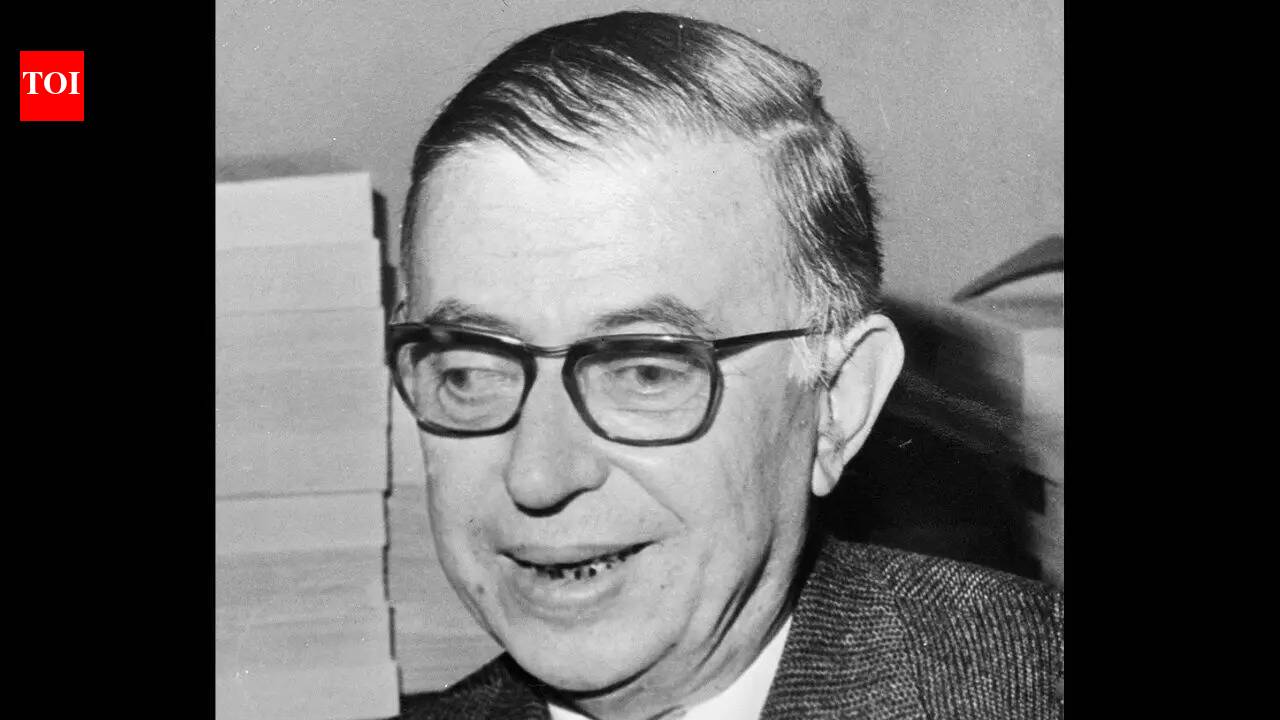
Jean-Paul Sartre (Image: Wikipedia) Quote of the day by Jean-Paul Sartre “Three o'clock is always too late or too early for anything you want to
Jean-Paul Sartre (Image: Wikipedia) Quote of the day by Jean-Paul Sartre “Three o'clock is always too late or too early for anything you want to do.” Jean-Paul Sartre's quote meaning explained Why time rarely feels perfect in real life The role of hesitation in everyday decisions How to apply the quote in daily life Why this feeling is so common A quiet reflection Other inspirational quotes by Jean-Paul Sartre “If you're lonely when you're alone, you're in bad company.” “I'm going to smile, and my smile will sink down into your pupils, and heaven knows what it will become.” “It's quite an undertaking to start loving somebody. You have to have energy, generosity, blindness. There is even a moment right at the start where you have to jump across an abyss: if you think about it you don't do it.” “She believed in nothing. Only her scepticism kept her from being an atheist.” There is something slightly ordinary but also oddly accurate in this line by Jean-Paul Sartre. It is not trying to sound deep at first glance. It just sits there, almost like a passing comment about time during an otherwise normal day. But the more it is read, the more it starts to feel familiar. Not because people think about “three o’clock” specifically, but because they recognise the feeling behind it.
That sense of not quite being ready, or being a little too late already, even when nothing has really changed. Time, in that moment, stops feeling neutral. It starts feeling slightly misaligned with intention. The quote is less about clocks and more about how people experience hesitation in small, everyday decisions.The line is simple, but it points to something more subtle. It is not really about a fixed time. Three o’clock is just a stand-in for any moment where timing feels uncertain.What Sartre is touching on is the way people judge readiness. A moment can feel too early if there is doubt about starting. The same moment can feel too late if there is awareness of delay. The actual clock does not change, but the feeling around it does.This is where the quote becomes interesting. It is not describing time itself. It is describing how time feels when a decision is sitting in the mind but not yet acted on.There is also a quiet sense of hesitation in it. The feeling that whatever you choose to do, the timing will never feel completely right. Something will always feel slightly off.In everyday situations, people rarely feel that they are acting at the perfect moment. Most actions happen in between other things. Between work, rest, interruptions, plans that shift slightly, and thoughts that do not settle immediately.Because of that, timing often feels less like a clear point and more like a moving target.A task can feel too early when there is still mental resistance.
The same task can feel too late once delay is noticed. Nothing about the task changes in that short gap. Only perception changes.That is the small pattern Sartre is pointing toward. Time does not arrive with instructions. People interpret it as they go.Hesitation plays a quiet role in how people experience time, even in small decisions.There are moments when something is ready to be done, but the mind does not fully align with it. So the moment passes slightly without action. Later, the same moment is seen differently, sometimes as missed, sometimes as premature.This shifting view creates the feeling described in the quote. Nothing external is fixed. The judgment around timing keeps changing.It is not always about delay or avoidance. Sometimes it is simply the mind trying to match intention with the right feeling, and not finding a stable point.In practical terms, this quote fits into ordinary decision making more than anything philosophical.At work, there are often small delays caused by waiting for the “right moment” to begin something. A conversation, a task, a follow-up. The quote suggests that this perfect moment is often not clearly defined, and sometimes does not arrive in the way it is expected.In personal life, it can show up in small habits. Putting things off because it feels slightly too soon, or slightly too late, even when both reasons are really just hesitation in different forms.Applying the idea does not mean rushing everything.
It is more about noticing how often timing is used as a reason when the real factor is uncertainty.Sometimes the moment does not become right on its own. It just passes, and later gets labelled as “too early” or “too late.”Most people assume timing should feel clear before action. But in reality, clarity often comes after action, not before it.That gap creates the kind of feeling Sartre is describing. A moment sits in uncertainty, and the mind tries to label it before acting. Too early. Too late. Rarely just “now.”The quote captures that small internal conflict in a very simple way. Not dramatic, not abstract. Just familiar.There is no resolution in the line, and it does not try to offer one. It simply points out how time is experienced when decisions are still forming.Three o’clock is not special. It only represents that in-between space where intention and action are slightly out of sync.And most people recognise that space more often than they notice it.
 The BriefWire