How Bharat Innovates Is Marking The Next Phase Of India-France Defence Partnership
How Bharat Innovates Is Marking The Next Phase Of India-France Defence Partnership Written By, Last Updated: June 16, 2026, 17:15 IST Bharat Innovates was not
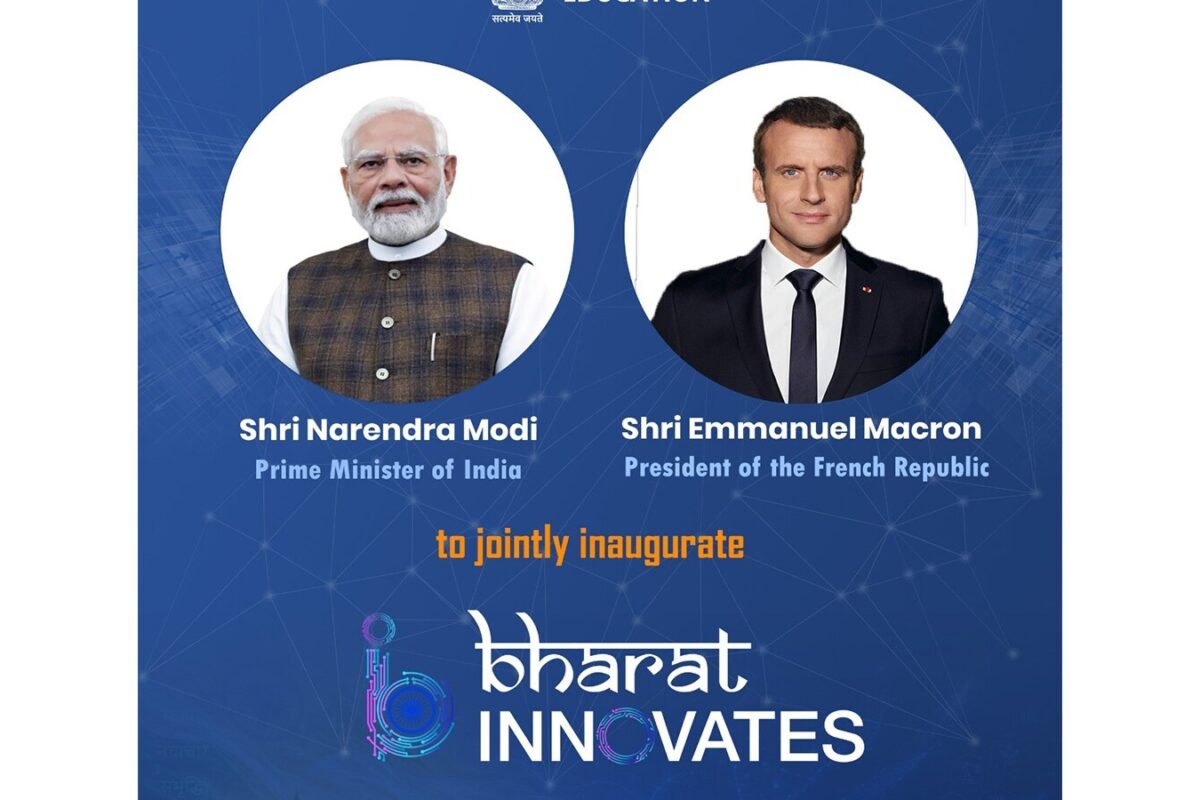
How Bharat Innovates Is Marking The Next Phase Of India-France Defence Partnership Written By, Last Updated: June 16, 2026, 17:15 IST Bharat Innovates was not a showcase. It was a statement of where India intends to go. Rapid Read Bharat Innovates brought 120 Indian deep-tech start-ups to the Palais des Expositions in Nice from June 14 to 16. For decades, the India-France defence partnership was defined by iconic platforms such as Rafale fighter jets and Scorpene submarines, platforms procured, delivered, and operated. Prime Minister Narendra Modi and President Emmanuel Macron jointly inaugurating Bharat Innovates 2026 in Nice on June 14 suggests that era is closing, and a different one is beginning, one centred on deep-tech collaboration, advanced manufacturing, and the technologies that will define future warfare. Organised by India’s Ministry of Education, Bharat Innovates brought 120 Indian deep-tech start-ups to the Palais des Expositions in Nice from June 14 to 16, placing them in front of global investors, research institutions, and industry partners as part of the India-France Year of Innovation. It covered sectors from healthcare to agritech to clean energy. But Space and Defence was among the largest cohorts on the floor, and those companies were not there by coincidence. For India, the event was a working demonstration of Aatmanirbhar Bharat: leveraging global partnerships not to import capability, but to co-develop and manufacture it at home. India’s innovation base The 120 start-ups were selected from over 3,000 applicants, collectively holding more than 1,500 patents. Over 500 global investors attended alongside corporate leaders from European aerospace and defence majors. PM Modi told the gathering that India is ‘no longer just a consumer of solutions, but a contributor of solutions.’ What India brought to the floor The defence and dual-use companies at Nice came with products, IP, and in several cases, operational deployments. The range of what they make tells its own story. Drones, swarms and counter-drone systems ideaForge, already a supplier to India’s armed forces, builds high-endurance UAV platforms for ISR. Raphe mPhibr manufactures military-grade aircraft systems end to end. BotLab Dynamics builds drone swarm technology under the brand Vayudh. EndureAir Systems makes heavy-lift UAV platforms and robotic flight control hardware.
On the counter side, Gurutvaa Systems builds AI-enabled platforms for detecting, tracking, and neutralising aerial threats. NewSpace Research and Technologies builds autonomous swarm systems and stratospheric platforms. Electro-optics and targeting Tonbo Imaging produces tactical EO and infrared optronics across land, naval, airborne, and missile platforms, thermal sights, gimballed payloads, and precision munition seekers. EON Space Labs builds miniaturised EO and infrared payloads for drones and satellites. Optimised Electrotech makes long-range intelligent surveillance systems for border defence. Propulsion and aerospace manufacturing Nabhdrishti Aerospace builds an indigenous turbojet engine in the 20 to 400-plus kgf range for UAV and defence applications at a claimed three to five times cost advantage over imported alternatives. Dheya Engineering Technologies produces micro gas turbine engines and green hydrogen propulsion systems. Fabheads Automation makes automated composite manufacturing systems for airframe production. Maritime and undersea Rekise Marine builds autonomous surface and underwater vehicles with a sovereign AI autonomy stack for Indian Navy ISR. EyeROV makes indigenous marine robotics including remotely operated and autonomous underwater vehicles. Space and orbital intelligence Digantara Industries builds space domain awareness platforms for defending orbital assets. GalaxEye develops multi-sensor satellite imagery for all-weather earth observation. Dhruva Space provides integrated satellite platforms and ground station services. OrbitAID Aerospace builds on-orbit satellite servicing and refuelling capability. Quantum, semiconductors and communications QNu Labs demonstrated a hybrid quantum security system combining Quantum Key Distribution and post-quantum cryptography. Its CEO told ANI in Nice: “The world is in grave danger today, AI and quantum computers are going to break encryption, which underpins our digital economy." Agnit Semiconductors, India’s first GaN RF semiconductor company, builds end-to-end materials-to-modules integration for defence, space, and radar systems. Netrasemi’s edge AI chip is optimised for surveillance cameras, drones, and robotics. What their presence at Nice actually means India did not send these companies to France so France could sell them something. It sent them because India now has technologies that European defence supply chains increasingly need, and France, more than most partners, has shown a willingness to engage on more equal terms. The drone and counter-drone companies address a gap that every NATO member is scrambling to fill after Ukraine demonstrated the asymmetric lethality of low-cost autonomous systems.
India’s UAV ecosystem, built largely without foreign dependency, produces platforms at price points and in operational conditions that Western manufacturers struggle to match. Raphe mPhibr and ideaForge are not niche players, they are potential co-development partners and export candidates into allied supply chains. The electro-optics and sensor companies address a similar gap. Tonbo Imaging’s thermal sights and precision seekers are already deployed on Indian platforms. The question in Nice was whether European defence integrators would treat them as suppliers, not just as interesting exhibits. The quantum security companies address a threat that India and France share equally. As both countries build sovereign digital infrastructure and protect classified military communications from quantum-enabled decryption, QNu Labs and Pramatra Space Technology offer an indigenously developed solution, one that France’s own research institutions, as the QNu-Eindhoven collaboration formalised at the summit demonstrates, are now willing to build on. Agnit’s GaN RF semiconductors are perhaps the most strategically significant. Gallium nitride is the material that powers next-generation radar and electronic warfare systems. An Indian company with end-to-end GaN capability, displayed in front of Safran and Thales, is an offer of supply chain diversification at a moment when Europe is trying to reduce its semiconductor dependence on East Asia. Taken together, these companies signal something the India-France relationship has not previously had on the Indian side: leverage. India is no longer arriving at the table with a cheque and a requirements list. It is arriving with IP, manufacturing capacity, and technologies that the other side needs. The architecture behind the summit This shift at the start-up level is mirrored at the platform level. India has issued a Letter of Request to France for 114 Rafale fighter jets valued at approximately Rs 3.25 lakh crore. But unlike the 2016 buy of 36 jets in flyaway condition, only 18 under the new MRFA programme will be sourced that way. The remaining 96 will be manufactured in India, with Tata Advanced Systems already building a fuselage production facility in Hyderabad. The objective is the same as that seen at Bharat Innovates: moving India up the value chain from assembly and acquisition towards ownership of technology, manufacturing capability, and supply chains.
Safran and India’s Gas Turbine Research Establishment have formed a joint venture to co-develop a new engine for the AMCA Mk II stealth fighter, with significant technology sharing and IP arrangements with Indian partners, an engine that could ultimately power unmanned combat aerial vehicles and naval fifth-generation fighters. The point here is the direction they confirm: India is rewriting the terms of its defence relationships, and France is the first major partner to accept the new terms. The real test The unresolved source code question will be the clearest measure of how far that acceptance goes. France has so far not agreed to transfer access to key elements of the Rafale’s mission software, including the mission computer and electronic warfare architecture, limiting India’s ability to independently integrate indigenous weapons. The real measure of the new India-France framework will not be counted in agreements signed in Nice, but in whether India gains the ability to design, modify, and eventually export technologies it has co-developed. That question carries weight well beyond France. India has long sought to avoid dependence on any single defence supplier, a lesson made sharper by the operational constraints it faced with Russian equipment after 2022. The companies that stood on the floor in Nice are the foundation of a different answer: one where India is not simply diversifying its import sources, but building the capability to need fewer imports altogether. Bharat Innovates was, in that sense, not a showcase. It was a statement of where India intends to go. News18 Newsletter Handpicked stories, in your inbox A newsletter with the best of our journalism submit About the Author Vallari Parashar Vallari Parashar is a Senior Sub Editor at News18. She writes on geopolitics, defence, and strategic affairs First Published: June 16, 2026, 17:15 IST News india How Bharat Innovates Is Marking The Next Phase Of India-France Defence Partnership Disclaimer: Comments reflect users’ views, not News18’s. Please keep discussions respectful and constructive. Abusive, defamatory, or illegal comments will be removed. News18 may disable any comment at its discretion. By posting, you agree to our Terms of Use and Privacy Policy Loading comments...
 The BriefWire