When India Removed Barricades From the US Embassy and Why That Moment Haunts New Delhi in 2026
In December 2013, India's Deputy Consul General in New York, Devyani Khobragade, was arrested by American federal agents on charges of visa fraud related to
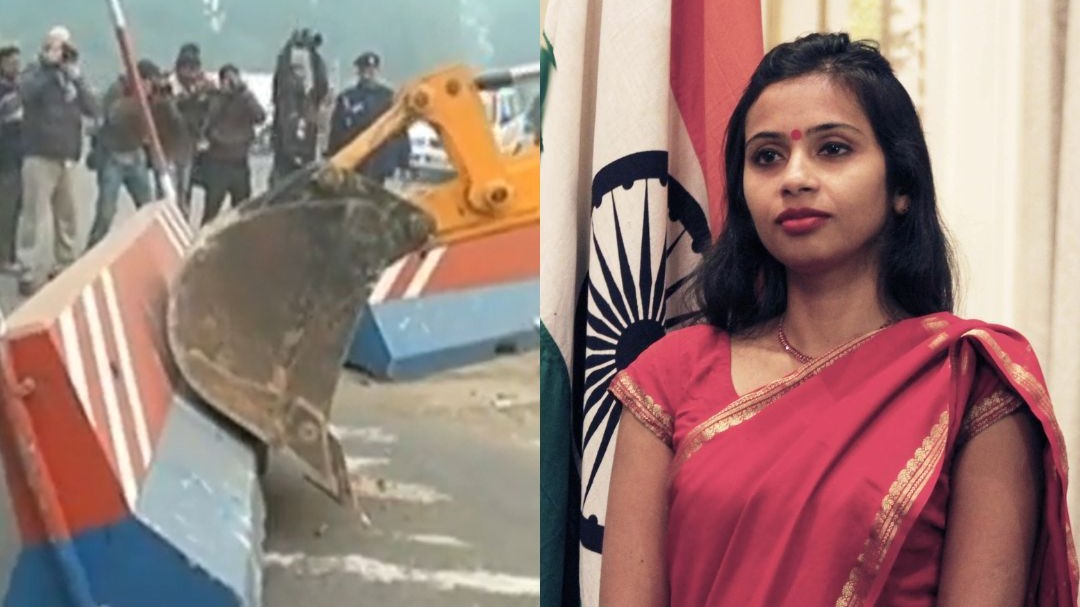
In December 2013, India's Deputy Consul General in New York, Devyani Khobragade, was arrested by American federal agents on charges of visa fraud related to her domestic worker. She was handcuffed outside her daughter's school, subjected to a strip search and cavity search by the U.S. Marshals Service, and placed in a holding cell alongside common criminals and drug addicts. The U.S. Marshals later confirmed that she had been put through standard arrestee intake procedures, a response that only deepened the outrage in New Delhi. Read Full Story India's reaction was swift and unusually assertive. Security Adviser Shivshankar Menon publicly described the treatment as "despicable and barbaric." The government withdrew airport passes and diplomatic privileges for American consular staff, recalled identity cards issued to U.S. Embassy personnel across Chennai, Hyderabad, Mumbai and Kolkata, and launched an investigation into the visa arrangements of employees at the American Embassy School in New Delhi. Most visibly, Indian police removed the concrete security barricades that had been erected outside the main entrance of the U.S. Embassy in New Delhi, a deliberate and public signal that India expected reciprocity in its diplomatic relationships. Senior politicians across party lines, including Prime Minister Modi, who was then the Chief Minister of Gujarat, refused to meet a visiting US congressional delegation in protest.
It was a coordinated, calibrated display of sovereign displeasure. America noticed. Fast-forward to June 2026, and a different kind of crisis is testing that same relationship. Three Indian merchant sailors Aditya Sharma, Shivanand Chaurasiya, and Patnala Suresh were killed on 10 June when U.S. military forces struck commercial vessels in the Gulf of Oman as part of Washington's enforcement of its naval blockade targeting Iranian oil shipments. Family members of one of the sailors held up his photograph at their home in Visakhapatnam, Andhra Pradesh, in the days that followed. Sharma's grandfather told the press that the family wanted the full truth of what had happened. Their hearts, he said, were shattered. India's Ministry of External Affairs summoned U.S. Charg d'Affaires Jason Meeks and formally described the use of deadly force against civilian shipping as "tragic and avoidable." External Affairs Minister S. Jaishankar spoke directly with U.S. Secretary of State Marco Rubio on 12 June and conveyed what he termed India's "strong protest," stating that lethal action against commercial shipping was not justified. The U.S. State Department's readout of that conversation, released more than eighteen hours after Jaishankar publicly disclosed the call, contained no reference to India's protest and no acknowledgement of the deaths of the three sailors.
Rubio instead stressed that all commercial vessels must immediately comply with orders from U.S. forces in the Strait of Hormuz and that violations of the blockade would not be tolerated. The omission was stark. Just weeks earlier, during a visit to India, Rubio had described the bilateral relationship as "one of our most important strategic partnerships in the world." Congress MP Shashi Tharoor was unsparing in his assessment. He called the U.S. statement "deeply shocking" and questioned how a country that presented itself as India's friend and strategic partner could be "so deeply insensitive." He also noted that practically every merchant ship navigating these waters carries Indian crew, and asked whether they were all now considered fair targets for American missiles. Foreign Secretary Nirupama Rao drew a wider conclusion from the exchange. She observed that the Rubio-Jaishankar readout reflected a broader pattern in international affairs where power increasingly expresses itself through sanctions, blockades, tariffs and coercion, leaving diplomacy to deal with the consequences. There is also a historical irony worth noting. It was Jaishankar himself who arrived in Washington as India's new Ambassador at the height of the Khobragade crisis in 2013, tasked with steadying a relationship that had been pushed to the brink by one diplomat's arrest.
More than a decade later, he finds himself as the country's top diplomat lodging formal protests over the deaths of three Indian nationals, protests that Washington has publicly declined to acknowledge. PM Modi and U.S. President Trump are expected to meet on the sidelines of the G7 Summit in France, in what would be their first face-to-face interaction since February 2025. Whether the deaths of three Indian sailors in the Gulf of Oman will feature in those discussions, and with what degree of firmness, remains to be seen. In 2013, India removed the barricades. The message was understood. In 2026, the question being asked across diplomatic circles and in Indian homes alike is whether strongly worded statements, however sincere, carry any weight with an administration that has already moved on. Ends
 The BriefWire