How India's own Tomahawk missile puts Chinese, Pak cities within strike range
Ever since its induction in 1983, the Tomahawk missile has been the bedrock of the US military's long-range strike capabilities. The cruise missile has featured
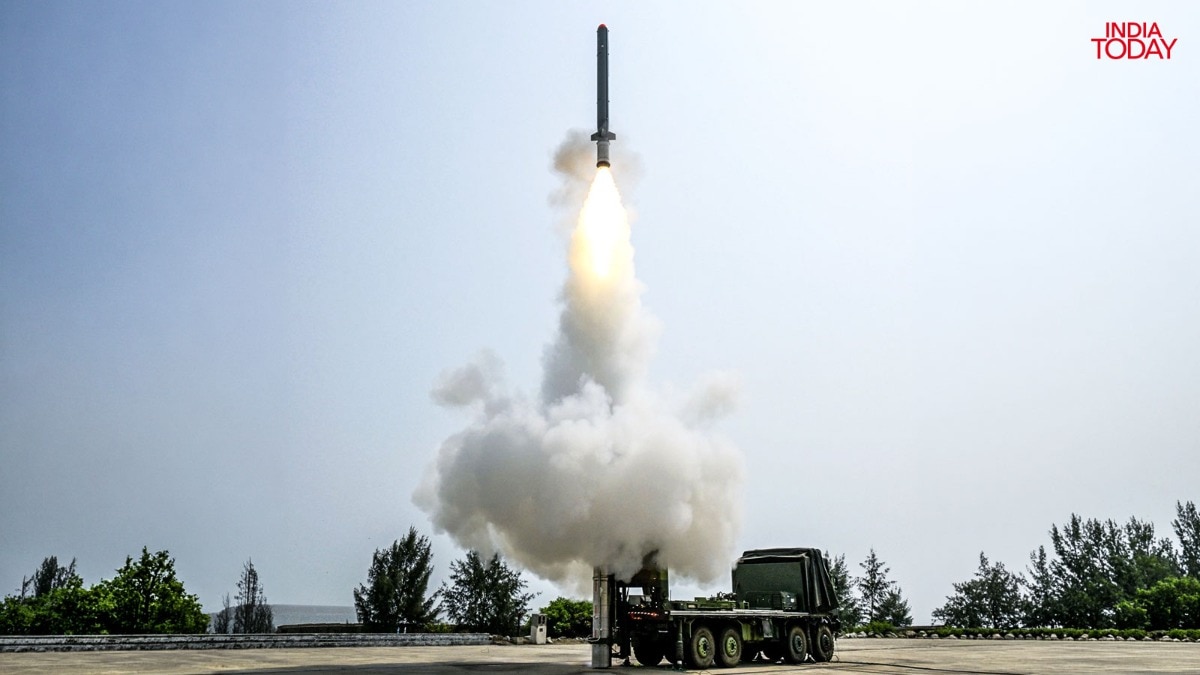
Ever since its induction in 1983, the Tomahawk missile has been the bedrock of the US military's long-range strike capabilities. The cruise missile has featured in every US conflict since 1991, including the recent Iran war, where 49 Tomahawks were used to strike targets deep inside Tehran. On Monday, the DRDO conducted the first successful test of India's equivalent of the US's Tomahawk off the Odisha coast. Read Full Story While the government has been silent on its capabilities, the Long Range Land Attack Cruise Missile (LRLACM) is believed to have a range of 1,000-1,500 km. This means, if deployed near forward areas, the missile could bring several key Chinese and Pakistani military, economic and political centres within striking distance. We will speak more on this later. On Monday, the Defence Ministry stated that the test met all operational and technical objectives. However, a formal induction into the armed forces is still two years away, with more trials set to be conducted.
What is significant is that the LRLACM is fully desi. The missile and its subsystems have been developed by various DRDO labs along with industry partners. The Bengaluru-based Aeronautical Development Establishment (ADE) is the nodal laboratory. HOW THE DESI TOMAHAWK WILL BE A GAME-CHANGER? Operation Sindoor, the Russia-Ukraine conflict and the Iran war have shown the crucial role played by stand-off weapons. The LRLACM will give a massive boost to India's long-range strike capabilities. The LRLACM is believed to be an upgraded successor to the Nirbhay missile program, which has been marred by several test failures since 2016. What adds to its versatility is that the LRLACM can be fired from ground launchers, warships or submarines, and can be armed with conventional or nuclear warheads. Unlike ballistic missiles, which travel into space before following a steep trajectory towards the target, LRLACMs like Tomahawks fly at very low altitudes, making them harder for enemy radar and air defence systems to detect.
The US version has a mission-tailored guidance system that enables it to evade obstacles and strike even highly localised targets with pinpoint accuracy. This is what makes the subsonic cruise missile a game-changer. If India had such a missile during the hostilities with Pakistan last year, it could have easily hit targets near Islamabad even if it was fired from a naval base in Mumbai. Tomahawks have been generally used by the US when it wants to blow stuff up from far away. Like it did in Iran recently, striking Tehran, Bandar Abbas, Qeshm Island, Kish, Minab and parts of Isfahan. The US has various versions of the Tomahawk, with the range anywhere between 1,250 and 2,500 km. The latest version, called the Block IV Tactical Tomahawk, allows it to switch targets while in flight. It can loiter for hours and change direction instantly on command. It is why Ukrainian President Zelenskyy was so keen on acquiring it last year from the US.
However, Donald Trump didn't give the nod. The Tomahawks, however, don't come cheap. It costs around $1.3 million (Rs 11.30 crore) each. The missiles have also been acquired by the UK, Japan, Australia and the Netherlands. WHICH CITIES IN CHINA, PAK COULD COME UNDER RANGE? With its extended range, the LRLACM could provide India with a significant strategic advantage in the region. In the western front, the missile could potentially cover large parts of Pakistan, including Islamabad, Rawalpindi (home to Pakistan's military headquarters), Lahore, Faisalabad, and Karachi, Pakistan's largest economic hub that also houses its key naval facilities. If deployed along the northern or eastern sectors near the Line of Actual Control (LAC), the missile could potentially cover several strategic locations in China's western and central regions. Regions like Lhasa, home to important Chinese military infrastructure, Chengdu (a major military hub), Urumqi (a strategically important city in Xinjiang), and Kunming could be within strike range. Ends
 The BriefWire