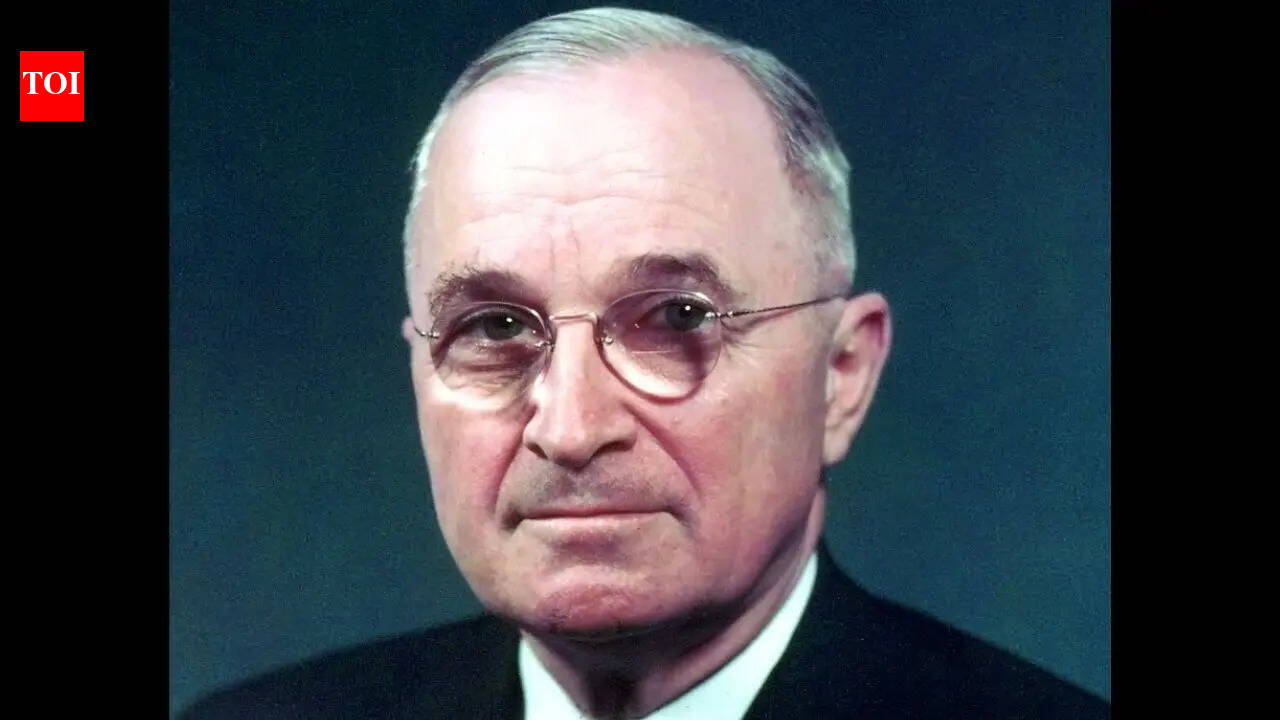
Quote of the day by e American President Harry S. Truman: “Three things can ruin a man: power, money and women. I never wanted power, I never had any money, and the only woman in my life is…”
Quote of the day by Harry S. Truman “Three things can ruin a man: power, money and women. I never wanted power, I never had
Quote of the day by Harry S. Truman “Three things can ruin a man: power, money and women. I never wanted power, I never had any money, and the only woman in my life is up at the house right now.” Understand the meaning of the quote by Harry S. Truman The quote reflects Truman's public image Power has fascinated people for centuries Wealth and reputation bring their own pressures How to apply Harry S. Truman's quote in daily life Why the quote remains memorable Harry S. Truman never developed a reputation for speaking in polished political language. Even after reaching the White House, he often sounded more like a neighbour sharing an opinion than a leader delivering a carefully constructed message. That quality explains why many of his remarks have survived long after his presidency ended. Some were serious. Some were blunt. Others carried a dry sense of humour that reflected his personality.The quote often attributed to Truman about power, money and women falls firmly into that last category. It begins with what sounds like a warning and ends with a joke. Yet the line has continued to circulate for decades because readers tend to find more than humour in it. Beneath the wit sits a familiar observation about ambition, temptation and the things that have complicated the lives of powerful people throughout history.The first half of the quote sounds almost like old fashioned advice.Power, money and relationships have appeared in stories, biographies and historical accounts for centuries.
Empires have risen and fallen around them. Careers have been built because of them and destroyed by them.Then Truman changes the tone completely.Rather than continuing with a serious lecture, he turns the spotlight on himself. The result is a line that feels more conversational than philosophical.Part of the appeal comes from that contrast. Readers expect a moral lesson and instead get a self-deprecating joke.At the same time, the humour works because the underlying idea is widely understood. Success often brings complications. The greater the influence or wealth, the greater the potential for poor decisions.Truman's remark acknowledges that reality without sounding preachy.People who followed Truman during his political career frequently commented on his straightforward manner.He did not come across as someone trying to impress audiences with elaborate language. Whether speaking to reporters, political allies or ordinary citizens, he generally preferred direct communication.That style helped shape public perceptions of him.Supporters viewed him as practical and plain spoken. Critics sometimes found him blunt. Either way, he rarely sounded scripted.The quote reflects that reputation.Even decades later, it feels less like a prepared statement and more like something spoken naturally during a conversation.That quality may explain why it remains memorable.The word "power" appears first in the quote, and perhaps that is not accidental.History contains no shortage of examples where authority changed people.
Some leaders handled responsibility well. Others became consumed by it.The topic appears repeatedly in literature, politics and philosophy because it touches on a basic question: what happens when individuals gain influence over others?There is no single answer.Power can be used responsibly. It can also encourage arrogance and overconfidence.Truman does not explore those ideas in detail. He simply includes power on his list and allows readers to draw their own conclusions.Money occupies a similar place in public discussion.Most people recognise its importance. Financial stability creates opportunities and removes certain worries. Yet wealth has never guaranteed contentment or good judgment.Stories about fortunes gained and lost appear in every generation.Some people spend their lives pursuing money only to discover that success introduces new pressures rather than eliminating old ones.That tension helps explain why wealth remains such a common theme in famous quotations and public debate.Truman's joke works partly because it touches on an issue that people have been discussing for centuries.Although the wording belongs to another era, the broader message still invites reflection.Most people will never become presidents or command enormous wealth. Even so, questions about ambition, priorities and personal choices remain relevant.The quote serves as a reminder that success alone is not enough. Character matters.
Judgment matters. The ability to remain grounded matters.Professional achievements can be valuable, but they rarely compensate for poor decisions made along the way.Many readers also appreciate the humour in Truman's response. Instead of presenting himself as a heroic figure, he chooses to laugh at himself.That approach carries its own lesson.A sense of perspective can be useful, especially when life becomes complicated.Some quotations survive because they contain deep philosophical insights.Others survive because they reveal personality. This one does a bit of both.Readers encounter a former president speaking about serious subjects, then unexpectedly turning the conversation into a joke. The shift feels human. It feels spontaneous.That may be the reason the quote continues to appear in collections of famous sayings and political anecdotes.The humour arrives first. The reflection tends to arrive later. And perhaps that combination is what has kept the line alive for so many years.
 The BriefWire