Iran Must Stop Backing Terror Groups Under Deal Framework, Vance Says; Details To Be Worked Out Later
Iran Must Stop Backing Terror Groups Under Deal Framework, Vance Says; Details To Be Worked Out Later Published By, Last Updated: June 16, 2026, 03:23
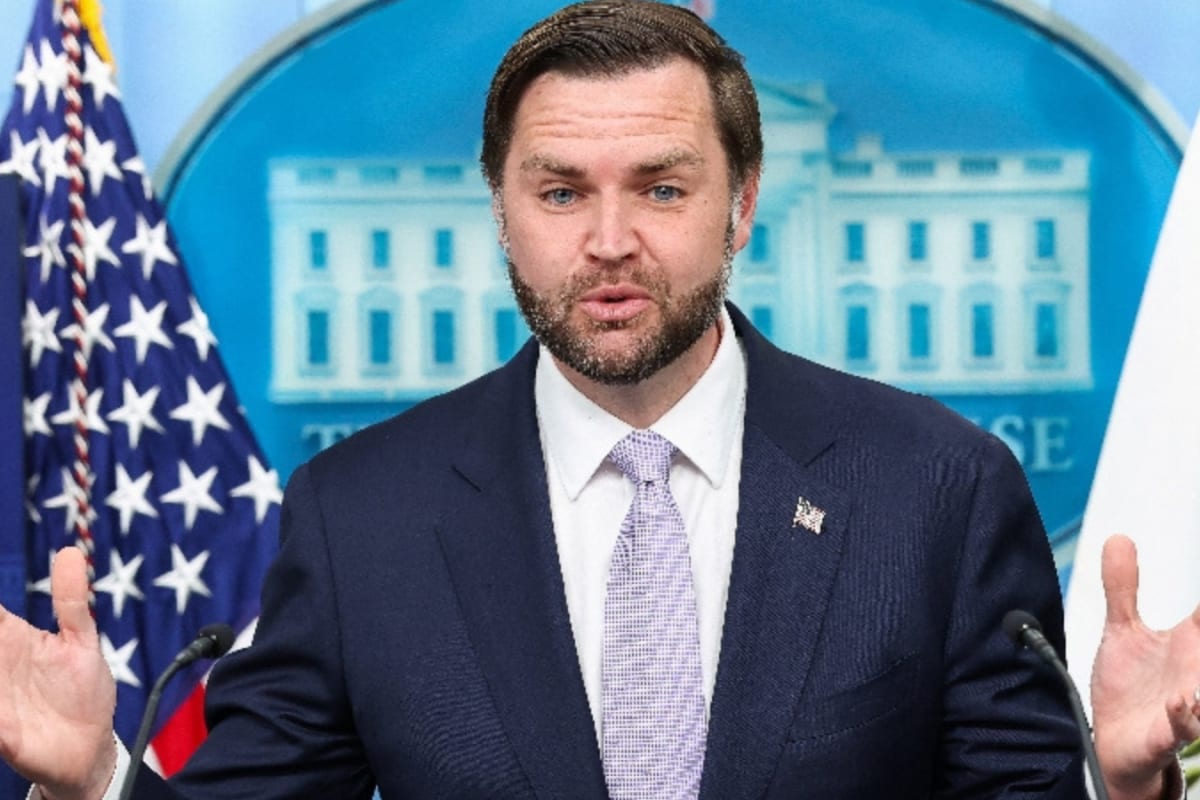
Iran Must Stop Backing Terror Groups Under Deal Framework, Vance Says; Details To Be Worked Out Later Published By, Last Updated: June 16, 2026, 03:23 IST JD Vance said the document is intentionally broad and focuses on creating incentives for Iran to change its behavior. United States Vice President JD Vance (Source: Reuters) US Vice President JD Vance said the newly signed memorandum of understanding (MoU) between the United States and Iran establishes a framework requiring Tehran to stop supporting militant groups and regional instability, while acknowledging that many of the specific commitments will be negotiated during a later technical phase. In an interview discussing the landmark agreement, JD Vance said the document is intentionally broad and focuses on creating incentives for Iran to change its behavior in exchange for economic and diplomatic benefits. “What paragraph one of the agreement says is effectively that Iran commits itself, just as the United States commits itself to regional peace and stability," JD Vance said, adding, “Part of that is that the Iranians have to stop funding violent terrorist organizations.
They have to stop funding regional instability." Pressed on whether the accord explicitly requires Iran to dismantle its ballistic missile programme or end support for groups such as Hamas, Hezbollah and the Houthis, JD Vance acknowledged that the memorandum itself is a brief and general document. “The MOU is about a page and a half, so it is a very general document," he said. “We are going to have to figure this stuff out during the technical negotiation phase." However, JD Vance argued that Tehran is fully aware of Washington’s expectations and that future economic benefits will depend on meeting them. “They know that we don’t want them to fund terrorist organizations. They know that we don’t want them to be a source of instability in the region," he said, continuing, “Most importantly, they know that we want a verifiable long-term commitment to not build or procure a nuclear weapon." According to JD Vance, the central principle of the agreement is conditionality: Iran will receive economic benefits only if it fulfills its commitments.
“What the agreement does is fundamentally set up a structure whereby if the Iranians behave like a normal country, then we want to treat them like a normal country and welcome them into the world economy," he said. The US Vice President also claimed that recent military operations had eliminated Iran’s existing nuclear capabilities, arguing that the agreement is designed to prevent Tehran from rebuilding them. “Right now, the Iranian nuclear programme has been completely destroyed," Vance said. “Their capacity to enrich uranium, their enriched stockpile of fuel is buried far below the earth." He said the administration had created a “two-way pathway" to ensure Iran does not reconstitute its nuclear programme. Under one scenario, sanctions and financial restrictions would remain in place if Tehran failed to comply. Under the other, Iran could gain access to economic opportunities and a transformed relationship with the United States and the region if it met verifiable benchmarks. “We really prefer that they choose the option where there’s greater economic cooperation and where they behave like a normal country and are treated like one as well," JD Vance said.
The full text of the memorandum is expected to be released in the coming days. News18 Newsletter Handpicked stories, in your inbox A newsletter with the best of our journalism submit Location: Washington D.C., United States of America (USA) First Published: June 16, 2026, 03:23 IST News world Iran Must Stop Backing Terror Groups Under Deal Framework, Vance Says; Details To Be Worked Out Later Disclaimer: Comments reflect users’ views, not News18’s. Please keep discussions respectful and constructive. Abusive, defamatory, or illegal comments will be removed. News18 may disable any comment at its discretion. By posting, you agree to our Terms of Use and Privacy Policy Loading comments...
 The BriefWire