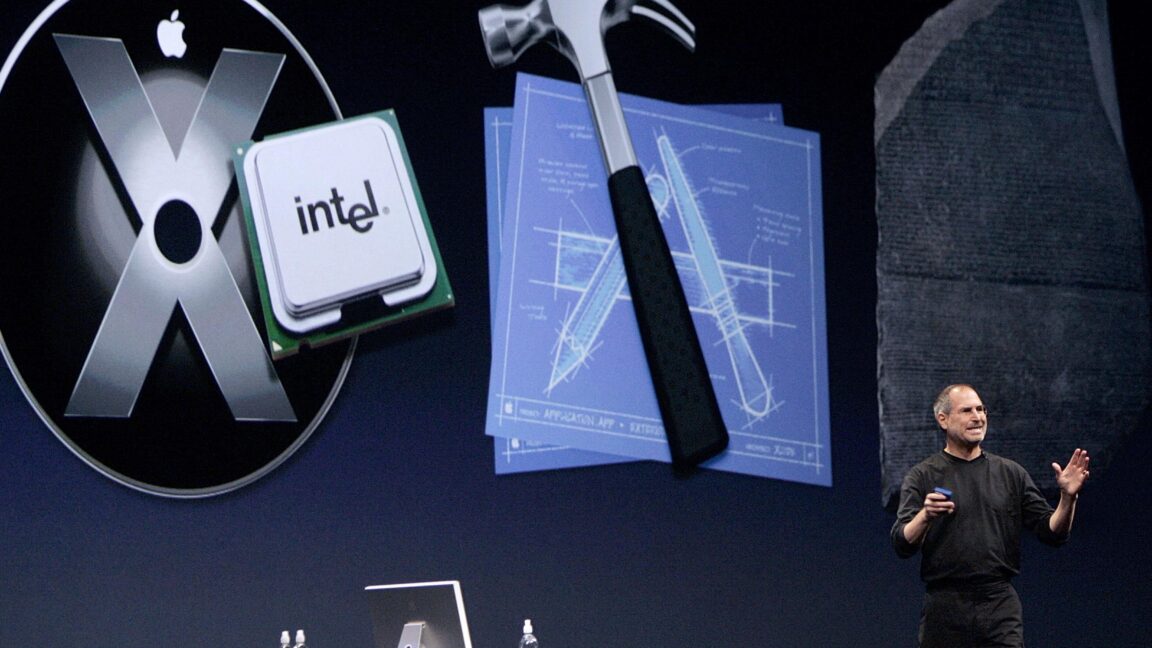
20 years of Intel Macs: Why Apple switched, and why it switched again
The release of macOS 27 later this fall won't quite close the book on the Intel Mac. The last handful of models that could run
The release of macOS 27 later this fall won't quite close the book on the Intel Mac. The last handful of models that could run macOS 26 Tahoe will be eligible for security and Safari updates for two more years, and elements of the Rosetta compatibility layer for running Intel code on Apple Silicon Macs will be with us in some form for some indeterminate amount of time after that.
But macOS 26 is definitely the last chapter of the Intel Mac story. Anything that happens after this is a coda or an epilogue. Most
of our WWDC coverage has been forward-looking, so indulge us if you will in a look backward at the full history of the Intel Mac,
a partnership between two companies that made Macs dramatically better, until it started making them worse. Read full article Comments
 The BriefWire