Trinamool split among Mamata Banerjee, MPs and MLAs: What does law say
Amid the rapidly evolving political crisis within the Trinamool Congress (TMC) in West Bengal, a fresh constitutional debate has emerged over the legality of the
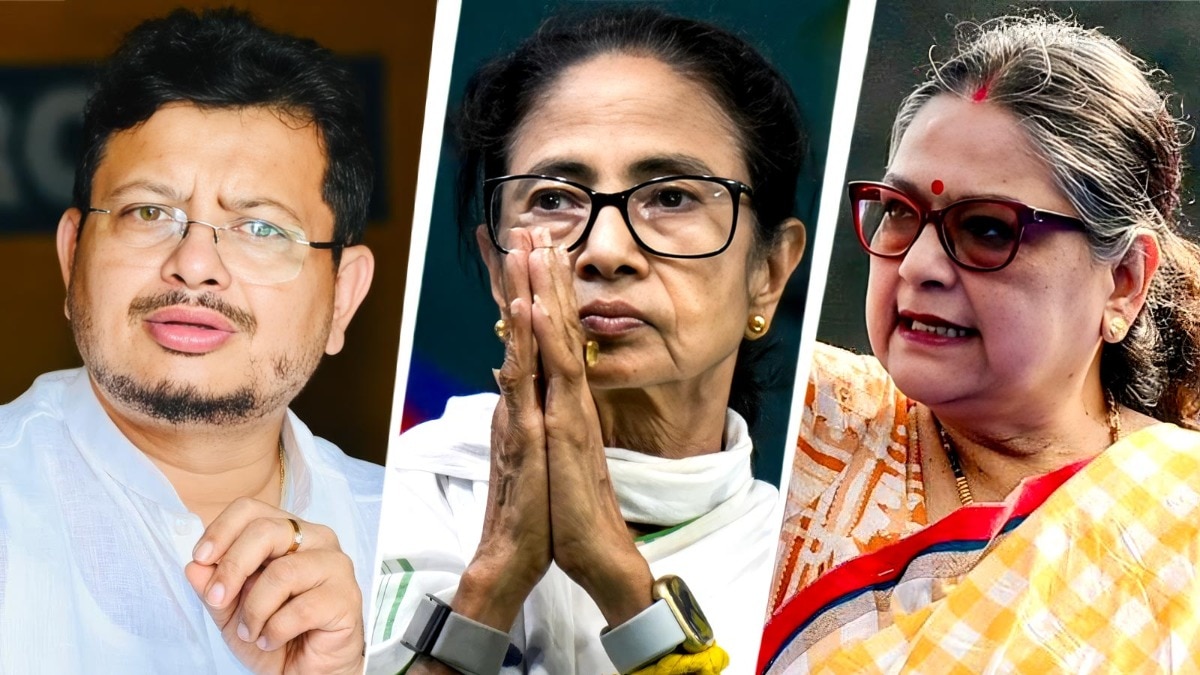
Amid the rapidly evolving political crisis within the Trinamool Congress (TMC) in West Bengal, a fresh constitutional debate has emerged over the legality of the actions taken by rebel MPs and MLAs and the applicability of the anti-defection provisions under the Constitution. As of Monday evening, 20 of the TMC's 28 Lok Sabha members announced their decision to "merge" with the Nationalist Citizens Party of India (NCPI), a regional party with a presence in Tripura and parts of rural Bengal. The MPs contend that since more than two-thirds of the party's Lok Sabha members support the move, they are protected under the merger provisions of the Tenth Schedule of the Constitution, which is the s the Anti-Defection Law. Read Full Story Simultaneously, a separate rebellion has unfolded in the West Bengal Legislative Assembly. Newly elected Trinamool MLAs have split into rival camps, with Leader of Opposition Ritabrata Banerjee claiming that he and 65 other legislators -- more than two-thirds of the party's Assembly strength -- constitute the "real" Trinamool Congress. Unlike the rebel MPs, Banerjee's faction has not agreed to merge with the NCPI. Instead, it has laid claim to the party's name, organisation and political identity. The developments have resulted in an unprecedented three-way division within the TMC The Mamata Banerjee faction, led by the former Chief Minister and her loyalists, including Abhishek Banerjee. The rebel MLAs led by Ritabrata Banerjee, who claim control over the legislative party in the Assembly and assert that they represent the authentic Trinamool Congress. The rebel MPs led by Kakoli Ghosh Dastidar, who argue that their two-thirds majority in the Lok Sabha entitles them to merge with the NCPI while also laying claim to the TMC's name and symbol. The crisis raises two key legal questions: Who controls the Trinamool Congress and its election symbol? And which, if any, of the rebel legislators are vulnerable to disqualification under the anti-defection law? THE CONSTITUTIONAL QUESTION Under the Tenth Schedule, MPs and MLAs can be disqualified if they voluntarily give up membership of the political party on whose ticket they were elected. The central controversy concerns the interpretation of Paragraph 4 of the Tenth Schedule, which creates an exception in cases of merger. The key question is whether a merger can be validly effected solely through the decision of two-thirds of the members of a legislature party, or whether the merger must also involve the "original political party".
The issue remains unsettled and is currently pending before the Supreme Court. In the Kuldeep Bishnoi case, the Punjab and Haryana High Court held that there can be no automatic presumption of a merger merely because legislators claim one has taken place. The court observed that the Speaker must first examine whether the original political party had taken any steps towards a merger before accepting such a claim. However, the Bombay High Court adopted a different interpretation while dealing with the Goa Congress defections. It held that members of a legislature party could themselves decide to merge with another political party for the purposes of Paragraph 4 of the Tenth Schedule. That ruling was challenged before the Supreme Court by Goa Congress leader Girish Chodankar. While the original challenge became pointless after the Assembly's term ended, Chodankar revived the issue through a fresh petition in 2025. The matter remains pending and is expected to be heard later this year. WHAT THE SUPREME COURT HAS ALREADY SAID The Supreme Court's five-judge Constitution Bench judgment in the Subhash Desai case, arising from the Maharashtra political crisis, offers important guidance, although it did not directly decide the merger question. The court drew a clear distinction between a "legislature party" and the "original political party". It held that authority to appoint key office-bearers such as the legislature party leader and chief whip flows from the political party acting through its recognised leadership and organisational structure. The court further observed that where rival factions claim to represent the same political party, the Speaker must make a prima facie determination regarding which faction actually constitutes the political party while deciding disqualification petitions. However, since the facts of the Maharashtra dispute were different, the Constitution Bench did not conclusively interpret the scope of the two-thirds merger provision. UNDERSTANDING THE TWO-THIRDS RULE The controversy centres on the deeming provision contained in Paragraph 4(2) of the Tenth Schedule. The provision states that, for the purpose of determining whether a political party has merged with another political party, such a merger shall be deemed to have taken place if not less than two-thirds of the members of the legislature party agree to the merger. The crucial issue is whether this deeming provision operates independently of the original political party, or whether it comes into play only after the original political party itself has approved or undergone a merger.
The current TMC crisis has brought this unresolved constitutional issue into sharp focus because the MPs and MLAs are advancing fundamentally different positions. While one faction claims merger with another party, the other insists that it is the original party itself. WHO DECIDES OWNERSHIP OF THE PARTY? Following the Supreme Court's ruling in the Subhash Desai case, any faction seeking control over the TMC's name and symbol will likely need to demonstrate support not only among elected representatives but also within the party's organisational structure. Such claims would have to be backed by evidence, including affidavits and resolutions, before the Election Commission of India (ECI). Support from district, state and national executive committees, as envisaged under the party constitution, could therefore become crucial in any future dispute before the ECI. The Supreme Court has repeatedly recognised that disputes over party identity and election symbols are distinct from disqualification proceedings before the Speaker. Both processes can proceed simultaneously. There is no legal distinction between the procedure for disqualification of an MP and that of an MLA. While disqualification is decided by the Speaker in the Lok Sabha and state Assemblies, and by the Chairman in the Rajya Sabha and Legislative Councils, such proceedings are based on a prima facie determination of party leadership and authority to initiate disqualification petitions. Questions relating to ownership of the party name and symbol, however, fall exclusively within the jurisdiction of the ECI under the Symbols Order. Pointing out that none of the factions has yet approached the ECI claiming to be the "real" Trinamool Congress, constitutional expert PDT Achary told India Today “The Shiv Sena situation was different. There the party had split and the Shinde faction had claimed ownership of the Party. Here nobody has so far gone to the ECI and said we are the real party and should be recognised. Here, so far, the MPs have only gone to the Speaker and asked for separate seating in support of the NDA – the speaker has no power to take that decision as long as the original party has not merged," he said. EXPERTS DOUBT VALIDITY OF LEGISLATORS' STAND Senior Advocate Nizam Pasha has questioned the legal basis on which Ritabrata Banerjee continues to be recognised as Leader of Opposition while simultaneously claiming separation from the TMC. According to Pasha, the legal position emerging from the Maharashtra judgment suggests that a faction seeking protection under the merger provision must satisfy a twin requirement: it must demonstrate both the support of two-thirds of the elected legislators and a legitimate claim to representing the original political party.
Achary, who is a former Lok Sabha Secretary-General, has expressed a similar view. He argues that the recognition of a dissident leader as Leader of Opposition appears legally questionable because authority within a legislature party ultimately flows from the original political party. Achary maintains that the anti-defection law provides only one relevant exception: legislators can avoid disqualification when their original political party merges with another party and at least two-thirds of the legislators agree to that merger. In his view, a mere decision by legislators to leave the party does not automatically attract protection under Paragraph 4. “There is a lot of confusion created by some persons that if two-thirds of MPs or MLAs merge with another party, they will not be disqualified under Para 4 of the 10th Schedule. This para can exempt an MP or MLA only if their original party merges with another party and two thirds of the MPs or MLAs agree with the merger and become members of the other party," he said. Achary also noted that none of the rival factions has yet approached the ECI to formally claim ownership of the "real" Trinamool Congress. Until such a claim is made and adjudicated, the question of party identity remains unresolved. A LEGAL BATTLE ON MULTIPLE FRONTS The Supreme Court observed in the Desai judgment that the purpose of the Tenth Schedule is to "disincentivise and penalise the constitutional sin of defection". The unfolding TMC crisis is likely to test the limits of that framework. With rival factions advancing competing claims over merger, party ownership and legislative legitimacy, the dispute appears headed for a prolonged legal battle. The contest is expected to play out simultaneously before the West Bengal Assembly Speaker, the Lok Sabha Speaker, the Election Commission of India and, ultimately, the Supreme Court. Until the court conclusively clarifies the relationship between the legislature party and the original political party under the merger provisions of the Tenth Schedule, the constitutional questions raised by the TMC split are likely to remain at the centre of national political debate. Ends
 The BriefWire