Strait of Hormuz reopening won't end shipping risks
A proposed US-Iran deal to reopen the Strait of Hormuz is raising hopes for global shipping and oil markets. But naval mines, high insurance costs
A proposed US-Iran deal to reopen the Strait of Hormuz is raising hopes for global shipping and oil markets. But naval mines, high insurance costs and geopolitical risks mean disruption could persist for months. US President Donald Trump on Sunday hailed a framework agreement between the United States and Iran aimed at ending hostilities in the Gulf that have reduced commercial shipping in the Strait of Hormuz to a trickle for more than three months. The deal, scheduled to be signed on Friday in Switzerland, reopens the strait to shipping without tolls, lifts the US naval blockade of Iranian ports and allows Tehran to resume oil exports under limited sanctions relief. The framework also extends the current ceasefire for at least 60 days while launching broader talks on Iran's nuclear program. Yet, unlike reopening a highway after a car wreck, restoring prewar oil, gas and container traffic through this vital chokepoint faces significant hurdles. Greek maritime risk management agency MARISKS warned in a research note on Monday that the framework agreement should be viewed as "the beginning of a de-escalation process rather than the immediate restoration of normal trading conditions." Iran-US peace deal leaves many major issues unresolved To view this video please enable JavaScript, and consider upgrading to a web browser that supports HTML5 video When can Gulf shipping safely resume? Assuming attacks from both the US and Iran have ended for good, Iran must first find and clear the naval mines it deployed during the conflict to make the waterway passable once again Most could be located fairly quickly using minesweepers, underwater drones and sonar.
But some mines may have drifted or be hard to find, say maritime experts. Independent observers will then need to verify that the waterway is safe for shipping. The process could take 40 to 50 days, according to maritime security sources cited by Reuters news agency on Monday. Jakob Larsen, chief safety and security officer at shipping association BIMCO, told Reuters that Hormuz transits right now would be "very risky" and called for "mine-free routes" to be established. War-risk insurance is still a major hurdle Even when the mines are cleared, shipping firms will be looking for much lower war-risk insurance costs for transiting Hormuz before confidence is restored. Currently, premiums remain extremely high, at 1% to 4% of a vessel's value per transit, compared with prewar rates below 0.1%, according to a report in The New York Times. For a typical $200-million (€172-million) tanker, this has added between $2 million and $8 million per transit, compared with less than $200,000 before the war. Shipping data and analysis company Lloyd's List on Monday cited an unnamed insurance underwriter based in Singapore who described premiums as "quick to go up, slow to go down." Anoop Singh, global head of shipping research at Oil Brokerage Ltd, warned that shipowners would assess the pros and cons based on their own risk tolerance. "The Japanese, Koreans and Chinese are less open to high risk, while the Greeks have a different appetite — so we may see some people gearing up," Singh told Bloomberg.
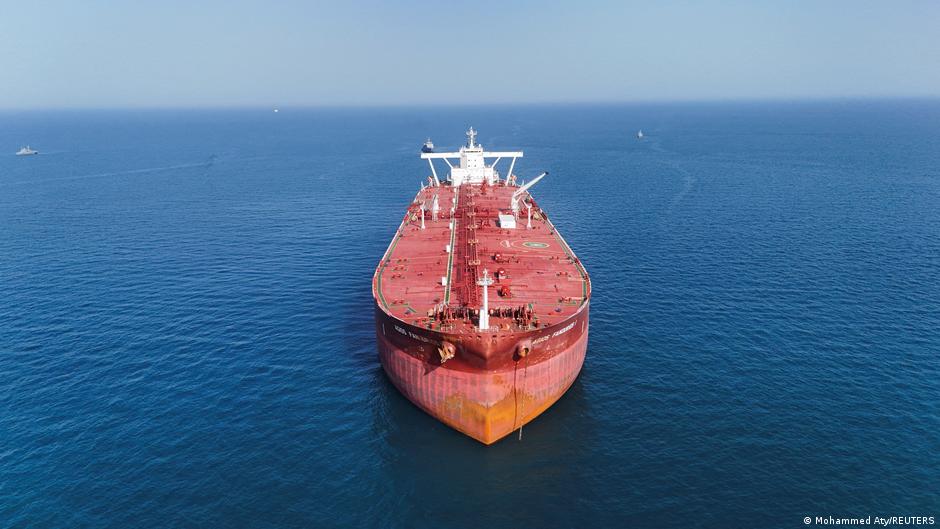
When can stranded ships start moving? Once safe corridors in the strait have been established, hundreds of commercial vessels and their crews that have been stranded for months in the wider Gulf region can begin moving. Bloomberg cited data from commodity intelligence firm Kpler that 300 fully loaded vessels are currently sitting in the Gulf, while a further 250 are empty and awaiting loading, once the strait reopens. Nearby in the Gulf of Oman, a further 300 empty tankers are awaiting permission to enter the Gulf. Why Saudi Arabia is redrawing its global alliances To view this video please enable JavaScript, and consider upgrading to a web browser that supports HTML5 video Staffing those ships could be another hurdle. Around 20,000 seafarers are estimated to remain aboard stranded vessels, according to the UN's International Maritime Organization. The UN agency also confirmed that 14 crew members have been killed in attacks, around half of them from India, the third-largest provider of seafarers after the Philippines and China. Amid growing reluctance among crews to accept deployments in the Gulf region, India's Directorate General of Shipping on Sunday ordered employment agencies to restrict deployments to conflict areas. Damaged energy facilities and a return to normal Gulf countries, meanwhile, can now begin to ramp up oil and gas production. But this requires safety inspections of energy facilities, repairs to any damaged infrastructure and the phased return of workers and maintenance crews. A full restart will hinge on restoring shipment schedules, securing enough tankers and convincing international buyers that energy flows are reliable again.
Neil Shearing, group chief economist at UK-based Capital Economics, projected Monday that it would take until the end of September for around 80% of energy flows through Hormuz to resume. Shearing warned that natural gas flows "will be slower to return," citing damage to Qatar's Ras Laffan liquefied natural gas hub — where attacks knocked out about 17% of the country's export capacity, likely for several years. What else could halt regional progress? The biggest unresolved issue around the US-Iran framework agreement is that it is just an outline for negotiators to find a lasting end to the conflict. Looking ahead the US is insisting on a permanently toll-free strait, while Iranian officials have spoken of "service fees" and retaining control of the waterway, along with neighboring Oman. With broader issues, like Iran's nuclear ambitions, sanctions relief and Tehran's support for groups like Hezbollah and the Houthis still not resolved, analysts think there is a real risk of more attacks. Emboldened by its leverage over the Strait of Hormuz, Iran may continue to test boundaries, while Israeli Prime Minister Benjamin Netanyahu has stressed that his country is not bound by the agreement. He warned that Israel will continue to act in self-defense, raising fears that unilateral strikes could quickly unravel the fragile framework. Edited by: Tim Rooks
 The BriefWire