Sky-high shipping costs squeeze Gujarat trade margins amid Gulf unrest
Gujarat exporters face crisis over rising logistics costs and West Asia uncertainty (AI image used for representational purpose only) Avoiding Hormuz Viranchi Shah Hitesh Bellani
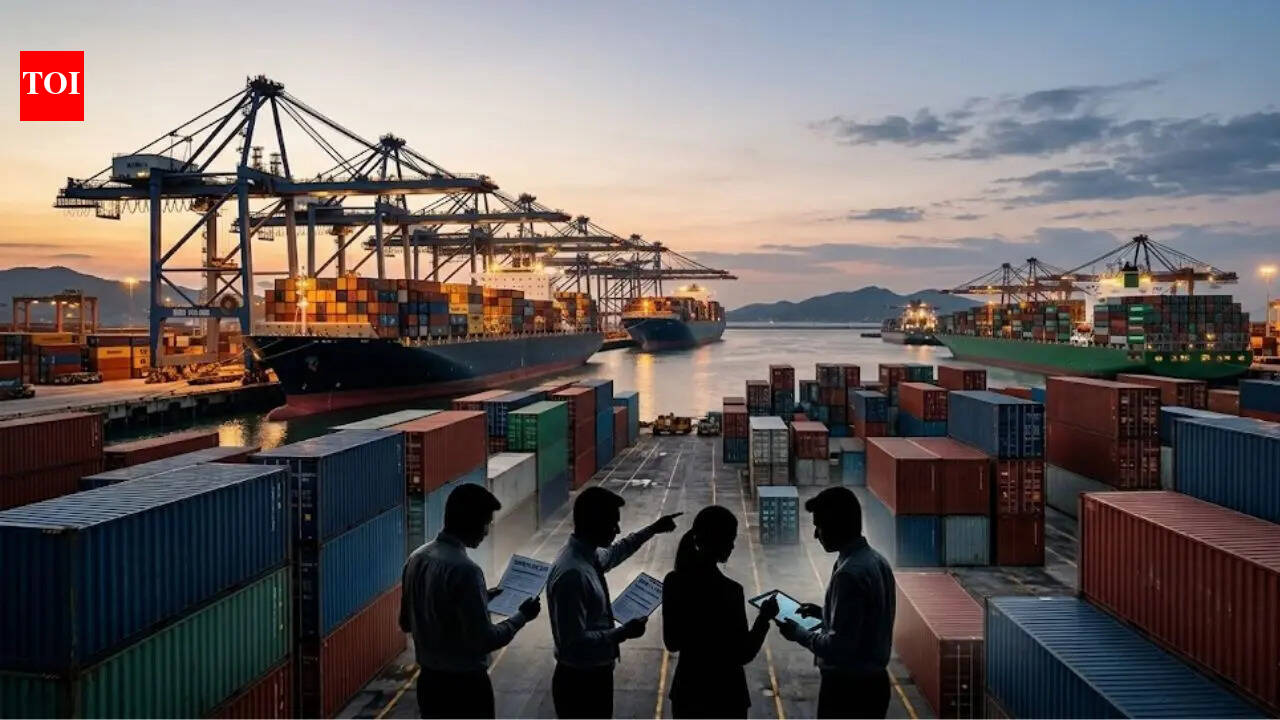
Gujarat exporters face crisis over rising logistics costs and West Asia uncertainty (AI image used for representational purpose only) Avoiding Hormuz Viranchi Shah Hitesh Bellani Flight frequencies drop, cargo costs soar Samir Shah Textile units see impact on margins, orders Darshan Mashroo Rising input costs bitter pill for pharma companies Apurva Shah Solar power sector faces the heat Gujarat’s exporters are grappling with a steep rise in logistics costs and growing uncertainty on trade with the West Asia amid the ongoing conflict. Freight charges for a 20-foot container from Mundra port to Qatar have surged from around $400 before the conflict to $5,500-$6,000, while rates to Kuwait have risen from about $600 to nearly $5,000 per container, exporters said.Disruptions on traditional shipping routes have forced cargo to move through multiple transshipment points, increasing handling costs, transit times and insurance expenses. “The logistics chain has become far more complicated and expensive. Multiple handling points, rising fuel costs and war-zone premiums have pushed freight rates to unprecedented levels,” said exporters trading with Gulf countries.Merchant exporter Yogendra Malu said overseas buyers are unable to absorb the higher costs. “Crude oil prices are fluctuating sharply and purchases have become strictly need-based. At the same time, rising raw material prices in India are adding to domestic costs,” he said.Industry representatives said shipping lines have rerouted vessels, revised schedules and reduced capacity, leading to delays, cargo rollovers and congestion at key hubs.
War-risk insurance premiums have also risen sharply, with some routes facing restricted coverage.“Every week brings fresh changes in routing and schedules, and the cascading delays are impacting exporters and importers across sectors,” said Darshan Mashroo, vice-president of the Ahmedabad Custom Brokers’ Association.Such disruption has spread beyond sea freight. Reduced flight frequencies, revised operating protocols and capacity shortages have pushed up air cargo costs, too, causing congestion and shipment delays.“The rise in prices and new protocols have increased transportation charges,” said Samir Shah, president of the Cargo Agents Association of India. He added that exporters are often unable to pass on the higher costs because of intense global competition and stringent certification requirements.The impact is being felt across sectors including pharmaceuticals, perishables, dyes, engineering goods, electronics and technical textiles, where rising logistics costs are eroding margins and affecting shipment viability.Air cargo movement from Gujarat has come under pressure amid soaring freight rates, congestion and irregular flight operations.Parag Baraiya, president of the Ahmedabad Custom Brokers’Association, said freight charges for a 500kg shipment to Dubai have jumped from about Rs 150 a kg to nearly Rs 375 per kg. “Space congestion is being witnessed across several sectors because flights are not operating regularly. Cargo pile-ups and warehouse congestion are being reported at multiple locations,” he said.Industry players said the increase is directly eroding margins as most export orders are negotiated in advance, leaving little room to pass on higher logistics costs to buyers.Ahmedabad’s export-import ecosystem is heavily dependent on Middle East connectivity, particularly for pharmaceuticals, perishables, dyes and engineering goods.According to industry estimates, 55%-60% of the region’s air cargo moves through Emirates-operated connections.
Seasonal exports such as mangoes have also been affected by delays and higher freight charges.Exporters of electronics, including mobile phone supply chains linked to global brands, are facing similar pressures. “Margins on some shipments have virtually disappeared because of the steep increase in freight costs,” said an air freight forwarder.Textile makers and exporters in Gujarat say while a weaker rupee has improved export competitiveness, much of the advantage is being diluted by market uncertainties and tough price negotiations with overseas buyers.“Buyers, especially in the garments sector, are negotiating hard because of currency volatility. As a result, exporters are unable to fully realise the advantage,” said a director of a leading textile company.Rohit Mall, associate vice-president of Mallcom (India) Ltd said, “We export industrial garments to Europe and the US, but are unable to fully transfer the increased input costs to buyers. Delays in receiving raw materials have also forced us to maintain larger inventories and plan production more conservatively.”The disruption is also affecting textile processing units. Sandip Shah, secretary of Maskati Cloth Market Mahajan, said rising input costs have pushed up the prices of dyes and fabrics, increasing the overall cost of production.The Indian Drug Manufacturers’ Association (IDMA) said the prices of active pharmaceutical ingredients (APIs) and key starting materials (KSMs) have risen by 20% to 100% over the past few months, putting pressure on drug manufacturers.“Prices of several APIs and raw materials, including aceclofenac, deflazacort and citric acid, have increased significantly.
For example, the price of deflazacort has risen from Rs 70 a gram to Rs 90 a gram, while citric acid prices have increased from Rs 65 a kg to Rs 95 a kg,” said Sumit Agrawal, vice-chairman of the IDMA Gujarat State Council.He attributed the rise largely to the higher cost of solvents. “Prices of solvents such as methanol, isopropyl alcohol (IPA) and acetone have increased sharply. Since these solvents are linked to the petroleum industry, any increase in crude oil prices inevitably pushes up their cost, which in turn raises the manufacturing cost of APIs and KSMs,” Agrawal said.Gujarat’s solar industry is also feeling the impact as freight rates from China have increased significantly, while prices of several metals have also surged. Kunj Shah, chairman of the energy committee of the Gujarat Chamber of Commerce and Industry (GCCI), said that despite significant investments in developing the domestic solar supply chain in recent years, the sector remains heavily dependent on imports of critical components such as inverters, solar cells and Battery Energy Storage Systems (BESS). “As a result, project costs have risen by 15-20%,” Shah said.
 The BriefWire