The potential of geothermal energy for US homes
Advancements in geothermal systems and sustained political support provide an opportunity for the industry to scale. At Cornell University in upstate New York, researchers are
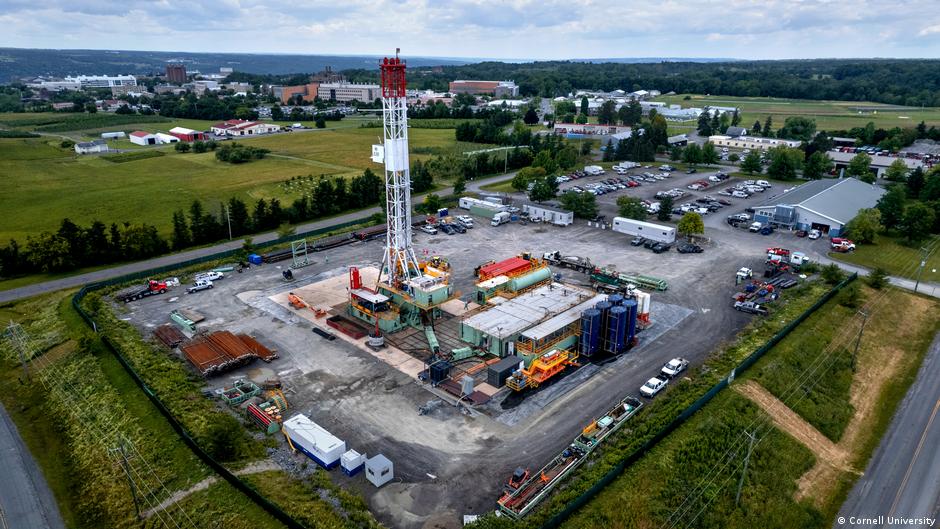
Advancements in geothermal systems and sustained political support provide an opportunity for the industry to scale. At Cornell University in upstate New York, researchers are testing how a deep geothermal system can work far from the tectonic boundaries and volcanoes that have long defined where the energy is viable. By tapping into the planet's internal warmth, the project, known as Earth Source Heat, could supply the 2,300-acre (931-hectare) campus in Ithaca with fossil fuel-free heat to help the university become carbon neutral by 2035. "We are developing the tools to do geothermal where the people are, not making people go out to where the rocks are hot," said Wayne Bezner Kerr, project program manager. If it succeeds, it could serve as a blueprint for scaling geothermal heating across New York and the cold, densely populated Northeast United States. That would be a departure because conventional geothermal systems depend on naturally occurring underground reservoirs of hot water, largely limiting development to the west of the country. A researcher takes samples of rock chips from Cornell's drill site for geological evaluation Image: Jason Koski/Cornell University What makes the Cornell project different is that it's an enhanced geothermal system (EGS). It works by drilling deep into hot, hard rock, fracturing it, and circulating water through the cracks to capture heat for energy. The approach borrows heavily from oil and gas techniques of horizontal drilling and fracking. However, unlike oil and gas fracking, Cornell's deep geothermal system uses much lower pressures, and the researchers have said they will avoid using explosives and environmentally harmful substances for fracturing rock. And apart from the geographical benefits, these technological advances also have a political advantage. Even under President Donald Trump, geothermal has largely escaped the polarization that surrounds other clean energy such as wind and solar, which is good news for a potential scale-up. Geothermal's untapped potential Geothermal can be used to generate electricity and to heat and cool buildings. The United States leads the world in installed geothermal capacity, with about 3.7 gigawatts.
Yet it remains a marginal player, with geothermal power plants generating just 0.4% of the country's total utility-scale electricity in 2023. But it could become a "meaningful" part of the US mix within the next 25 years, according to Drew Nelson of Project InnerSpace, a nonprofit working to scale geothermal systems. This chimes with a 2022 analysis that found geothermal capacity could reach 90 gigawatts by 2050. Much of the potential comes from enhanced geothermal systems. In Utah, for example, what is being billed as the world's largest next-generation geothermal is under construction. Developed by Texas-based geothermal company, Fervo Energy, the Cape Station is expected to add 500 megawatts to the grid by 2028 — enough to power some 350,000 US homes annually. How big oil and gas can spark a geothermal energy revolution To view this video please enable JavaScript, and consider upgrading to a web browser that supports HTML5 video The company previously completed a pilot project in Nevada. The 3.5-megawatt facility supplies power to the state's grid and supports Google's data centers and cloud region in the state. Nelson described the application of oil and gas techniques to geothermal in the past couple of years as "a revolution." These techniques make "existing geothermal sites more efficient as well as opening up vast new swaths of country for geothermal potential," he added. Technological advances in geothermal are converging with rising demand for clean, reliable energy that can help the US meet skyrocketing demand, added Nelson. "Those two things are coming together nicely to create a potential market for geothermal to scale," he said. Political support for geothermal energy Since returning to office in 2025, President Donald Trump has clawed back billions in funding for climate and clean energy investments, ordered work to halt on wind projects, and pushed to expand domestic oil and gas drilling. But geothermal — particularly next-generation technologies — continues to receive support from the administration. Energy Secretary Chris Wright, formerly CEO of oilfield services company Liberty Energy, which invested in Fervo Energy, has publicly backed geothermal expansion.
This year, the Department of Energy (DOE) launched a 15-state initiative to accelerate geothermal deployment by setting state-level goals, improving resource mapping, reducing project costs, and addressing regulatory barriers. The DOE also recently announced $171.5 million in funding (€145 million) for enhanced geothermal projects, including field tests for electricity generation and exploratory drilling to identify promising sites. And while the "One Big Beautiful Act" — a sweeping tax and spending package signed into law in July 2025 — rolled back some clean energy tax credits, it preserved incentives for geothermal heating and cooling. US President Donald Trump signing legislation that rolled back some clean energy incentives while preserving support for geothermal Image: Leah Millis/REUTERS "You look at the policies of President Trump and the policies of President Biden, there's not a lot of overlap in their policies, but geothermal is in that overlap," said Nelson, adding that one reason for that is its reliability. "No matter your political persuasions, there's a realization that we need more of it," he told DW. Beyond electricity generation Electricity is not the only domain where geothermal could have a major impact. Back at Cornell, the Earth Source Heat researchers are focusing on using deep geothermal energy to heat buildings directly, rather than converting it into electricity first. "If we were to use geothermal resources to meet our heat requirement, we could do so enormously more with a much greater efficiency than we could by converting it to electricity and then using that electricity to make heat available to us," Wayne Bezner Kerr said. Cornell is developing a system to deliver heat across the university. On the eastern part of the campus, it has already converted its heating network from steam to hot water, which is more efficient and allows new sources, like geothermal, to be integrated more easily. In 2022, with support from a DOE grant, Cornell drilled a nearly two-mile-deep exploratory borehole beneath its campus. Though Kerrs says the geothermal project has stalled for now amid changes in federal administration and policy direction, he is optimistic that they will be able to secure new funding.
The ultimate aim is to demonstrate that it can produce heat reliably over long periods. How Iran war energy crisis strengthens case for renewables To view this video please enable JavaScript, and consider upgrading to a web browser that supports HTML5 video Community model for geothermal energy Meanwhile, in Hinesburg, a mixed-income housing development is being built around a shared geothermalheat pump system owned and operated by utility Vermont Gas Systems. Instead of installing individual systems, homes in the town in the northeastern state of Vermont connect to a centralized network — similar to a natural gas line but carrying heated and cooled water. That model addresses one of geothermal's biggest barriers: upfront cost. "The upfront capital costs are prohibitive, so we have never been able to do a geothermal project," said Amy Demetrowitz, chief operating officer of Champlain Housing Trust, an affordable housing developer involved in the project. Geothermal power plants have largely been used in places like California so far Image: Jim West/imageBROKER/picture alliance By shifting those costs to the utility, the system makes geothermal more accessible for affordable housing and larger developments. "We need to build more affordable housing and then look at how we are heating and cooling," Demetrowitz said. "We want to make sure it's an affordable source, and we have been really committed to decarbonizing our portfolio. " The challenge of high initial costs could be improved with more deployment, Drew Nelson pointed out. "The more projects you do, the more that risk can be understood and quantified, and the more the cost is going to come down," he said. Edited by: Tamsin Walker
 The BriefWire