Farming meets AI: California farmers cut pesticide use by 70% and save $250 per acre with laser robots
Why California's farmers are turning to AI Meet the laser robot that zaps weeds The night-time robot fighting pests Saving farmers more than $250 per
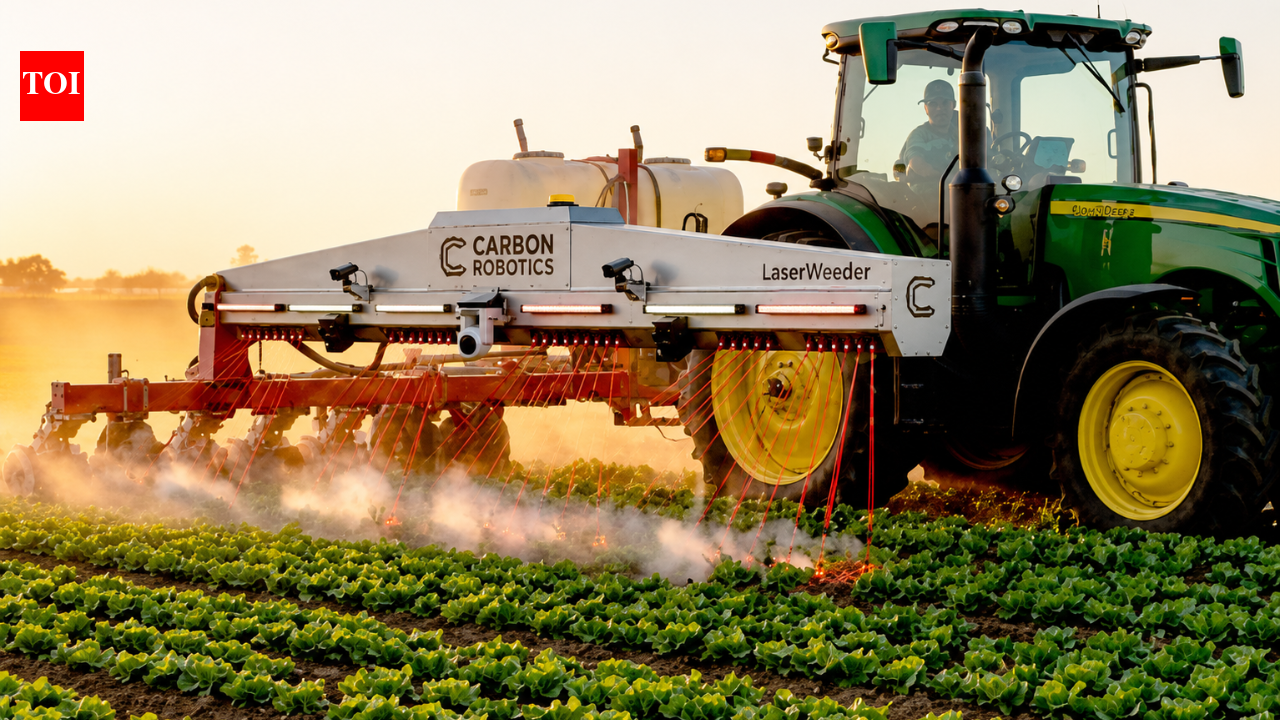
Why California's farmers are turning to AI Meet the laser robot that zaps weeds The night-time robot fighting pests Saving farmers more than $250 per acre Healthier soil and stronger harvests Tackling labour shortages and herbicide resistance A glimpse into the future of farming For generations, farmers have relied on a combination of manual labour, herbicides and pesticides to protect crops from weeds and pests. Now, artificial intelligence is offering a radically different approach. In California's Salinas Valley, often called America's Salad Bowl, autonomous robots equipped with AI, high-resolution cameras, lasers and UV light are helping growers tackle some of agriculture's biggest challenges. Companies such as Carbon Robotics and TRIC Robotics have developed machines that identify weeds, destroy them with lasers and even patrol fields overnight to target pests. The result is lower chemical use, reduced labour costs and healthier crops, all while improving farm productivity.California produces a large share of the United States' lettuce, spinach and other leafy greens, making efficient farming essential. However, growers are facing mounting challenges, including labour shortages, rising wages, herbicide-resistant weeds and increasing pressure to reduce chemical use.Traditional methods often require large crews to manually remove weeds or repeated applications of herbicides and pesticides.These approaches are becoming more expensive and less effective, prompting farmers to explore automated alternatives.AI-powered robots are emerging as one of the most promising solutions.One of the most talked-about agricultural technologies is Carbon Robotics' LaserWeeder.The machine combines artificial intelligence, high-resolution cameras and powerful lasers to identify weeds growing among crops.
Once a weed is detected, the robot instantly fires a laser pulse that destroys the unwanted plant without damaging nearby crops.Unlike conventional herbicides, the system does not rely on chemicals. Instead, it uses computer vision to distinguish crops from weeds with remarkable precision.The latest versions can reportedly eliminate hundreds of thousands of weeds per hour, allowing farmers to cover large areas while reducing dependence on manual labour.While LaserWeeder focuses on weeds, TRIC Robotics has developed a different solution for pests and plant diseases.Its autonomous Luna robots patrol fields overnight, using UV-C light to damage the DNA of pests, moulds and fungal pathogens. The robots also use vacuum systems to physically remove insects from crops.Night-time operation is particularly important because UV treatment is more effective during dark hours and can be applied without interfering with farm activities during the day.This combination of light-based treatment and insect removal offers farmers a non-chemical method of controlling pests.One of the most significant benefits reported by growers is the dramatic reduction in chemical use.By replacing many conventional spraying and weeding operations with AI-powered machines, some farms have reduced pesticide usage by as much as 70%. This helps lower costs while also addressing concerns about environmental impact and chemical resistance.Reducing chemical inputs can benefit soil ecosystems and decrease the likelihood of weeds and pests developing resistance to traditional treatments.The economic advantages are attracting just as much attention as the environmental benefits.According to reports from farms using the technology, robotic weed control can reduce weeding costs by around 40%, resulting in savings of more than $250 per acre in some cases.Because labour is one of the largest expenses for many vegetable growers, automation can deliver substantial financial benefits.
Industry estimates suggest that many robotic systems can pay for themselves within one to three years through lower labour costs and improved productivity.Growers adopting these technologies report improvements beyond simple cost savings.Farms such as Braga Fresh have highlighted healthier soil conditions and reduced reliance on chemicals. By targeting weeds and pests more precisely, farmers can avoid broad chemical applications that may affect beneficial organisms living in the soil.Some operations have also reported higher yields, with gains varying depending on crop type, growing conditions and the scale of deployment.Labour shortages remain one of agriculture's most pressing issues. Finding enough workers for labour-intensive tasks such as hand weeding has become increasingly difficult in many farming regions.At the same time, weeds across North America are becoming resistant to commonly used herbicides, reducing the effectiveness of traditional weed-control methods.Laser-based weed removal offers a different approach by physically destroying weeds rather than relying on chemical treatments. This allows farmers to maintain control even when herbicides become less effective.The robots working in California's fields today represent a broader shift toward precision agriculture, where AI, automation and advanced sensors perform tasks once handled entirely by people and chemicals.As the technology improves and adoption grows, experts believe autonomous machines could become as common on farms as tractors and irrigation systems.
For farmers facing rising costs, labour shortages and sustainability challenges, AI-powered robots may offer a glimpse of agriculture's next chapter—one where lasers, cameras and algorithms play a central role in growing the world's food
 The BriefWire