Meet Carol Ruckdeschel: The 84-year-old woman who chose to live alone on a wild island filled with snakes, horses and devoted life to nature
PC: BBC Carol Ruckdeschel ’s decision to stay behind: From visiting researcher to permanent island life Cumberland Island: A remote barrier world shaped by isolation
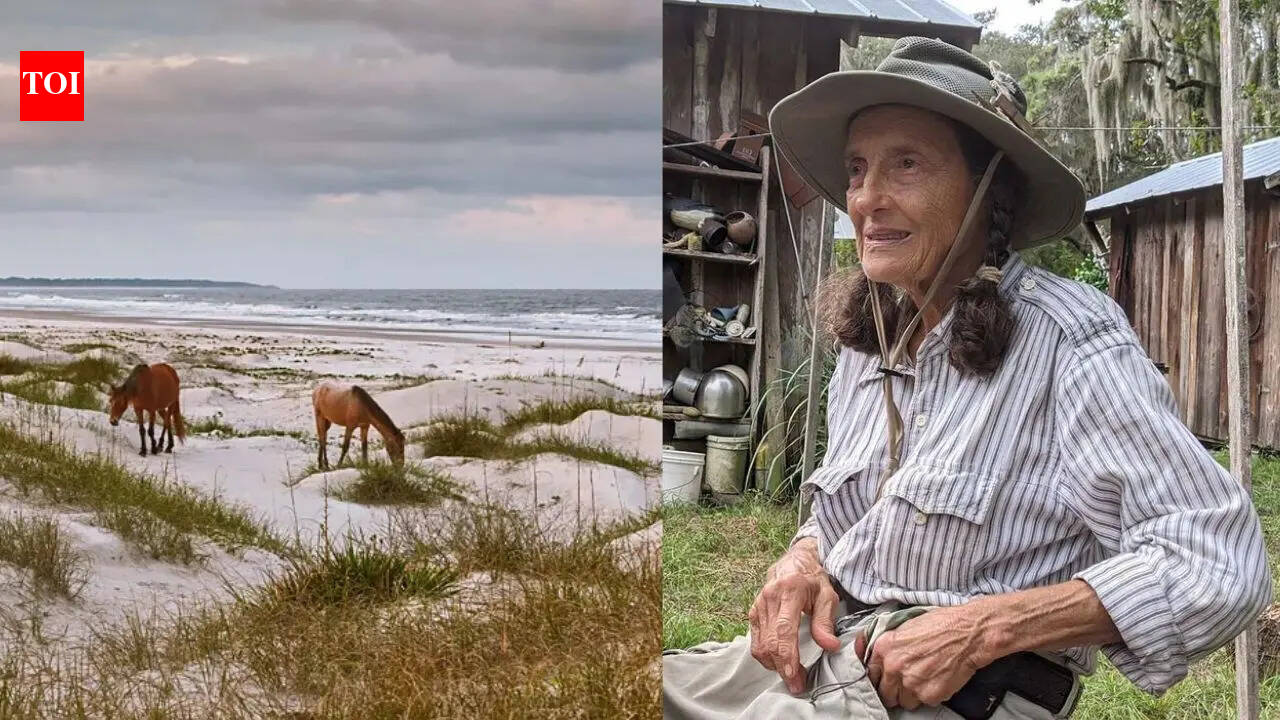
PC: BBC Carol Ruckdeschel ’s decision to stay behind: From visiting researcher to permanent island life Cumberland Island: A remote barrier world shaped by isolation and the tide What the tide leaves behind, and takes away again An island that never stops evolving despite protection Off the coast of Georgia, the Atlantic flattens into long pale stretches of sand that seem to go on without hurry. Marshland folds into forest, forest gives way to dune, and nothing holds a fixed line for long. Cumberland Island sits in that blur between land and water, reached only by ferry and left just as easily. People come for a few hours, sometimes a weekend, then drift away again with salt still on their shoes and not much else to carry back. It rarely becomes familiar in the way places on the mainland do. Somewhere further north on the island, an older woman has spent most of her life staying put in that shifting landscape, moving through it slowly, watching what changes and what refuses to.As reported by the BBC, at 84, she continues to walk the same stretches of coastline she first encountered when she arrived on the island as a younger woman. The pace has changed, though the direction has not. Sand, water, forest edge, marsh.Carol Ruckdeschel first came here in the 1960s, when she was still studying biology and the island was not yet something she lived inside permanently.
Like most visitors, she left.Unlike most, she came back and stayed long enough for departure to stop feeling like the default option, as reported by the BBC.By the early 1970s, she was living on the island full-time. The place she settled into was not comfortable in any conventional sense. There was no easy infrastructure to rely on. Water had to be gathered or carried. Heat, food, repairs, everything took effort that never really eased with time. The structure she occupied changed slowly over the years, patched and adjusted rather than properly built in any standard way.Her routine never took on the softness that people sometimes imagine when they hear about isolated coastal living. Even now, well into her eighties, she still moves through the island on foot. Not in a leisurely way. More in the manner of someone continuing a pattern that has never really paused.Cumberland has no bridge, no casual drive-in access. Everything arrives by boat, which already filters the kind of attention it receives. Once you step off the ferry, the island does not behave like a destination so much as a stretch of land that continues its own logic without acknowledging visitors.The surface of it is never still. Sand shifts after storms, tree lines creep into spaces once cleared, and marsh edges redraw themselves without warning.
Horses move across open ground in scattered groups, their presence so normalised that it almost disappears into the wider scene. People argue about them, about whether they belong here or not, though the island never seems interested in that argument.Sea turtles return to the same beaches when conditions allow. Shorebirds arrive in bursts and leave just as quickly. Offshore, dolphins pass through as if following instructions only they understand. On land, snakes slip between grass and fallen timber, rarely noticed unless someone is already looking down.Most of her attention sits along the shoreline, where land and sea exchange things constantly. The beach does not keep records in any fixed sense; it only rearranges them. What washes up in the morning will not be there by evening.She has spent years walking those stretches, noting what appears after tides move through. Driftwood gathering in odd clusters. Shells broken in ways that suggest pressure rather than time. Birds resting in groups that shift location without a pattern. Small animal remains that arrive and disappear again with the tide.Sea turtles, when encountered injured or dead, are examined with a level of attention that belongs more to field science than casual observation. Measurements are taken. Conditions noted. Nothing is treated as symbolic. It is just data, even when it looks like something else to passers-by.Snakes appear in these environments too, not as dramatic encounters but as part of the same quiet system.
In warm patches near forest edge or in damp ground close to marsh, they move through without announcement. Most of the time they are not recorded in stories about the island, yet they are present in the same spaces she walks through every day.The northern part of Cumberland, where she lives, does not offer much in the way of ease. Visitor traffic thins out long before reaching it. Paths become less defined. Trees close in. The sound of movement changes, less human interruption, more wind through live oak branches.Her home has been assembled gradually over time. Nothing about it suggests completion. Rainwater is collected where possible. Wood is stored for cooking and heat. Small patches of garden exist when conditions allow, though the island’s weather and wildlife rarely cooperate fully with planning.There is contact with the mainland, but it never feels central to how she lives. Supplies arrive when needed. Equipment is repaired when it breaks. The separation is practical rather than symbolic. The idea of total isolation does not really hold here, even if the distance sometimes feels like it might.
 The BriefWire