The 440Kg Question: Why Iran's Uranium Stockpile Could Make Or Break Trump's Peace Deal
The 440Kg Question: Why Iran's Uranium Stockpile Could Make Or Break Trump's Peace Deal Published By, Last Updated: June 15, 2026, 09:02 IST For Washington
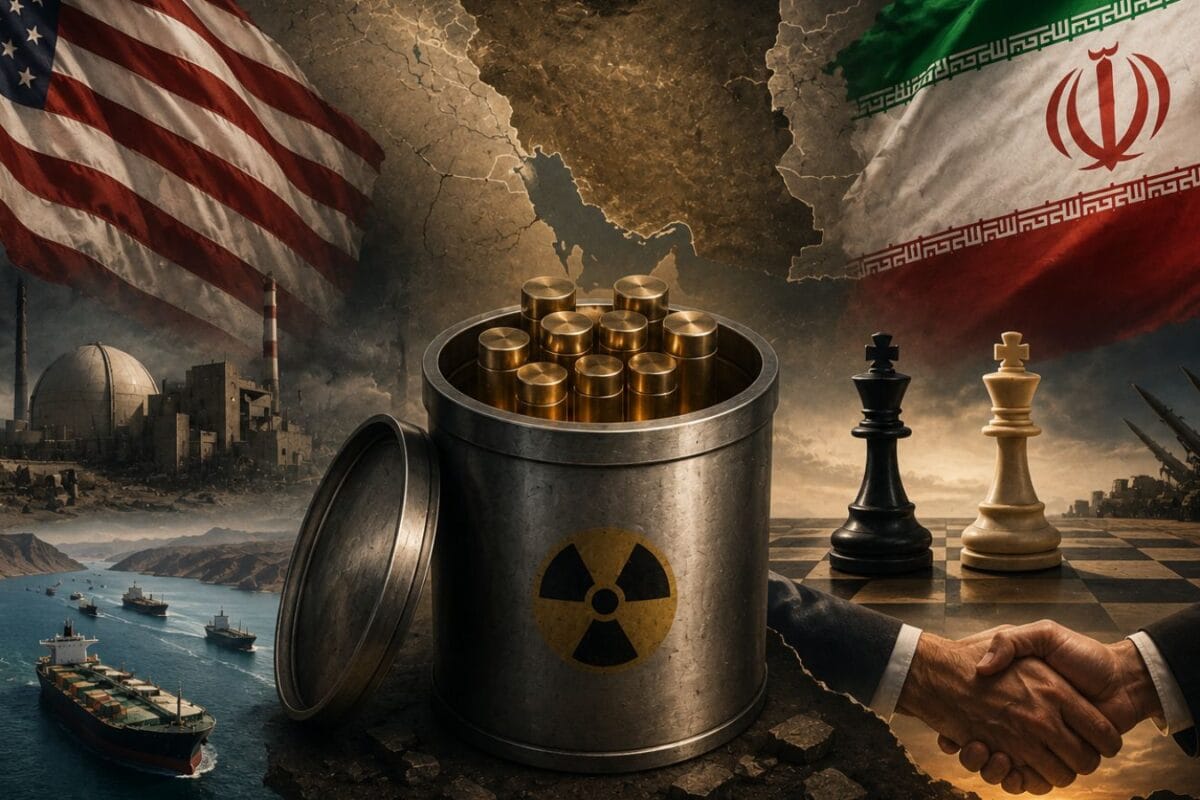
The 440Kg Question: Why Iran's Uranium Stockpile Could Make Or Break Trump's Peace Deal Published By, Last Updated: June 15, 2026, 09:02 IST For Washington, the uranium represents a potential future nuclear threat. For Tehran, it represents leverage and one of its strongest bargaining chips Rapid Read Weighing about 440 kilograms, the stockpile of highly enriched uranium has emerged as the single-biggest obstacle to a lasting agreement between Washington and Tehran. (AI-Generated Image) As the United States and Iran move closer to a peace deal after months of conflict in West Asia, one issue continues to overshadow discussions on sanctions relief, troop withdrawals and the reopening of the Strait of Hormuz. Weighing about 440 kilograms, the stockpile of highly enriched uranium has emerged as the single-biggest obstacle to a lasting agreement between Washington and Tehran. According to CNN, the fate of Iran’s uranium stockpile has become one of the central sticking points in negotiations aimed at transforming a fragile ceasefire into a broader peace settlement. ALSO READ | Why Did Iran Wait Until Midnight To Finalise Its Peace Deal With Trump? US President Donald Trump has made clear where he stands on the issue. Speaking at the White House in May, he said of Iran’s enriched uranium: “We will get it. We don’t need it, we don’t want it. We’ll probably destroy it after we get it." But Iran’s leadership is not willing to relent. According to Reuters, Iran’s Supreme Leader directed that the country’s highly enriched uranium “should not be sent abroad". Between those two positions lies one of the most difficult questions facing negotiators—what exactly should happen to 440 kg of uranium enriched to 60 per cent purity? Why 440Kg Matters The stockpile consists of uranium enriched to roughly 60 per cent. The number is critical because most civilian nuclear power reactors use uranium enriched to around 3-5 per cent.
Nuclear weapons, by contrast, require uranium enriched to about 90 per cent. Iran’s stockpile, therefore, sits uncomfortably close to weapons-grade territory. According to assessments cited by CNN, international inspectors and nuclear experts believe the material could theoretically be enriched further to weapons-grade levels in a relatively short period if Iran chose to do so. Experts estimate that the stockpile contains enough material for around 10 nuclear weapons if enriched to 90 per cent. Iran maintains that its nuclear programme is peaceful and insists it has every right under international law to enrich uranium for civilian purposes. The United States, Israel and several European governments argue that enrichment to 60 per cent goes far beyond civilian requirements and significantly shortens the pathway to a bomb. ALSO READ | US, Iran Reach Peace Agreement; Trump Says Strait Of Hormuz Will Be ‘Permanently Toll Free’ That is why the debate is not simply about uranium. It is about what that uranium could potentially become. The Material Survived, Even If The Facilities Didn’t The issue has become even more complicated following months of conflict and military strikes on Iran’s nuclear infrastructure. While several enrichment facilities suffered damage, Western intelligence assessments and reports cited by Reuters suggest much of the highly enriched uranium itself may have survived. Unlike large nuclear facilities, uranium can be transported, hidden, dispersed or stored at undisclosed locations. As a result, even after military operations targeting Iran’s nuclear programme, the material at the centre of international concern may still exist. For negotiators, the question is no longer only whether Iran can enrich uranium. It is whether the existing stockpile can be fully accounted for. The Verification Problem This uncertainty has created what many experts describe as the biggest challenge facing negotiators: verification. The International Atomic Energy Agency (IAEA), the UN’s nuclear watchdog, has repeatedly stressed the need to resume inspections and monitoring activities in Iran.
Inspectors need to know where the uranium is, how much remains and whether all of it has been accounted for. Without that information, any future agreement would be difficult to verify. ALSO READ | Obama, Trump To Biden: How Iran Got To Nuclear Threshold On The Watch Of 3 US Presidents The challenge is evident even in the watchdog’s own assessments. IAEA Director General Rafael Grossi told Reuters that inspectors believe “a bit more than 200 kg" of Iran’s 60 per cent-enriched uranium may be located in tunnel facilities near Isfahan. However, the agency is still seeking a complete accounting of the country’s enriched uranium stockpile. Why Trump Wants The Uranium Removed For Washington, the stockpile represents the biggest unresolved risk in Iran’s nuclear programme. Trump and his advisers argue that as long as the uranium exists, concerns about a future Iranian weapons programme will persist regardless of what happens to enrichment facilities. That explains why the administration has pushed for the material to be removed, destroyed or rendered unusable as part of a broader settlement. Trump’s declaration—“We’ll probably destroy it after we get it"—reflects a broader belief within his administration that dismantling facilities alone is not enough if the enriched uranium remains intact. Why Iran Refuses To Give It Up Iran sees the issue very differently. For Tehran, the stockpile is also a symbol of national sovereignty and a source of negotiating leverage. Iranian officials argue that the material was produced through a domestic nuclear programme that the country has spent decades building despite sanctions, sabotage operations and military pressure. That helps explain why Tehran has resisted proposals to transfer the uranium abroad. What Are The Options? Several proposals have been discussed by diplomats and nuclear experts. One possibility is exporting the uranium to another country under international supervision. Another is “downblending" the material, a process that dilutes highly enriched uranium into lower-enriched forms suitable for civilian use but unusable for weapons.
A third option would involve placing the stockpile under strict international monitoring while keeping it inside Iran. Why The Entire Deal May Depend On It The broader US-Iran discussions cover a wide range of issues, including sanctions relief, access to frozen Iranian assets, maritime security and future nuclear negotiations. Yet despite those sweeping topics, diplomats continue to return to the same question. What should happen to the 440 kg stockpile? For Washington, the uranium represents a potential future nuclear threat. For Tehran, it represents leverage and one of its strongest bargaining chips. In many ways, the debate over the stockpile encapsulates the larger challenge facing both sides. The United States wants guarantees that Iran can never quickly move toward a nuclear weapon. Iran wants recognition of its right to maintain a civilian nuclear programme without surrendering what it sees as a hard-won national asset. That is why a stockpile weighing less than half a tonne has become the focal point of one of the world’s most consequential diplomatic negotiations. News18 Newsletter Handpicked stories, in your inbox A newsletter with the best of our journalism submit About the Author Apoorva Misra Apoorva Misra is News Editor at News18.com with over nine years of experience. She is a graduate from Delhi University's Lady Shri Ram College and holds a PG Diploma from Asian College of Journalism,... Read More Location: Tehran, Iran First Published: June 15, 2026, 09:02 IST News explainers The 440Kg Question: Why Iran's Uranium Stockpile Could Make Or Break Trump's Peace Deal Disclaimer: Comments reflect users’ views, not News18’s. Please keep discussions respectful and constructive. Abusive, defamatory, or illegal comments will be removed. News18 may disable any comment at its discretion. By posting, you agree to our Terms of Use and Privacy Policy Loading comments...
 The BriefWire