Research Must Serve Public Welfare And National Development: CM Yogi Adityanath
Research Must Serve Public Welfare And Development: CM Yogi Adityanath Published By, Last Updated: June 14, 2026, 14:35 IST CM Yogi Adityanath said India holds
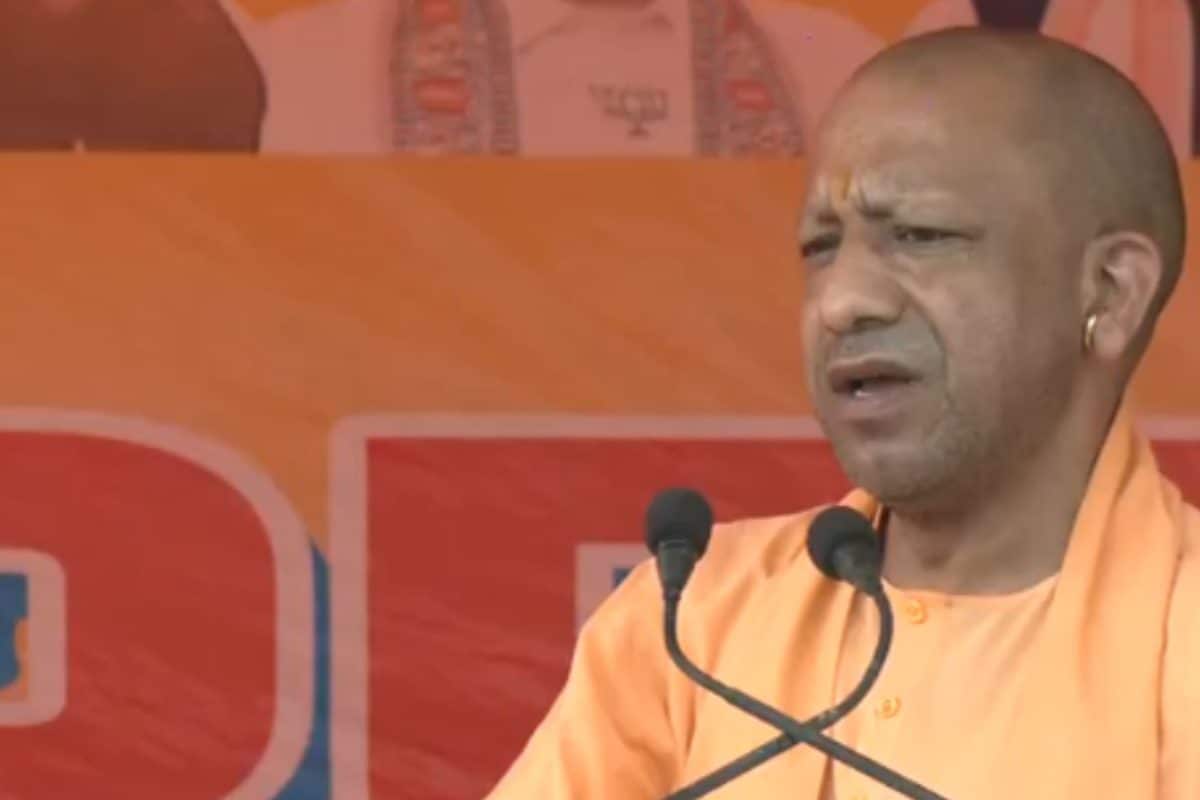
Research Must Serve Public Welfare And Development: CM Yogi Adityanath Published By, Last Updated: June 14, 2026, 14:35 IST CM Yogi Adityanath said India holds immense potential in science, agriculture, medicine, enterprise, Ayurveda and traditional knowledge. Rapid Read File photo of Uttar Pradesh's CM Yogi Adityanath. (ANI) Chief Minister Yogi Adityanath has called on young scientists, researchers and technology experts to align innovation and scientific research with nation building and public welfare, stressing that knowledge must move beyond laboratories to transform society and the economy. Addressing the inaugural session of the Seventh Convention of Vijnana Bharati in Kashi on Saturday, the Chief Minister said India holds immense potential in science, agriculture, medicine, enterprise, Ayurveda and traditional knowledge. He emphasised that research should not remain confined to academic circles but must contribute to economic advancement, public welfare and the strengthening of India as a global power. Adityanath expressed satisfaction that the convention was being held in Kashi, which he described as the “sacred land of knowledge," and noted that more than 1,300 delegates had registered for the event. He highlighted that Banaras Hindu University (BHU) was born out of the vision and dedication of Mahamana Madan Mohan Malaviya, with the objective of restoring Kashi’s ancient identity as a centre of knowledge and science. The Chief Minister said he was confident that integrating India’s knowledge traditions with modern science, research and innovation would play a crucial role in transforming the country into a developed nation and giving it a new identity on the global stage. Tracing India’s long history as a knowledge hub, he observed that while modern science has a history of about 400 to 500 years, India has been a centre of knowledge, science and innovation for thousands of years.
He pointed out that around 2,000 years ago, India’s share in the global economy stood at 44 to 45 percent, and even during periods of foreign invasions, it remained at 24 to 25 percent. However, by the time of Independence, he noted, this share had fallen to 1.5 to 2 percent. Adityanath underlined the scientific approach embedded in traditional Indian agriculture, stating that the Indian farmer was not merely a cultivator but also an inventor and innovator. Traditional systems of natural farming, animal husbandry and soil fertility management, he said, reflected scientific thinking. Referring to the Shrimad Bhagavad Gita, he noted that agriculture, cow protection and commerce were interconnected pillars of the Indian economy. Over time, he added, excessive dependence on chemical fertilisers and pesticides had led society away from these original traditions. He further remarked that Indian traders historically did more than engage in commerce; they also helped connect different parts of the nation. Similarly, Indian artisans were not just craftsmen but entrepreneurs who took Indian products to global markets. He asserted that this traditional model remains relevant today for achieving self-reliance and sustainable development. Citing the work of renowned scientist Jagadish Chandra Bose, the Chief Minister said Bose’s experiments had shown that plants possess sensitivity and consciousness. If a plant can respond to positive and negative behaviour, Adityanath argued, it is easy to imagine the impact of negative thinking on human society. He accused foreign invaders, Leftist ideologies and anti-India tendencies of having made sustained efforts over long periods to weaken India’s knowledge traditions and cultural pride, causing society to become disconnected from its roots. Sharing a personal memory from his childhood in Uttarakhand, the Chief Minister recalled how his mother encouraged children in their village to grow vegetables in small plots of land.
He said this illustrated how every aspect of the Indian way of life is intertwined with science. From the use of turmeric and spices in the kitchen to various daily traditions, he said, a scientific approach is clearly visible. Referring to the Covid pandemic, Adityanath stated that despite a population of 140 crore, India was able to confront the crisis effectively. He attributed this resilience to the natural immunity and traditional lifestyle of Indians. The Chief Minister also highlighted the traditional practice in villages of keeping livestock in agricultural fields from March to October, describing it as an excellent example of natural and cow-based farming. As this practice weakened, he said, the cost of cultivation rose, soil fertility declined and the agricultural crisis deepened. Discussing economic initiatives in Uttar Pradesh, Adityanath said that after his government took office in 2017, the state launched a campaign under the guidance of Prime Minister Narendra Modi to revive traditional enterprises. Through the One District One Product (ODOP) scheme, he explained, artisans were linked with technology, design, packaging and marketing. As a result, he said, the state’s exports increased from Rs 86 thousand crore to more than Rs 2 lakh crore. Currently, he added, 96 lakh MSME units are operating in Uttar Pradesh, providing employment to approximately 3 crore people and bringing the unemployment rate below 3 percent. He also referred to Jivaka, the Ayurvedic scholar of Takshashila University, recounting an episode from his education. After completing his studies, Jivaka’s guru asked him to find a plant that did not possess medicinal properties. After a long search, Jivaka reported that he could not find any such plant. The Chief Minister said this anecdote reflects the scientific outlook of India’s knowledge traditions, which recognise utility and research potential in every element of nature.
Addressing young scientists directly, Adityanath said there are innumerable opportunities for research and innovation in agriculture, medicine, technology, MSMEs, enterprise and various branches of science. He urged them to explore these avenues in the interest of the nation. He suggested that Vijnana Bharati organise innovation exhibitions alongside every convention and conduct innovation competitions beforehand, with outstanding researchers and innovators being recognised on the platform. He also called for better coordination with the Ministries of Science and Technology and other government departments so that researchers can present their innovations before relevant stakeholders. The event was attended by Vijnana Bharati’s All India Patron Officer Sunil Ambekar, President Dr. Shekhar C. Mande, BHU Vice-Chancellor Professor Ajit Chaturvedi, IIT BHU Director Professor Amit Patra and other distinguished dignitaries. News18 Newsletter Handpicked stories, in your inbox A newsletter with the best of our journalism submit About the Author News Desk The News Desk is a team of passionate editors and writers who break and analyse the most important events unfolding in India and abroad. From live updates to exclusive reports to in-depth explainers,... Read More First Published: June 14, 2026, 14:35 IST News india Research Must Serve Public Welfare And Development: CM Yogi Adityanath Disclaimer: Comments reflect users’ views, not News18’s. Please keep discussions respectful and constructive. Abusive, defamatory, or illegal comments will be removed. News18 may disable any comment at its discretion. By posting, you agree to our Terms of Use and Privacy Policy Loading comments...
 The BriefWire