Haryana wants companies to start WFH
Live Events as a Reliable and Trusted News Source Addas a Reliable and Trusted News Source Add Now! (You can now subscribe to our (You
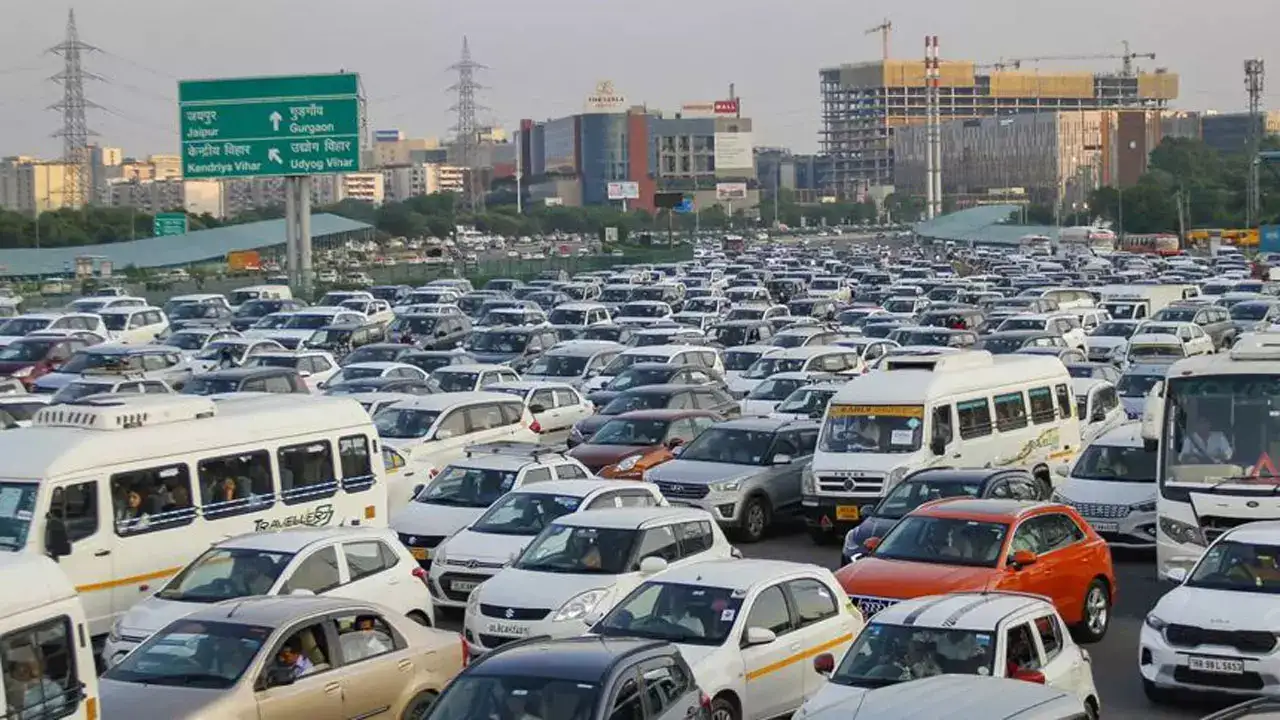
Live Events as a Reliable and Trusted News Source Addas a Reliable and Trusted News Source Add Now! (You can now subscribe to our (You can now subscribe to our Economic Times WhatsApp channel The Haryana government has urged private companies to adopt work-from-home (WFH) policies and staggered office schedules as part of a wider effort to reduce traffic congestion, fuel consumption, and energy use. The proposal comes amid concerns over rising fuel prices and global supply chain disruptions that are putting pressure on the economy.The initiative is expected to have a major impact on Gurgaon, one of India's largest corporate hubs, where daily office commutes contribute significantly to traffic jams across the city and the Capital Region (NCR). The Millennium City, which hosts the offices of several Fortune 500 firms and leading Indian companies, attracts nearly five lakh vehicles daily from Delhi, Faridabad and other NCR cities. With thousands of employees commuting to offices every day, the city routinely faces severe traffic snarls during rush hours.According to a report of the Times of India, the state has directed its industries department to work closely with leading industry associations, including Nasscom, CII, and FICCI to implement the plan.
Companies are being encouraged to allow employees to work remotely wherever possible and introduce flexible office timings to spread out peak-hour traffic.The move is an extension of austerity measures already introduced across government departments. These measures include limiting official vehicle usage, reducing fuel consumption, and promoting virtual meetings instead of physical gatherings.Meanwhile, an advisory has been issued by Chief Secretary Anurag Rastogi, who cited ongoing global supply chain challenges linked to the conflict in West Asia. The disruptions have pushed up fuel prices and increased pressure on imports, prompting the government to explore ways to conserve resources.Industry leaders have largely welcomed the proposal. Nitin Sahini, President of Foqal Analytics, described the government's approach as practical and beneficial.He noted that knowledge-driven industries have already demonstrated that hybrid and remote work models can maintain productivity and client service standards while reducing travel time and operational costs. He added that lower fuel consumption, reduced congestion, and improved air quality are among the key benefits.Sahini acknowledged that implementation may vary across sectors but said organizations capable of offering flexible work arrangements should seriously consider doing so.Employees have also voiced support for the initiative.
Pramod Singh, who works for a multinational company, pointed out that businesses continued to operate effectively during the Covid-19 pandemic when remote working became the norm.According to Singh, work-from-home arrangements do not negatively affect productivity and can help both employees and employers save on commuting, office space, and operational expenses.Alongside the advisory to private companies, the Haryana government has introduced several cost-saving measures within its own departments. The finance department has been instructed to reduce petroleum-related expenditure by 20% until September, while departments must report a minimum 10% reduction in vehicle usage each month. A dedicated monitoring portal will also be launched to track compliance and savings.The government has further ordered a 50% reduction in vehicles accompanying VIP convoys, subject to security requirements, and imposed a temporary ban on the purchase of non-electric vehicles by government departments, boards, corporations, and commissions.Citizens have also been advised to adopt fuel-saving and energy-efficient habits. The government is encouraging the use of public transport, carpooling, and electric vehicles while discouraging unnecessary foreign travel and participation in large gatherings.Residents have been urged to support local tourism, purchase locally made products, and conserve energy both at home and in workplaces.
Hotels, restaurants, and households have been asked to prioritize PNG usage and maintain air-conditioning temperatures within prescribed limits.The state has also called on citizens to participate in the "Mera Bharat, Mera Yogdan" campaign, which promotes sustainable living, resource conservation, and energy efficiency.Officials confirmed that the directives have been circulated to all administrative departments, district authorities, universities, boards, and corporations across Haryana for immediate implementation.
 The BriefWire