A Himalayan Adventure: The selfish act of trekking
Live Events BACK TO BASICS CONS OF CLIMBING as a Reliable and Trusted News Source Addas a Reliable and Trusted News Source Add Now! (You
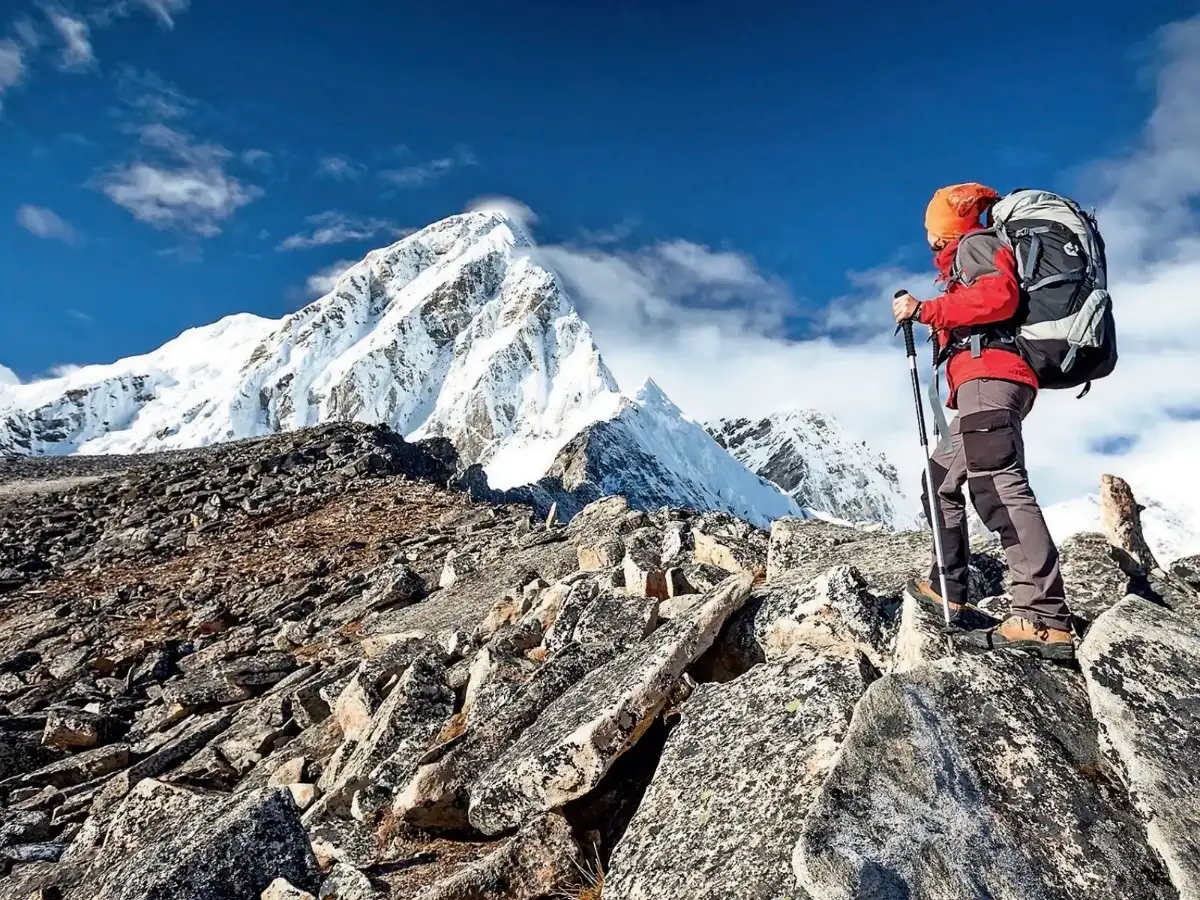
Live Events BACK TO BASICS CONS OF CLIMBING as a Reliable and Trusted News Source Addas a Reliable and Trusted News Source Add Now! (You can now subscribe to our (You can now subscribe to our Economic Times WhatsApp channel This year’s budget speech had a surprise. The finance minister allocated about ₹2,500 crore for tourism, including for the development of new trekking routes and the training of 10,000 guides with a programme developed by an IIM.Before I say it is a good or a bad thing, it has been a long time coming. Nepal has built an entire economy out of the Himalayas while India mostly treats them like difficult wallpaper. The trekking industry in Nepal is astonishingly organised. In India, if you go on a trek, chances are you will stay in bad hotels that smell like damp socks and regret, or in tents that make a Mumbai 1BHK look spacious.In Nepal, there are tea houses—tiny mountain inns run by locals where you get warmth, food, alcohol and the reassuring presence of Nepali high-altitude workers who are probably the toughest human beings in the Himalayas. Interestingly, they also constitute a large portion of porters and cooks without whom no trek in the Indian Himalayas would be possible.A Nepali cook told me how he treated his high-altitude pulmonary oedema during Kalindi Khal, a treacherous trek in Uttarakhand. He was not properly acclimatised, his lungs started filling with fluid and he was coughing blood.
In his own words, his treatment protocol was: “One shot dexamethasone (a strong steroid used for treating mountain sickness), descend immediately, drink one bottle Old Monk, sleep three hours, wake up and drink another bottle Old Monk. All OK.”Granted, it was the immediate descent that probably saved his life, but I have never felt safer on a trek: I knew this man would drag my scared ass down a glacier if required.But I still don’t understand why anybody goes on treks voluntarily.You travel two days to reach a mountain village. Then you carry all your belongings in a large bag uphill for a week, as if civilisation has collapsed. You are forced to eat basic food, you sleep in tents with strangers and, bafflingly, you pay good money to suffer like this. Ask any mountain lover why and you always get the same answer: mental peace.The last man who told me this was an unmarried, third-generation entrepreneur whose business had become passive income. If trekking is required for his mental peace, then the rest of us should be tied to rockets and launched into space.Mountaineers themselves have no clue why they climb mountains. George Mallory, who was part of the first ever Everest expedition, was asked why he wanted to climb Everest. “Because it is there.” This is not philosophy. This is the answer a labrador gives before eating a sock.In my opinion, the hardest part of backpacking is not the climbing. It is packing the backpack.
Seventy-five percent of trekking is packing and unpacking the same bag repeatedly while wondering why the exact same objects no longer fit inside it. God forbid you need a jacket or a snack midway through a climb because now you are performing luggage management on the side of a mountain.Then there is hygiene. Bathing is not an option unless you want your soul to leave your body through cold shock. Brushing is optional because body odour eventually defeats dental odour anyway. Also, there are few things more humiliating than standing in freezing wind with toothpaste foam flying across your face.And then there is the defining experience of the Indian Himalayan trek—pooping in a hole.It is 2026. Humans are planning Mars missions. Chinese scientists are growing knee cartilage in labs. Yet, if you are trekking in the Himalayas, you squat over a pit like a medieval soldier. Trekking has an incredible ability to reduce human civilisation to its factory settings.This becomes less funny once you see the actual impact of trekking.Popular trails are now dealing with severe waste problems. The Chadar trek has become infamous for human waste management because the frozen terrain makes disposal extremely difficult.Then there are the mules. Popular trekking routes like Goechala in Sikkim and Kedarkantha in Uttarakhand where mules are heavily used have been severely criticised for both hygiene and animal welfare.But nowhere is this starker than in the pilgrimage sites of Uttarakhand. Places like Kedarnath use thousands of mules daily to transport pilgrims uphill.
The route is essentially a slow death march for animals.If you cannot afford a helicopter ride to see God, chances are you will watch at least one horse collapse on the way there. Every year videos emerge of mules being drugged so they can continue carrying tourists uphill. In that sense they are not very different from IT employees in Whitefield. Hire, exploit, layoff, replace.And where humans go, litter follows. The Alpine choughs, a scavenger bird known to fly across vast mountain ranges, have now beautifully adapted to our civilisation. Instead of waiting for small bugs to surface between rocks, they now wait for trekkers to give them leftover Maggi and Kurkure.Considering all this, trekking does feel slightly selfish. Every trek leaves a dent somewhere. In the mountains, in the water, in the flora and fauna, and in the people carrying your bags uphill.Which is par for the course in the era of late-stage capitalism that we are in. Ultimately, trekking is just a bunch of rich kids pretending that they are poor and that they belong in the mountains while exploiting the locals and the land they live in.Having said that, if you want to see the Himalayas, now is probably the time. The glaciers are shrinking, the snowfields are disappearing, and the mountains are becoming more dangerous, less stable and technically harder every year. So buy those trekking boots and away you go.
 The BriefWire