Why is AN-32 the plane India trusts in its toughest skies? It's backed by science
When an Indian Air Force AN-32 came down while landing at Rowriah Air Force Station in Jorhat, Assam, on Saturday, June 13, 2026, killing five
When an Indian Air Force AN-32 came down while landing at Rowriah Air Force Station in Jorhat, Assam, on Saturday, June 13, 2026, killing five air warriors, attention turned to a machine that has quietly carried India for more than four decades. The IAF has constituted a Court of Inquiry to determine the cause of the crash. An IAF An-32 aircraft met with an accident during a routine sortie today at approximately 1000h at Jorhat, Assam. Crash site management and initial enquiries are on at this time. IAF requests everyone to refrain from speculation till preliminary results are not in. IAF deeply— Indian Air Force (@IAF_MCC) June 13, 2026 Read Full Story The force said the aircraft was on a routine sortie when the accident occurred at around 10 am, and it has urged the public to refrain from speculation until preliminary findings from the investigation are available. To understand the aircraft is to understand why the IAF keeps sending it into the country's hardest skies. WHY INDIA ASKED FOR A SPECIAL PLANE The AN-32 was designed by the Soviet Union's Antonov Design Bureau and adapted to operate in Indian conditions, as per the Indian requirement, a retired Indian Air Force pilot told IndiaToday.in on condition of anonymity.
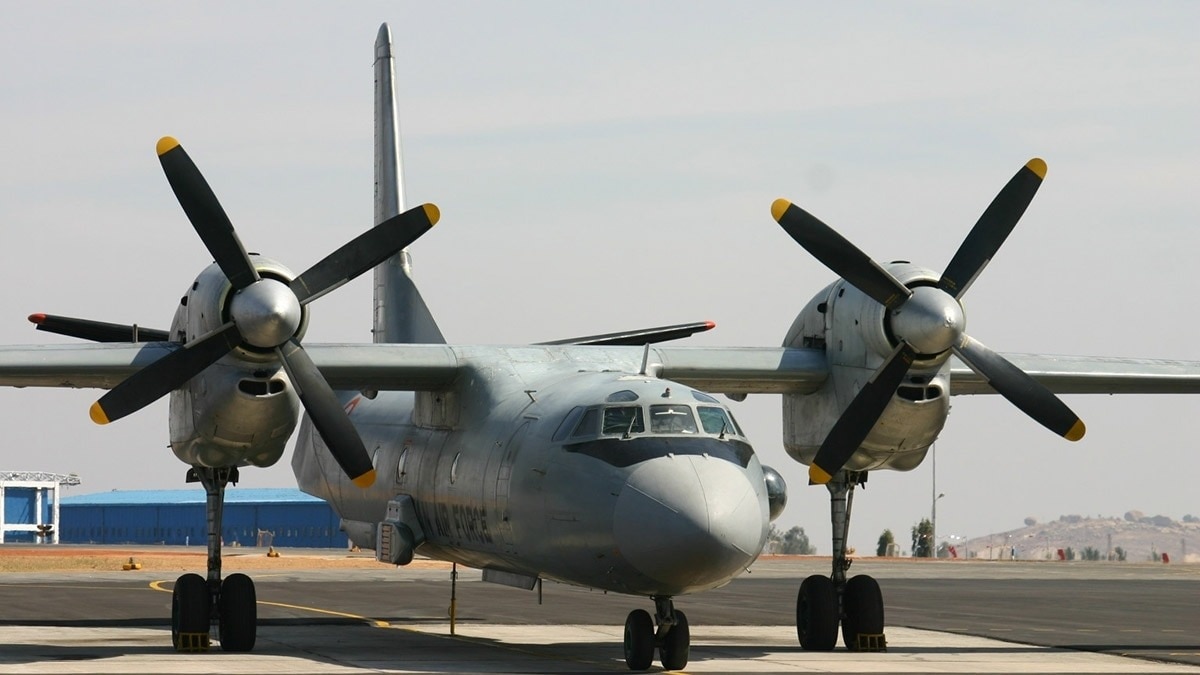
An Indian Air Force An-32 crashed while attempting to land at Jorhat Air Base in northeastern India According to local media, the aircraft broke apart and caught fire after impact. Reports suggest there were between 42 and 50 people on board. There is no official information pic.twitter.com/jM7KmoybQW— NEXTA (@nexta_tv) June 13, 2026 India needed a transport aircraft for hot and high places, where the air is thin either because of heat or altitude. Thin air means fewer air molecules for the engine to grip, so an ordinary aircraft struggles to gain power and lift. ENGINES THAT SIT UP HIGH The first thing you notice is that the two engines sit high above the wings. This is deliberate. The high-mounted engine allows it to land in unprepared areas, keeping the propellers well clear of any debris on a landing strip, the officer, who has over 40 years of experience as a test pilot in the IAF, said. The AN-32 has carried India for over four decades. A retired test pilot explains the science behind its high-set engines, its turboprop power and why the moment of landing leaves the smallest margin for error. (Photo: PTI) That was a requirement of the Indian Air Force, and the Russians adapted it.
The high wing carries a second advantage. Cargo can be loaded and offloaded with the engines still running, a real need in military operations, he said. THE PHYSICS OF A TURBOPROP The AN-32 runs on two turboprop engines. A turboprop uses a gas turbine, a spinning engine driven by burning fuel, to turn a propeller that pulls the aircraft forward. Flying the AN-32 is not different from flying any other aircraft, the retired test pilot said. Mechanical problems are generally no concern, he added, other than problems in flight control, which is very remote. He recalled surviving engine failure twice while going around on approach. WHAT THE WEATHER DOES, AND DOES NOT, DO Assam's humid monsoon air is often blamed. High humidity does slightly reduce air density, but it is a very minimal effect, the officer said, because the accident happened at practically sea level, perhaps under 200 metres. That, he felt, could not be a major contributory factor, as the aircraft routinely lands at far higher altitudes. Five Indian Air Force personnel lost their lives in the AN-32 transport aircraft crash at the Rowriah airbase in Jorhat, Assam, on Saturday, June 13, 2026. (Photo: PTI) The real threat on approach during the monsoon is wind shear, a sudden change in wind speed or direction near the ground, which strikes when there are thunderstorms in close vicinity of the airport, he said.
In the hills it is harder still. The mountain passes and valleys are generally covered with clouds, the officer explained, so finding a landing zone becomes extremely difficult, and a pilot must descend through clouds. A slight mistake, and you land up hitting the hills. A WORKHORSE WITH A NARROW MARGIN The aircraft has known tragedy before. On June 3, 2019, an IAF AN-32 took off from the same Jorhat base for Mechuka in Arunachal Pradesh and crashed in the mountains, killing all 13 on board. Rescue teams at the site where an Indian Air Force AN-32 crashed while landing at the Jorhat air base on June 13, 2026. (Photo: PTI) For a landing accident, the reasons can be numerous, the officer said, with a hard landing and any landing gear failure among the probabilities. It is rugged and dependable, yet like every aircraft, it leaves the smallest margin for error the moment it touches down. Ends Published By: Radifah Kabir Published On: Jun 13, 2026 21:48 IST
 The BriefWire