E100 Era Begins? Nitin Gadkari Officially Signs Regulations Legally Authorising 100% Ethanol Fuel
E100 Era Begins? Nitin Gadkari Officially Signs Regulations Legally Authorising 100% Ethanol Fuel Written By, Last Updated: June 13, 2026, 20:02 IST The legal authorisation
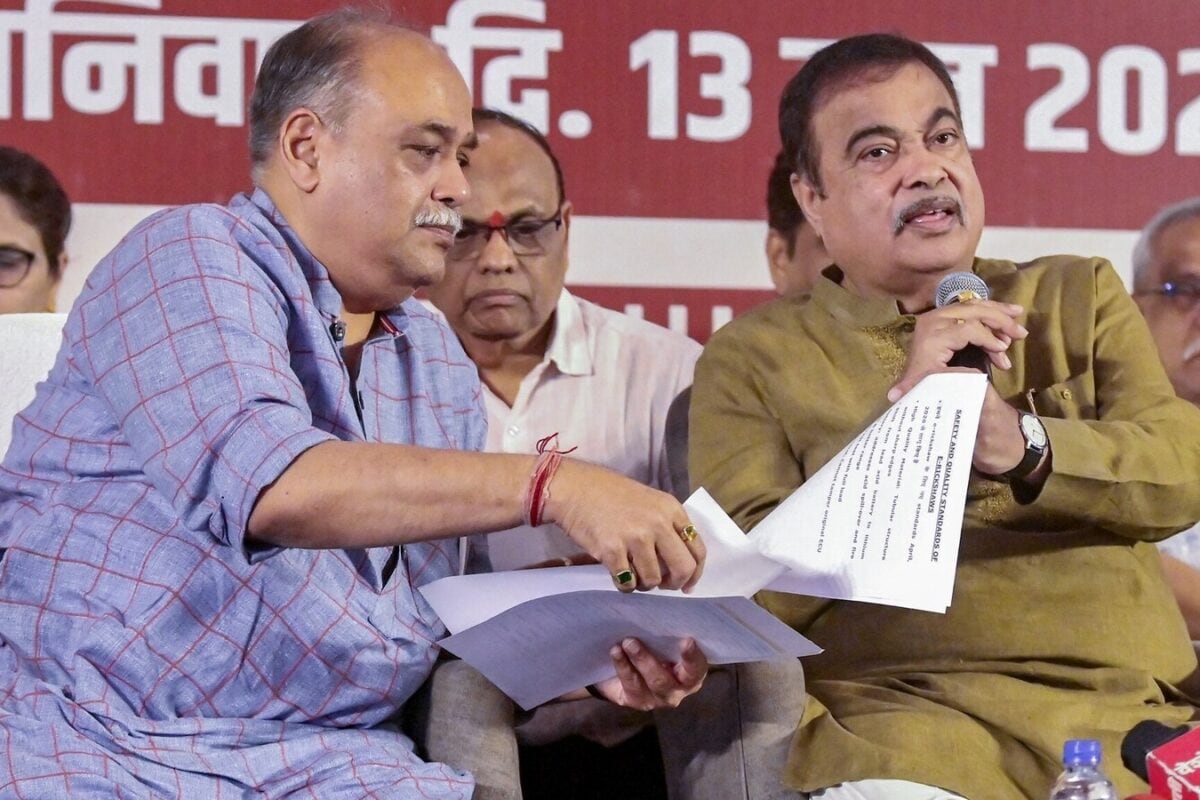
E100 Era Begins? Nitin Gadkari Officially Signs Regulations Legally Authorising 100% Ethanol Fuel Written By, Last Updated: June 13, 2026, 20:02 IST The legal authorisation of pure ethanol establishes a clear framework for high-compression, dedicated fle fuel engines Union Minister for Road Transport and Highways Nitin Gadkari addresses a press conference, in Nagpur, Maharashtra, on Saturday, June 13, 2026. Pic/PTI In a decision set to significantly reshape India’s automotive sector and energy landscape, Union Minister for Road Transport and Highways Nitin Gadkari has officially signed off on the regulatory framework permitting the use of 100 per cent ethanol as a legal vehicular fuel. Announcing the development on Saturday, Gadkari confirmed that he formalised the necessary documentation, clearing the statutory path for the commercial rollout and formal standardisation of pure biofuel across the country’s transportation grid. The greenlighting of pure ethanol, commercially referred to as “E100“, aligns with the Union Government’s long-term strategy to systematically reduce India’s heavy reliance on costly crude oil imports.
By creating a definitive legal mechanism for 100 per cent ethanol consumption, the policy shifts the country beyond the existing blending targets, encouraging major automotive manufacturers to expedite the domestic production of flexible-fuel vehicles (FFVs) and specialised powertrains capable of running entirely on plant-based fuels. Accelerating the Fle Fuel Ecosystem The signing of the E100 regulations signals an immediate shift for domestic and global automobile manufacturers operating within the Indian market. While the country has successfully progressed towards a nationwide rollout of 20 per cent ethanol-blended petrol, the legal authorisation of pure ethanol establishes a clear framework for high-compression, dedicated fle fuel engines. Major manufacturing giants have already showcased prototype models featuring flexible-fuel technologies, and this executive clearance provides the necessary regulatory certainty required for mass assembly lines and commercial distribution. Crucially, the policy provides an immense economic cushion for India’s massive agricultural sector, particularly sugarcane farmers and grain producers. The surplus cultivation of sugarcane, corn, and damaged food grains will increasingly be diverted toward bio-refineries to produce second-generation ethanol.
This domestic cycle is projected to slash the national import bill by thousands of crores while simultaneously insulating Indian consumers from the volatile price fluctuations of the global Brent crude market. Logistics and Infrastructure Calibrations With the legalities now firmly established, the Ministry of Petroleum and Natural Gas, alongside public sector oil marketing companies, is expected to begin the phased deployment of dedicated E100 dispensing stations across major urban centres and agricultural hubs. Transport experts note that pure ethanol poses specific logistical challenges, such as higher moisture absorption and corrosive properties, which require retail outlets to recalibrate their storage tanks and underground pipelines. As state transport departments prepare to integrate these guidelines into the central motor vehicle rules, the focus turns to local manufacturing compliance and emission testing protocols. The government remains highly optimistic that the introduction of 100 per cent ethanol will rapidly drive down vehicular carbon footprints, assisting India in meeting its international net-zero commitments while offering an affordable, clean alternative at the fuel pumps.
News18 Newsletter Handpicked stories, in your inbox A newsletter with the best of our journalism submit About the Author Pathikrit Sen Gupta Pathikrit Sen Gupta is a Senior Associate Editor with News18.com and likes to cut a long story short. He writes sporadically on Politics, Sports, Global Affairs, Space, Entertainment, And Food. He tra... Read More First Published: June 13, 2026, 20:02 IST News auto E100 Era Begins? Nitin Gadkari Officially Signs Regulations Legally Authorising 100% Ethanol Fuel Disclaimer: Comments reflect users’ views, not News18’s. Please keep discussions respectful and constructive. Abusive, defamatory, or illegal comments will be removed. News18 may disable any comment at its discretion. By posting, you agree to our Terms of Use and Privacy Policy Loading comments...
 The BriefWire