The Himalayan Lifter’s Fatal Descent: As AN-32 Crash Claims 5 IAF Lives, Inside The Soviet-Era Workhorse’s Legacy
The Himalayan Lifter’s Fatal Descent: As AN-32 Crash Claims 5 IAF Lives, Inside The Soviet-Era Workhorse’s Legacy Written By, Last Updated: June 13, 2026, 19:20
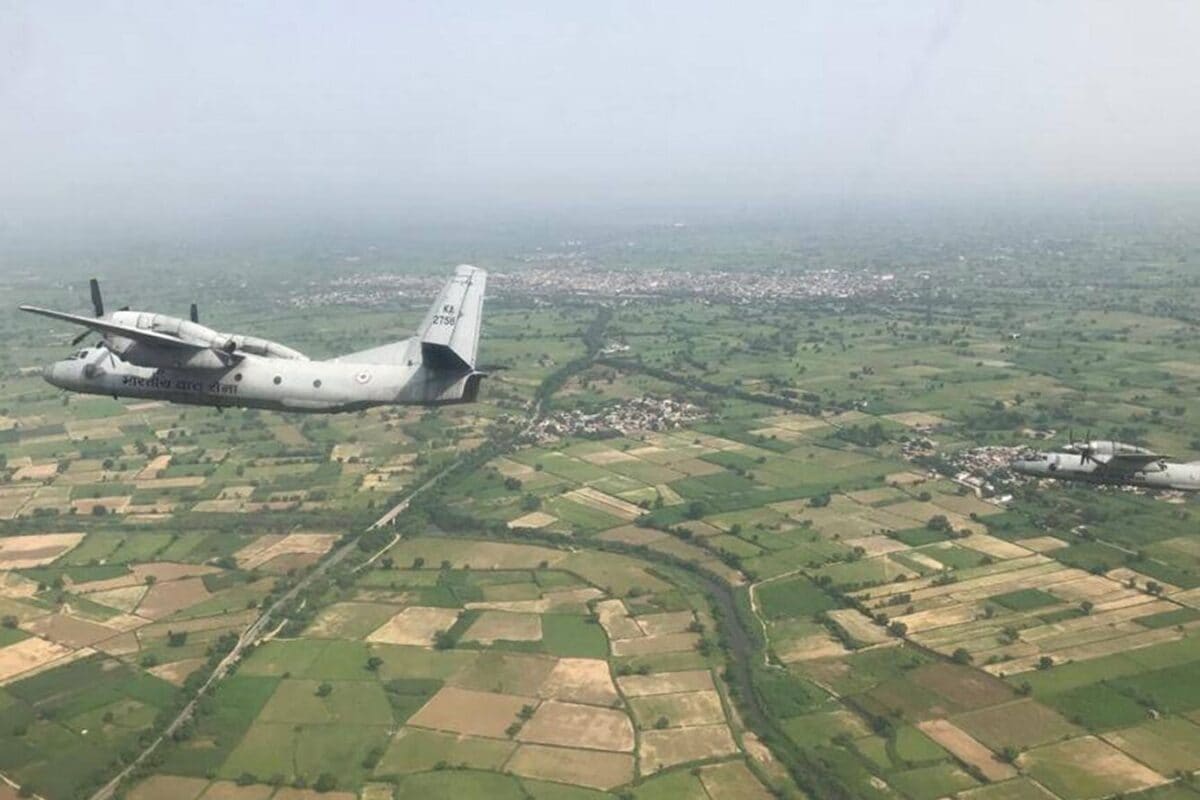
The Himalayan Lifter’s Fatal Descent: As AN-32 Crash Claims 5 IAF Lives, Inside The Soviet-Era Workhorse’s Legacy Written By, Last Updated: June 13, 2026, 19:20 IST Despite its historical reliability, the lifecycle of the IAF's AN-32 fleet has been a subject of intense strategic discussion The Indian Air Force (IAF) has ordered a court of inquiry to ascertain the cause of the AN-32 transport aircraft crash in Jorhat, Assam. Image/ANI Five Indian Air Force (IAF) personnel have been killed after an Antonov AN-32 transport aircraft crashed at the Rowriah Air Force Station in Assam’s Jorhat on Saturday. Top air force officials confirmed that the twin-engine turboprop aircraft encountered severe complications during its operational routine, leading to the fatal crash within the parameters of the military airbase. Emergency response teams and airfield crash tenders rushed to the impact site immediately, but the intensity of the crash left no survivors among the crew on board. The Indian Air Force has ordered a high-level court of inquiry to ascertain the exact cause of the accident, focusing on potential technical malfunctions or sudden structural failures.
The incident has once again turned the spotlight on the operational parameters and safety record of the IAF’s transport fleet, particularly its ageing Soviet-origin workhorses that operate extensively across the challenging terrains of India’s northeastern frontier. The Workhorse of the Skies The Antonov AN-32, designated by NATO as the “Cline", is a Soviet-origin twin-engine military transport aircraft that has formed the backbone of the Indian Air Force’s tactical airlift capabilities for over four decades. Developed by the Ukraine-based Antonov Design Bureau in the late 1970s, the aircraft was specifically tailored to meet the stringent requirements of the IAF, which needed a robust transport platform capable of operating in extreme hot-and-high conditions. India became the launch customer for this variant, inducting the first batch into operational service in 1984. The AN-32’s unique design features significantly elevated engines mounted above the wings, which prevents foreign object damage on unpaved, rugged airstrips and provides the high thrust necessary to take off from short, high-altitude advanced landing grounds in the Himalayas. With a payload capacity of approximately 7.5 tonnes, the twin turboprop has been heavily utilised for paratrooping operations, casualty evacuations, and transporting vital military freight to remote border outposts.
Fleet Lifecycle and Security Record Despite its historical reliability, the lifecycle of the IAF’s AN-32 fleet has been a subject of intense strategic discussion. To address the ageing framework of the aircraft, India signed a major modernisation contract in 2009 to upgrade over a hundred AN-32s to the advanced AN-32RE standard. This extensive overhaul was designed to introduce advanced avionics, modernised cockpit layouts, improved radar systems, and an enhanced payload capacity to extend the service life of the fleet well into the 2020s. However, the fleet has suffered several catastrophic losses over the decades due to the unforgiving mountainous topography and volatile weather systems of the Northeast. Prior to Saturday’s tragedy, the fleet recorded major accidents in the region, including a prominent 2009 crash in Arunachal Pradesh that claimed thirteen lives and a devastating 2019 crash where an AN-32 came down in a remote part of the same state after taking off from Jorhat, killing all thirteen personnel on board. As the IAF progressively transitions to newer transport platforms like the Airbus C-295, the remaining AN-32 squadrons continue to bear a heavy operational load under demanding conditions.
News18 Newsletter Handpicked stories, in your inbox A newsletter with the best of our journalism submit About the Author Pathikrit Sen Gupta Pathikrit Sen Gupta is a Senior Associate Editor with News18.com and likes to cut a long story short. He writes sporadically on Politics, Sports, Global Affairs, Space, Entertainment, And Food. He tra... Read More First Published: June 13, 2026, 19:04 IST News india The Himalayan Lifter’s Fatal Descent: As AN-32 Crash Claims 5 IAF Lives, Inside The Soviet-Era Workhorse’s Legacy Disclaimer: Comments reflect users’ views, not News18’s. Please keep discussions respectful and constructive. Abusive, defamatory, or illegal comments will be removed. News18 may disable any comment at its discretion. By posting, you agree to our Terms of Use and Privacy Policy Loading comments...
 The BriefWire