India's missile shield gets major boost as DRDO nails 3 back-to-back tests
India on Friday took a significant step forward in strengthening its strategic defence architecture as the Defence Research and Development Organisation (DRDO) successfully demonstrated a
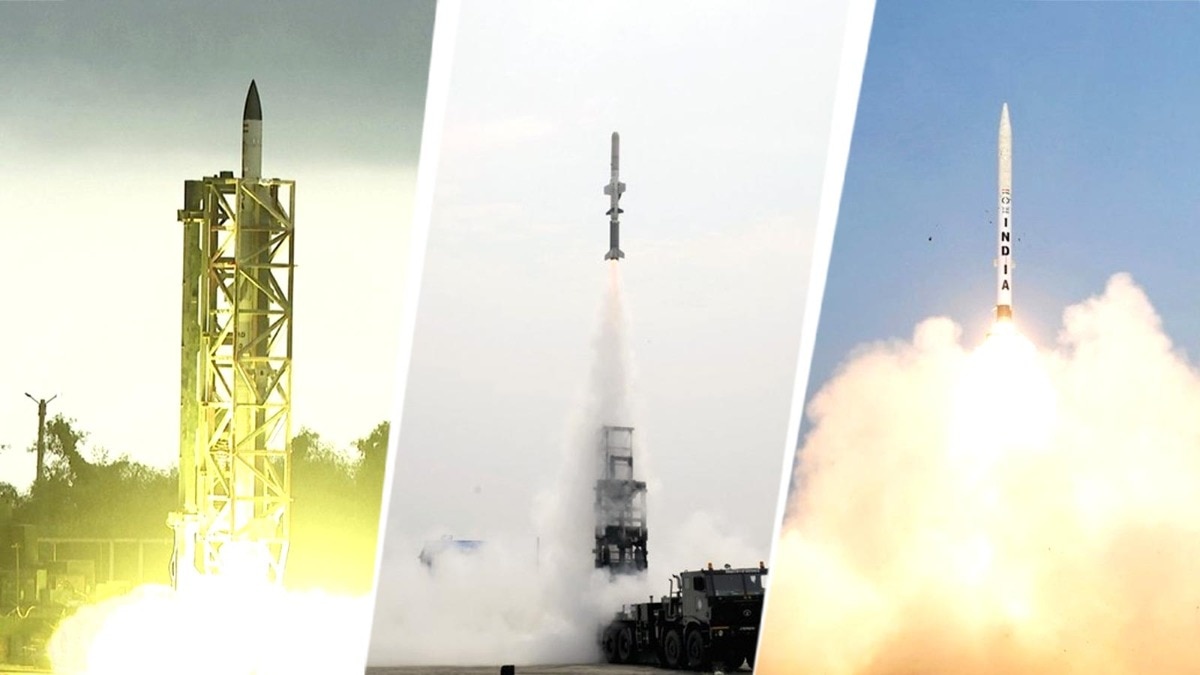
India on Friday took a significant step forward in strengthening its strategic defence architecture as the Defence Research and Development Organisation (DRDO) successfully demonstrated a series of key missile technologies, including a multi-layered Ballistic Missile Defence (BMD) system and a new medium-range Naval Anti-Ship Missile capability. Announcing the achievement, Defence Minister Rajnath Singh said DRDO had conducted three consecutive flight tests that showcased India’s ability to counter multiple categories of threats. Read Full Story "DRDO has successfully demonstrated multiple crucial technologies bolstering the nation's defence capabilities against different types of enemy threats. Three consecutive flight tests were successfully conducted to demonstrate multi-layered defence against long-range Ballistic Missiles and Anti-ship capability at medium range," Singh said in a post on X. According to the defence minister, the multi-layered BMD capability was successfully validated as interceptor systems engaged and destroyed their assigned targets.
He also said the systems were developed using advanced technologies to address emerging missile threats. The tests demonstrated India’s ability to detect, track and neutralise incoming ballistic missiles through a layered interception mechanism designed to operate across different altitudes and engagement ranges. Such architecture provides multiple opportunities to eliminate a hostile missile before it reaches critical targets. "These tests have put India in an elite group of nations having Ballistics Missile Defence Capabilities to engage Ballistic Missiles up to ICBMs," Singh said. The capability is strategically important as modern conflicts increasingly feature long-range ballistic missiles capable of carrying conventional and nuclear payloads. A credible missile shield enhances the protection of military infrastructure, strategic installations and civilian population centres while improving national resilience during conflict scenarios. The successful demonstrations also highlighted the growing maturity of indigenous defence technologies developed by DRDO, including sensors, interceptor systems, command-and-control networks and tracking radars designed to function as an integrated response system.
Alongside missile defence, DRDO carried out the maiden flight test of the Naval Anti-Ship Missile-Medium Range (NASM-MR), aimed at enhancing the Indian Navy’s ability to strike hostile surface combatants at stand-off distances. The new capability is expected to strengthen maritime deterrence and reinforce India’s operational posture in the Indian Ocean Region. The developments align with the government’s broader push for self-reliance in defence manufacturing under the Atmanirbhar Bharat initiative and reflect India’s effort to reduce dependence on foreign military technologies. MISSION SUDARSHAN CHAKRA Separately, Rajnath Singh outlined the government’s vision for "Mission Sudarshan Chakra", announced by Prime Minister Narendra Modi during his 2025 Independence Day address. Speaking at the inauguration of an Advanced Weapon System Complex at DRDO’s Defence Research & Development Laboratory in Hyderabad, Singh said the programme is being designed as a multi-level missile defence system for modern India.
He said the shield would protect military installations, critical infrastructure, civil assets and key establishments while retaining the capability to deliver a "decisive punch" when required. Singh added that the three-layered protection architecture would minimise inconvenience to citizens and prioritise their safety. The minister also emphasised the importance of resilience and deterrence in a changing security environment and urged DRDO to accelerate the transition from development to production. With successful demonstrations of missile interception and naval strike capabilities, India has moved closer to operationalising advanced indigenous defence systems. The focus is now expected to shift towards deployment readiness, production scaling and integration into the armed forces' operational network. Ends
 The BriefWire