The Tololing Lesson: Why PM Narendra Modi’s Border Infrastructure Push Matters
The Tololing Lesson: Why PM Narendra Modi’s Border Infrastructure Push Matters Reported By, Last Updated: June 13, 2026, 08:24 IST Tololing exposed the deadly cost
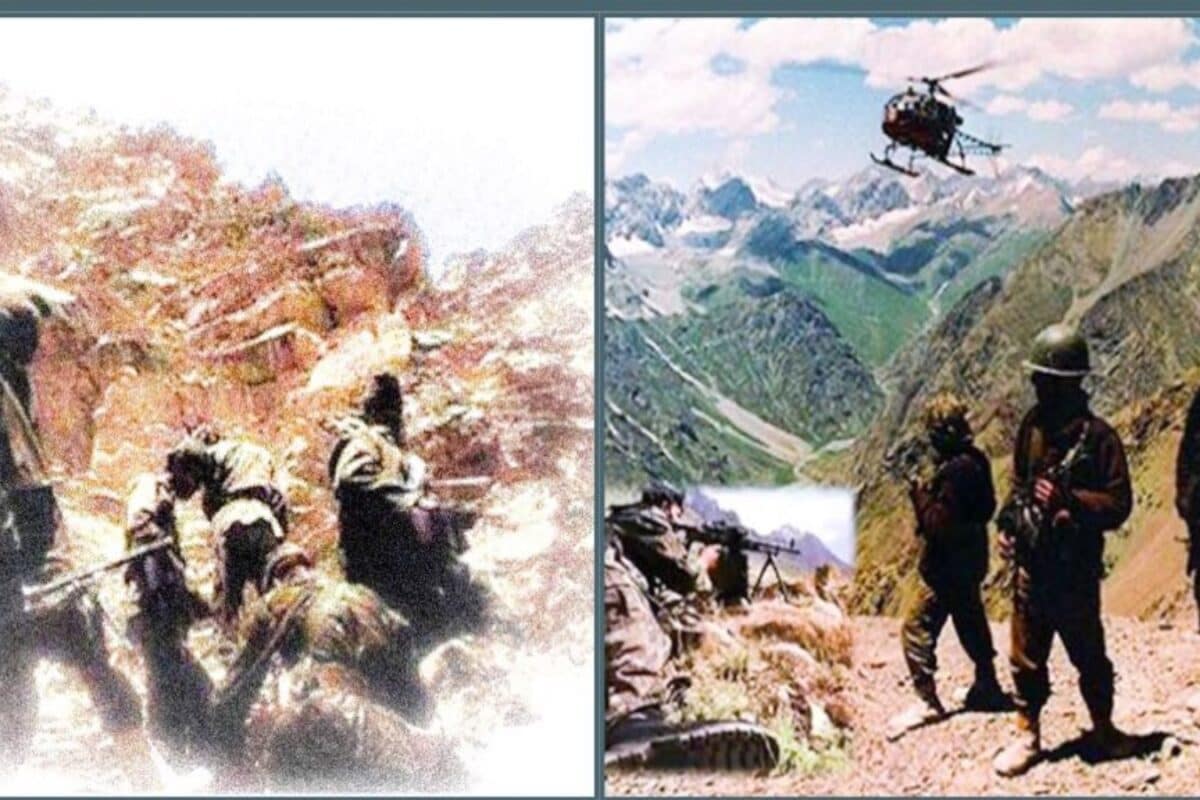
The Tololing Lesson: Why PM Narendra Modi’s Border Infrastructure Push Matters Reported By, Last Updated: June 13, 2026, 08:24 IST Tololing exposed the deadly cost of an inaccessible frontier. 27 years later, the Modi government’s roads, tunnels and airbases show how India has sought to correct that failure. Rapid Read Battle for Tololing in Dras sector. (Image: X/@adgpi) Twenty-seven years ago, on June 13, Colonel M.B. Ravindranath’s voice came through at 4.10 in the morning. ‘Sir, I’m on Tololing Top.’ Five words addressed to Major General Mohinder Puri at the 8 Mountain Division headquarters. Three weeks of fighting for a single ridgeline in the Drass sector, and it was over. Tololing sits directly above NH1D, the Srinagar-Kargil-Leh highway, the only road connecting Ladakh to the rest of India. When Pakistan’s Northern Light Infantry occupied it in early May 1999, it did not just take a hill. It gained a view of everything that moved below. Every convoy, every ammunition truck and every soldier being pushed forward to fight elsewhere along that 160-kilometre front was visible from Tololing. The highway on which India depended for the entire war was being watched. Taking the ridge back broke the 18 Grenadiers before the battle was over. Lieutenant Colonel R. Vishwanathan and Major Rajesh Adhikari were martyred there. The 2 Rajputana Rifles went up next and lost Major Vivek Gupta and nine others in the final push. Casualties at Tololing alone accounted for close to half of those suffered in the entire Kargil War. The slopes gave nothing: bare rock and ice, no cover, no way to bring armour up and no route that the enemy could not observe and fire upon. Whatever the forward troops needed had to come up that one road, in trucks that the enemy was watching.
The Long Failure After Kargil The Kargil Review Committee said what needed to be said. Border roads were a defence requirement. Not development work, not a welfare scheme for remote villages, but a defence requirement. The government identified 73 India-China Border Roads, covering 3,812 kilometres, and set 2012 as the deadline for their completion. By 2012, most remained unfinished. This was not simply incompetence, though incompetence was certainly present. There was also a doctrine, never written down but influential enough to shape decisions. Since 1962, parts of the Indian establishment had believed that building roads to the frontier was an invitation to the enemy to use them. The logic was that a road capable of moving Indian troops forward could just as easily bring a Chinese army in. So roads were not built, or were built slowly or inadequately, and the frontier remained thinly connected. Kargil showed exactly where that logic led. It led to soldiers dying on slopes they might have taken at a far lower cost had the Army been able to move and resupply them with any degree of speed. It took another 15 years, and a change of government, before the calculus shifted. Strategic Infrastructure Post-2014 After 2014, India abandoned the doctrine of leaving the frontier inaccessible to deter invasion. This was enabled by consolidating the BRO under the Ministry of Defence, streamlining execution through EPC contracts and providing the financial muscle required for high-altitude engineering. The primary achievement has been the establishment of all-weather access. The 255-kilometre DS-DBO road transformed Daulat Beg Oldie from an isolated, air-dependent outpost into a logistically sustainable ground position. Similarly, the Chisumle-Demchok road over Umling La and new bridges across Arunachal Pradesh’s major river systems have pushed India’s operational reach directly to the LAC. Reliability is now anchored in a network of strategic tunnels that bypass treacherous, seasonal passes.
The Atal Tunnel under Rohtang and the Sela Tunnel to Tawang have effectively ended the winter isolation of Ladakh and northern Arunachal Pradesh. These assets, supplemented by the Nechiphu Tunnel and the upcoming Zoji La Tunnel, ensure that troop movements and resupply are no longer hostage to Himalayan weather cycles. To build resilience, the frontier is being triple-stitched with redundant corridors. The Nimmu-Padum-Darcha road provides a third axis into Ladakh, while the Trans-Kashmir project will finally provide lateral connectivity between Poonch and Sonamarg. This ensures that no single landslide or tactical interdiction can sever the nation’s connection to an entire sector. Finally, air-power infrastructure has been hardened and pushed forward. The reactivation of DBO and Fukche, combined with the transformation of Nyoma into a full-fledged fighter base, allows the IAF to project power within minutes of the border. In the east, the upgrading of advanced landing grounds ensures that rapid reinforcement is a permanent capability, not a seasonal luxury. What Galwan Proved The fighting in Galwan in June 2020 was medieval in its methods: clubs and stones in a Himalayan river valley at night. Twenty Indian soldiers died. China has never disclosed its full casualty figure. What the clash proved strategically was that the LAC is not a settled border managed by diplomats. It is a contested line where miscalculation still draws blood. India responded by deploying thousands of troops in eastern Ladakh through winters in temperatures of minus 30 degrees Celsius and below. That deployment would not have been possible at scale without the infrastructure built in the preceding years. The DS-DBO road is not an achievement in isolation. It is the reason a corps-level deployment in Sub-Sector North is logistically feasible. A military that can sustain forward positions through winter, drive to its most remote outpost, keep fighters on standby within minutes of contested airspace and rotate its troops without depending entirely on airlift is a military that costs more to challenge.
That is deterrence in its most practical form. Not a treaty. Not a declaration. Roads, tunnels and bridges that tell the other side what a provocation will actually cost. The Lesson The soldiers who took Tololing on June 13, 1999, did so because they refused to stop climbing. The battle was won through courage. But it cost far more than it should have because roads could not carry enough, quickly enough, to a frontier treated for too long as a distant inconvenience. The men of the 2 Rajputana Rifles deserved a better-prepared frontier behind them. What is being built now is an attempt to ensure that the next generation of soldiers fighting on that frontier does not pay the same price for the country’s neglect. That is the real measure of whether the lesson of Tololing has been learned. Not speeches, not inaugurations, not budget figures. Whether the road was there when it was needed. News18 Newsletter Handpicked stories, in your inbox A newsletter with the best of our journalism submit About the Author Vallari Parashar Vallari Parashar is a Senior Sub Editor at News18. She writes on geopolitics, defence, and strategic affairs First Published: June 13, 2026, 08:24 IST News india The Tololing Lesson: Why PM Narendra Modi’s Border Infrastructure Push Matters Disclaimer: Comments reflect users’ views, not News18’s. Please keep discussions respectful and constructive. Abusive, defamatory, or illegal comments will be removed. News18 may disable any comment at its discretion. By posting, you agree to our Terms of Use and Privacy Policy Loading comments...
 The BriefWire