The Geneva Breakthrough: Inside Secret Backchannel Talks Setting Up Historic US-Iran Accord | Exclusive
The Geneva Breakthrough: Inside Secret Backchannel Talks Setting Up Historic US-Iran Accord | Exclusive Reported By, Last Updated: June 12, 2026, 23:37 IST According to
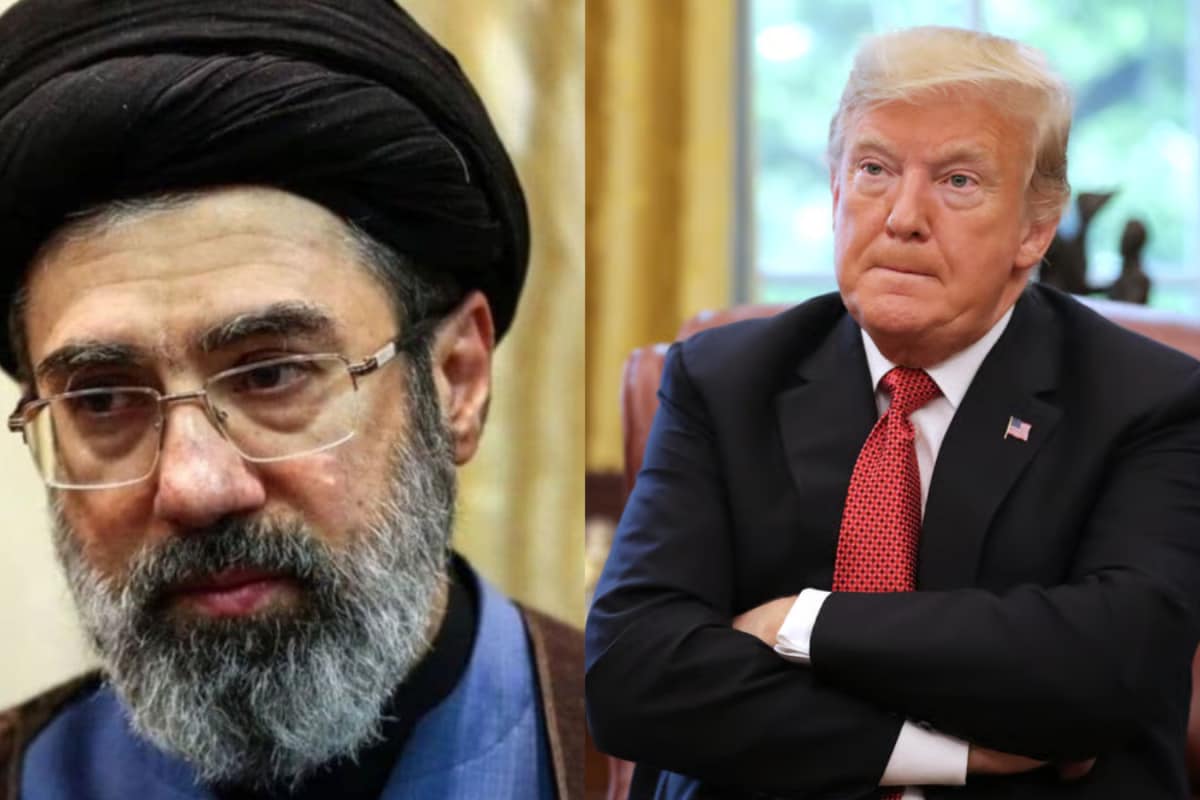
The Geneva Breakthrough: Inside Secret Backchannel Talks Setting Up Historic US-Iran Accord | Exclusive Reported By, Last Updated: June 12, 2026, 23:37 IST According to senior Pakistani officials, the landmark framework is expected to be officially designated as either the Islamabad Accord or the Islamabad Memorandum of Understanding Iran's Supreme Leader Mojtaba Khamenei and US President Donald Trump. File Image A monumental diplomatic breakthrough appears imminent in Europe, as top diplomatic sources in Islamabad and Tehran have revealed to CNN-News18 that a historic peace agreement between the United States and Iran is highly likely to be signed in Geneva this coming Sunday. The proposed deal marks the culmination of months of intensive, high-stakes backchannel diplomacy aimed at de-escalating long-standing frictions and securing a comprehensive framework for stability in West Asia. While Washington and Tehran remain the central pillars of the negotiation, the sweeping regional scope of the draft memorandum means that Israel and Lebanon are also expected to be featured as critical primary signatories to ensure a lasting cessation of hostilities across all volatile fronts.
Reflecting the immense geopolitical stakes of this truce, a powerful contingent of regional heavyweights, including Saudi Arabia, the United Arab Emirates, Qatar, Turkey, Egypt, Bahrain, and Oman, will gather in Switzerland to witness the formal signing. Pakistan, which has played a pivotal and widely acknowledged role as a neutral mediator throughout the crisis, is moving rapidly to finalise its executive logistics. Pakistani Prime Minister Shehbaz Sharif, Chief of Army Staff Field Marshal Asim Munir, and Foreign Minister Ishaq Dar are scheduled to fly out of Islamabad for Geneva on Saturday morning to steer the final phases of the accord. The core structural layout of the treaty divides participating nations into direct participants and regional facilitators. The primary signatories finalising the agreement are the United States, Iran, Israel, and, in all likelihood, Lebanon, marking a comprehensive, multilateral commitment to regional stability. Backing this historic accord and ensuring its long-term enforcement on the ground is a robust group of official witnesses and guarantors, which includes Israel in a dual strategic capacity, alongside Pakistan, the United Arab Emirates, Saudi Arabia, Qatar, and Bahrain.
According to senior Pakistani officials, the landmark framework is expected to be officially designated as either the Islamabad Accord or the Islamabad Memorandum of Understanding, a direct nod to the exhaustive diplomatic capital expended by Pakistan’s civil and military leadership to bridge the chasm between the two warring powers. Top sources in Tehran have indicated that the signing ceremony will likely be witnessed directly by United States Vice President JD Vance and Iranian Parliament Speaker Mohammad Bagher Ghalibaf, both of whom have spearheaded critical facets of the recent high-level channels. The impending treaty is expected to establish an immediate ceasefire framework, formalise a coordinated cooling-off period, and outline terms for targeted economic and strategic adjustments in exchange for verifiable maritime and security guarantees. While the final text is being rapidly internalised by the highest echelons of leadership, officials at the Prime Minister’s Office and the Ministry of Foreign Affairs in Islamabad are working through the night to ensure all diplomatic protocols and transport logistics are perfectly aligned ahead of the historic Saturday morning departure to Switzerland.
News18 Newsletter Handpicked stories, in your inbox A newsletter with the best of our journalism submit About the Author Manoj Gupta Group Editor, Investigations & Security Affairs, Network18 First Published: June 12, 2026, 23:29 IST News world The Geneva Breakthrough: Inside Secret Backchannel Talks Setting Up Historic US-Iran Accord | Exclusive Disclaimer: Comments reflect users’ views, not News18’s. Please keep discussions respectful and constructive. Abusive, defamatory, or illegal comments will be removed. News18 may disable any comment at its discretion. By posting, you agree to our Terms of Use and Privacy Policy Loading comments...
 The BriefWire