Amit Shah reviews Amarnath Yatra preps, orders tech-driven security for pilgrims
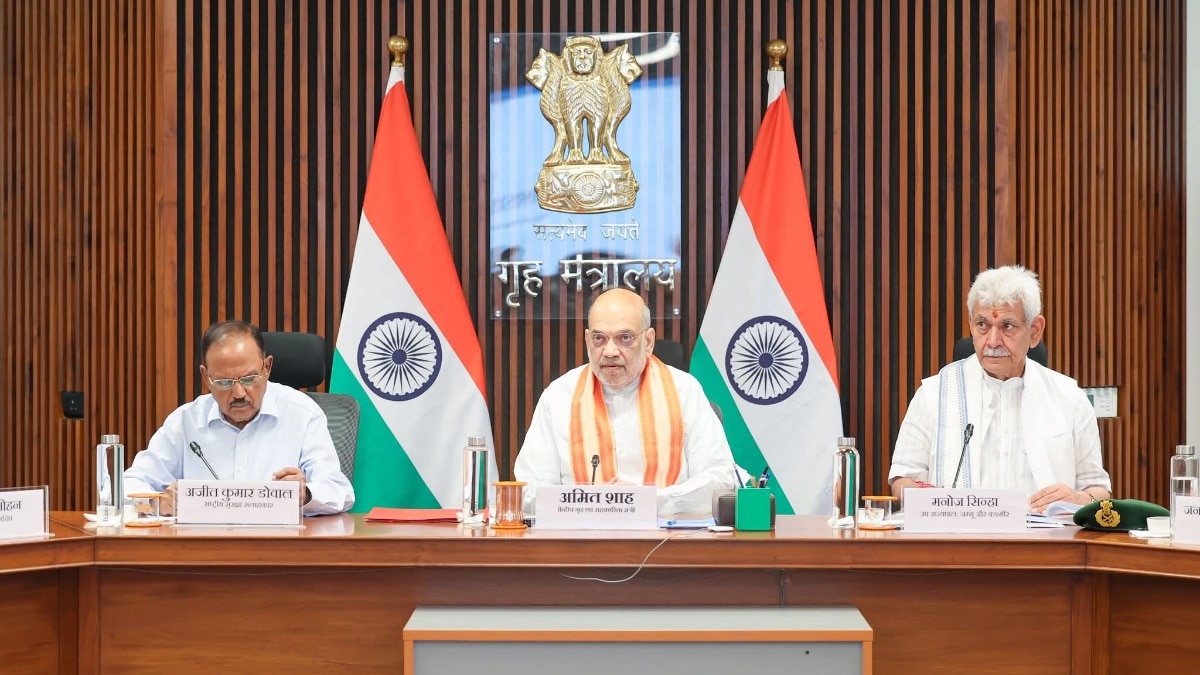
The Union Minister for Home Affairs and Cooperation chaired a high-level review meeting to assess the security arrangements and operational preparedness for the upcoming Amarnath
The Union Minister for Home Affairs and Cooperation chaired a high-level review meeting to assess the security arrangements and operational preparedness for the upcoming Amarnath Yatra 2026. The crucial security conclave saw active participation from top brass representing the Jammu and Kashmir administration, Central Armed Police Forces (CAPFs), intelligence agencies, and senior officials from concerned line ministries to formulate a comprehensive strategy for a secure, smooth, and hassle-free pilgrimage. Read Full Story The Home Minister emphasised that the Central Government, under the Prime Minister's leadership, remains unyieldingly committed to ensuring the safety and comfort of the lakhs of devotees expected to undertake the holy pilgrimage. He issued strict directives to all participating security and civil agencies to function with seamless inter-departmental coordination, emphasising that passenger amenities must be prioritised alongside zero-compromise security protocols. EMPHASIS ON AN IMPREGNABLE MULTI-LAYERED SECURITY GRID The primary focus of the high-level deliberation remained centred on fortifying the security architecture of the entire pilgrimage matrix. The Home Minister directed the immediate establishment of an impregnable, multi-layered security grid across the transit corridors, to be maintained through the synchronised operational efforts of the CAPFs, Jammu and Kashmir Police, the Indian Army, and specialised counter-terror units. This integrated security grid is engineered to proactively identify, track, and neutralise any potential kinetic threats before they can manifest. To achieve this, instructions were issued to upscale the deployment of boots on the ground in traditionally sensitive sectors, intensify vehicular checking, and establish round-the-clock dominant patrols.
Specialised communication channels will also be institutionalised to ensure real-time intelligence sharing and lightning-fast tactical responses among the deployed forces. ROUND-THE-CLOCK MONITORING VIA MODERN TECHNOLOGY Transitioning toward a technology-driven security paradigm, the Home Minister mandated the pervasive integration of advanced surveillance systems along the traditional mountain tracks and transit base camps. The security layout will feature extensive deployments of tactical drones, high-definition CCTV networks, and automated perimeter intrusion detection systems to maintain a 24/7 vigil. Unmanned Aerial Vehicles (UAVs) will be extensively utilised to provide real-time aerial recons of the high-altitude terrains and naturally vulnerable choke points, enabling the command centres to spot any suspicious movements instantly. Simultaneously, the expanded closed-circuit television network will feed live imagery from base camps and public halts directly into unified control rooms, enabling quick-reaction teams to respond effectively to any emerging operational or medical contingencies. CONTINUOUS MONITORING BY SENIOR OFFICERS To ensure maximum accountability on the ground, the meeting resolved that senior command personnel from the state police and central paramilitary forces will remain physically stationed at key base camps and high-pressure points along the trekking routes. These high-ranking officers will directly oversee day-to-day security deployments, disaster mitigation drills, and pilgrim facilitation desks. The Home Minister noted that the direct physical presence of leadership on the ground would eliminate bureaucratic red tape, allowing for immediate course correction and fostering dynamic, real-time coordination among distinct administrative wings. SPECIAL FOCUS ON PILGRIM AMENITIES While maintaining an aggressive security posture, the government is parallel prioritising the overall well-being of the pilgrims.
The review meeting meticulously parsed the logistical blueprints drafted for biometric registrations, transit accommodation, emergency healthcare infrastructure, and localised disaster management cells. The Home Minister ordered the immediate simplification of the registration pipeline to enhance user experience for inbound devotees. Furthermore, civil departments were instructed to ensure an uninterrupted supply of clean drinking water, adequate temporary shelters, electricity, and strict sanitation standards. Given the acute physiological challenges associated with the high-altitude trek, specialised medical camps equipped with oxygen hyperbaric chambers, critical-care ambulances, and expert doctors are being deployed at frequent intervals to counter altitude sickness and weather-induced medical emergencies. DISASTER MANAGEMENT MECHANISM TO BE STRENGTHENED In light of the volatile meteorological patterns and challenging geographical terrain defining the Himalayan shrines, the review extensively addressed the vulnerabilities of the route to natural calamities. The Home Minister instructed all disaster response groups—including the NDRF and SDRF—to maintain a state of peak operational readiness to combat flash floods, sudden cloudbursts, or massive landslides. Standard rescue equipment, heavy earthmovers, satellite communication links, and relief stockpiles are to be pre-positioned at strategic coordinates to ensure that emergency evacuation lines remain functional under adverse circumstances. REGISTRATION OF LOCALS AND LIVESTOCK In a significant move to enhance tracking and transparency, the Home Minister ordered the mandatory registration of all local service providers, including pony drivers, porters, and logistical labourers. These individuals will be issued secure, QR-code-enabled identity cards to streamline access control. The introduction of QR-code verification is viewed as a critical step to assist security forces in validating credentials instantaneously at entry checkpoints.
Additionally, dedicated veterinary stations will be erected to conduct rigorous health screenings and fitness certifications for the horses and mules utilised during the trek, ensuring animal welfare and preventing transit bottlenecks. WEATHER-DEPENDENT OPERATIONS Acknowledging the decisive impact of mountain weather on human safety, the Home Minister directed that the movement of pilgrim batches (jathas) must be dynamically regulated based on real-time weather forecasts provided by the India Meteorological Department (IMD). The standard operating procedure will dictate that no batch is cleared to advance into higher altitudinal zones if adverse weather indicators are signalled. This automated synchronisation between meteorological feeds and convoy movement is expected to drastically lower the risk of weather-related accidents and prevent overcrowding at unsafe heights. SECURITY AT MAJOR TOURIST HOTSPOTS EXPANDED Expanding the security umbrella beyond the immediate geography of the Amarnath tracks, the high-level meeting also reviewed the security grid of peripheral tourist hotspots across Jammu and Kashmir. The Home Minister noted that thousands of pilgrims traditionally extend their journeys to visit prominent tourist destinations across the valley, necessitating an equally robust safety framework in those sectors. Consequently, security agencies have been directed to increase vigilance, establish visible policing, and mount extra surveillance around major transit hubs, hospitality sectors, and high-footfall public zones, ensuring that tourists and devotees can experience the region without any underlying anxiety. Ends
 The BriefWire