Loud Alarm At 2 AM, No Emergency Outside: Could India’s Weather Warning System Trigger Alert Fatigue?
Loud Alarm At 2 AM, No Emergency Outside: Could India’s Weather Warning System Trigger Alert Fatigue? Published By, Last Updated: June 12, 2026, 14:39 IST
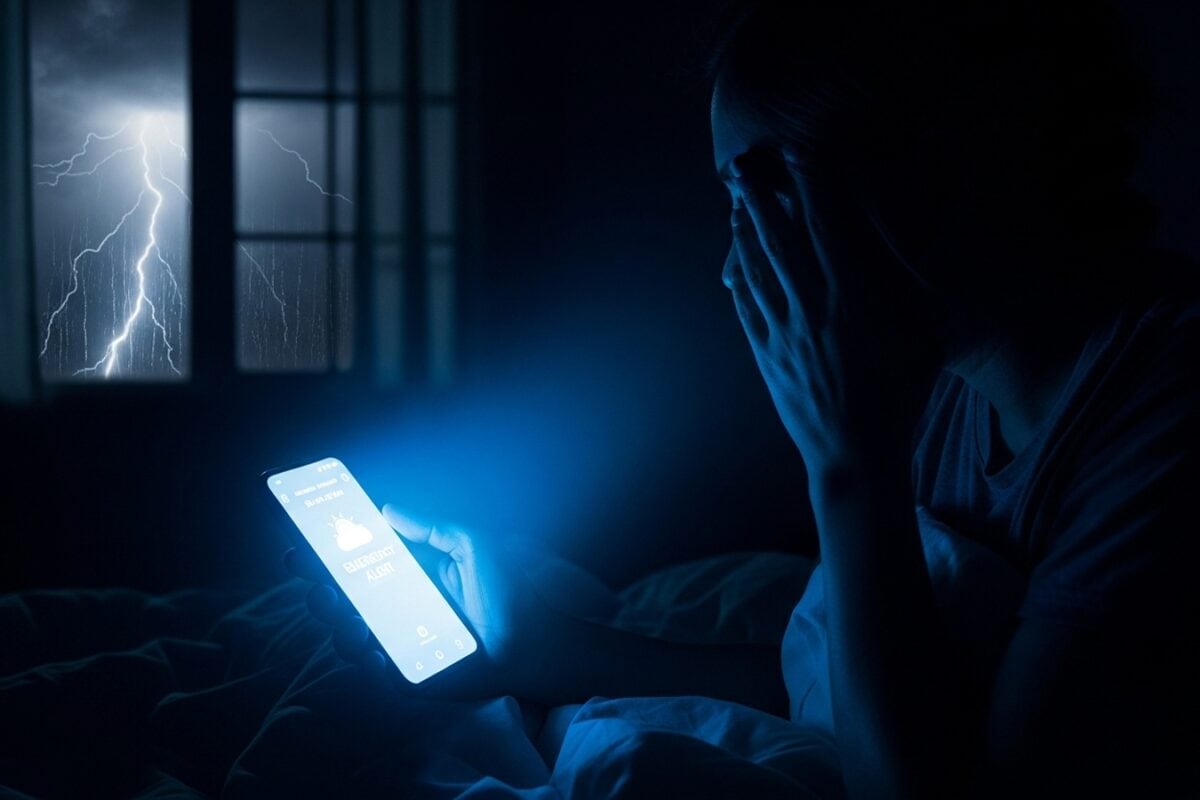
Loud Alarm At 2 AM, No Emergency Outside: Could India’s Weather Warning System Trigger Alert Fatigue? Published By, Last Updated: June 12, 2026, 14:39 IST The debate surfaced after residents across parts of Delhi-NCR reported receiving loud "Extremely Severe" weather alerts on their phones during late-night or early-morning hours. Rapid Read News18 The shrill emergency alert tone that suddenly blares from a mobile phone is designed to do one thing: grab attention immediately. But when thousands of people are jolted awake in the middle of the night only to find not-so-alarming skies outside their windows, a question naturally follows – are weather alerts becoming too intrusive, and could that eventually make people ignore them? The debate surfaced today after residents across parts of Delhi-NCR, Uttar Pradesh and neighbouring regions reported receiving loud “Extremely Severe" weather alerts on their phones, most during late-night or early-morning hours. The alerts were issued as the India Meteorological Department (IMD) warned of thunderstorms, lightning, squalls and heavy rainfall in several districts. Read More: Phones Buzz With ‘Extremely Severe’ Alert As IMD Warns Of Thunderstorms, 100 Kmph Winds In Parts Of UP While authorities argue that such warnings can save lives, many users questioned whether the highest level of mobile alert should be triggered so broadly, especially when severe weather did not materialise in their immediate vicinity. Why These Alerts Are Being Sent India has been steadily expanding its cell broadcast-based emergency warning system, which sends alerts directly to mobile phones in a designated geographic area. The system gained prominence after a series of devastating weather events in recent years, including flash floods, lightning strikes, cyclones and cloudbursts that claimed hundreds of lives.
Unlike SMS messages, cell broadcast alerts are designed to bypass network congestion and immediately notify people of imminent dangers. The technology is increasingly being used worldwide to warn citizens about earthquakes, tsunamis, tornadoes, cyclones and severe storms. The logic behind late-night alerts is that dangerous weather does not wait for daylight. If a flash flood, lightning storm or severe thunderstorm is expected within hours, authorities want people to receive the warning even while asleep. Public Frustration Growing The problem arises when recipients do not perceive an immediate threat. Several users on X complained that the alert tone was loud enough to wake entire households, including children and elderly family members. Some questioned why phones were overridden despite being on silent mode. One user remarked that people were being startled awake by an “extremely severe" warning even though conditions outside appeared normal. Others expressed concern that repeated alerts could eventually desensitise the public. The govt should reserve emergency alerts with loud, alarming sirens for truly exceptional threats to life and national security.Using the same system for routine weather advisories, especially at odd hours, is not just irritating, it creates alert fatigue. If people are… — THE SKIN DOCTOR (@theskindoctor13) June 12, 2026 Right, and finally someone pointed this out.Last night I received 3 emergency alerts between around 10 PM to 2:30 AM for an upcoming storm and rain. It’s good that the gov is notifying people, but the alarm tone was way too alarming for the actual threat level. Abhishek rai (@Abhishe74899601) June 12, 2026 Why has the government gone trigger happy with these stupid weather alerts? Just received such a loud alert on my phone at 1 am!— Pragun Bhutani (@pragunbhutani) June 12, 2026 Weather alert department sends me an unpausable, excessively loud, unmutable alert on my phone about incoming heavy storm.
At 01:30 am in the morning.I wake up. My mom wakes up. Thanks. I wasn’t planning to go out at this time. Can’t go back to sleep either.But thanks. — Harsh S. Kulshrestha (@kulshresthharsh) June 11, 2026 The criticism was not necessarily directed at the existence of warnings themselves but at what some viewed as a mismatch between the severity of the alert and the conditions experienced on the ground. The Risk Of ‘Alert Fatigue’ Experts refer to this phenomenon as “alert fatigue". It occurs when people receive so many warnings – or warnings they perceive as unnecessary – that they gradually stop paying attention to them. The concept has been studied extensively in disaster management and public health systems worldwide. Research has shown that when warnings are issued too frequently or cover very large areas, recipients may begin ignoring future notifications, assuming they are another false alarm. This becomes particularly dangerous because the next alert may concern a genuinely life-threatening situation. Emergency management agencies globally face a difficult balancing act. Sending too few alerts can leave people unprepared during disasters. Sending too many can reduce public trust in the warning system itself. What Other Countries Have Done Countries such as the United States, Japan and Australia also send emergency alerts capable of overriding phone settings. However, many systems use tiered warning structures. Routine weather advisories are delivered through standard notifications, while only the most imminent threats trigger the loud, emergency-level alarms that interrupt sleep. The effectiveness of any warning system ultimately depends on public trust. Citizens must believe that if their phone emits an emergency tone at 2 am, the threat is serious enough to warrant immediate attention.
The Challenge For India For India, the issue is not whether emergency weather alerts should wake people up at night. In genuinely dangerous situations, they probably should. The larger challenge is ensuring that the most intrusive warnings remain reserved for the most serious threats. As climate change contributes to more frequent extreme weather events and authorities expand digital warning systems, striking the right balance between caution and over-warning will become increasingly important. If every alert sounds like an emergency, people may eventually stop treating emergencies as emergencies. And that is precisely what disaster managers hope to avoid. News18 Newsletter Handpicked stories, in your inbox A newsletter with the best of our journalism submit About the Author Pragati Ratti Pragati is a News Editor at news18.com. Having headed the Business and Viral sections, Pragati now ideates, writes and edits long-form features and articles on national and global affairs. She ensures... Read More First Published: June 12, 2026, 14:38 IST News explainers Loud Alarm At 2 AM, No Emergency Outside: Could India’s Weather Warning System Trigger Alert Fatigue? Disclaimer: Comments reflect users’ views, not News18’s. Please keep discussions respectful and constructive. Abusive, defamatory, or illegal comments will be removed. News18 may disable any comment at its discretion. By posting, you agree to our Terms of Use and Privacy Policy Loading comments...
 The BriefWire