How to watch planetary parade in US tonight
What Is the June 12 Planetary Parade? When Can You See Planetary Parade in the US? Live Events Venus will be the brightest and easiest
What Is the June 12 Planetary Parade? When Can You See Planetary Parade in the US? Live Events Venus will be the brightest and easiest object to spot. Jupiter will appear close to Venus. Mercury will sit lower and closer to the horizon, making it the most challenging of the three to find. Tips for Watching the Planetary Parade Why This Event Is Special as a Reliable and Trusted News Source Addas a Reliable and Trusted News Source Add Now! (You can now subscribe to our (You can now subscribe to our Economic Times WhatsApp channel Skywatchers across the United States are looking forward to watching a mini planetary parade featuring Mercury, Venus, and Jupiter that appears in the evening sky today, June 12. The celestial trio will line up low above the western horizon shortly after sunset, creating one of the most beautiful naked-eye astronomy events in June.
Sky enthusiasts will need a clear view of the horizon and may have less than an hour to catch all three planets before they sink from view.The event brings together three planets—Mercury, Venus, and Jupiter—in the same section of the evening sky. Venus and Jupiter, the two brightest planets visible from Earth, have already been putting on a show throughout early June. Today, Mercury joins the lineup near the horizon.Astronomers call this a "planet parade" because multiple planets appear grouped together from Earth's perspective. While the planets are actually millions of miles apart in space, they seem to line up in the sky when viewed from Earth.The best viewing window begins about 30 to 60 minutes after local sunset on June 12. Though the exact time varies by location, but the key is to head outside shortly after sunset and look toward the western to west-northwestern horizon.Because the planets will be relatively low in the sky, waiting too long could mean missing Mercury entirely as it quickly drops below the horizon.
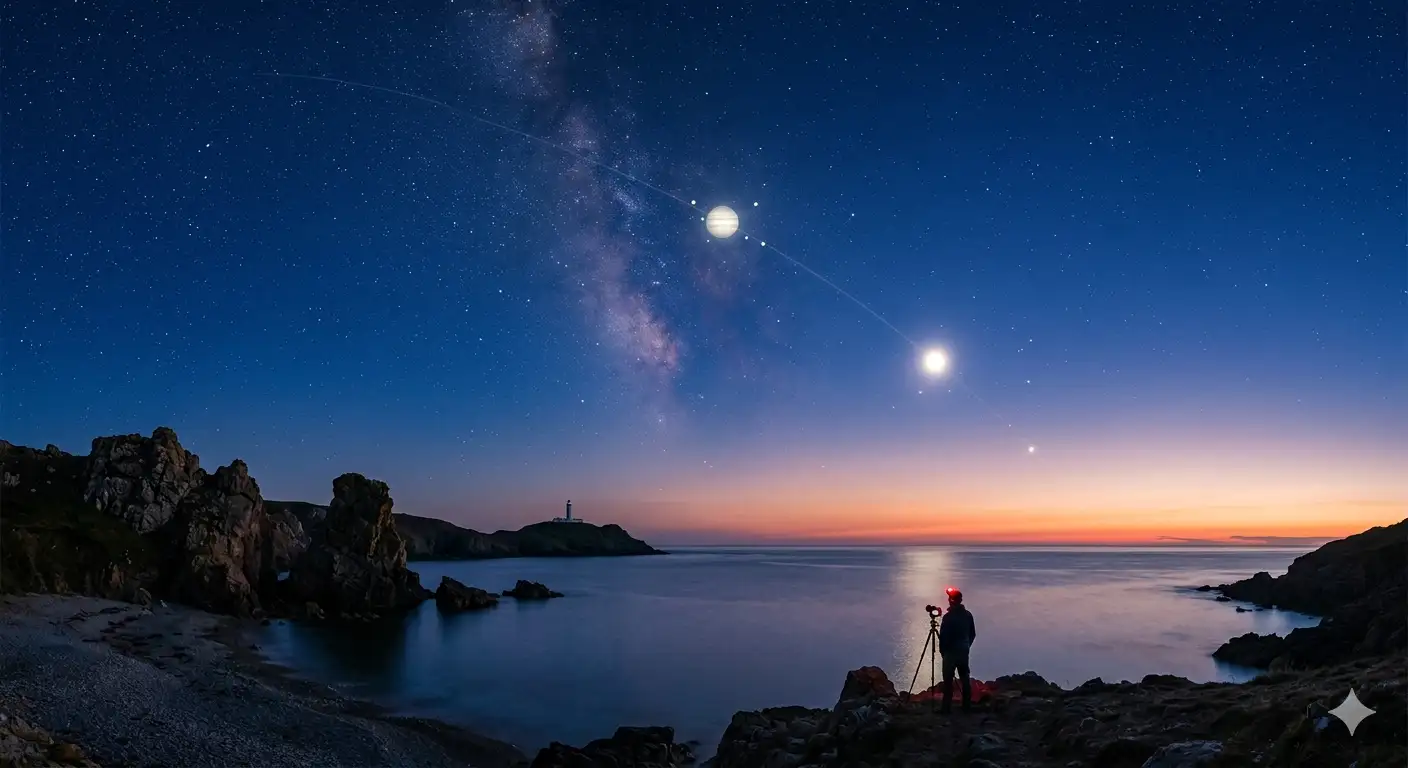
Experts recommend starting your observation as soon as the sky begins to darken.Look low in the western sky after sunset.Rural areas, beaches, open fields, hilltops, and locations with an unobstructed western horizon will offer the best views. Light pollution can make Mercury harder to detect.Trees, buildings, and mountains can block the view because the planets will appear low in the sky. An open horizon is crucial.Don't wait until full darkness. The best viewing period starts shortly after sunset and may last less than an hour.Venus and Jupiter should be visible to the naked eye, but binoculars can help locate the fainter Mercury.Cloud cover near the horizon can easily hide the planets. Clear skies will be essential.The trio of planets against the twilight sky can make for impressive photographs, especially from elevated locations with scenic foregrounds.The June 12 alignment combines three bright planets in a compact area of the sky, creating a rare visual treat for casual observers and astronomy enthusiasts alike.
Venus and Jupiter are especially striking because of their brightness, while Mercury's appearance adds an extra challenge for skywatchers.If skies are clear, this brief planetary parade could be one of the easiest and most rewarding celestial events to observe this summer—no telescope required.
 The BriefWire