'Laid Down Arms, Got Nothing': Why Former Militants Have Announced A 72-Hour Blockade In Tripura
'Laid Down Arms, Got Nothing': Why Militants Have Announced A 72-Hour Blockade In Tripura Published By, Edited By Last Updated: June 12, 2026, 13:43 IST
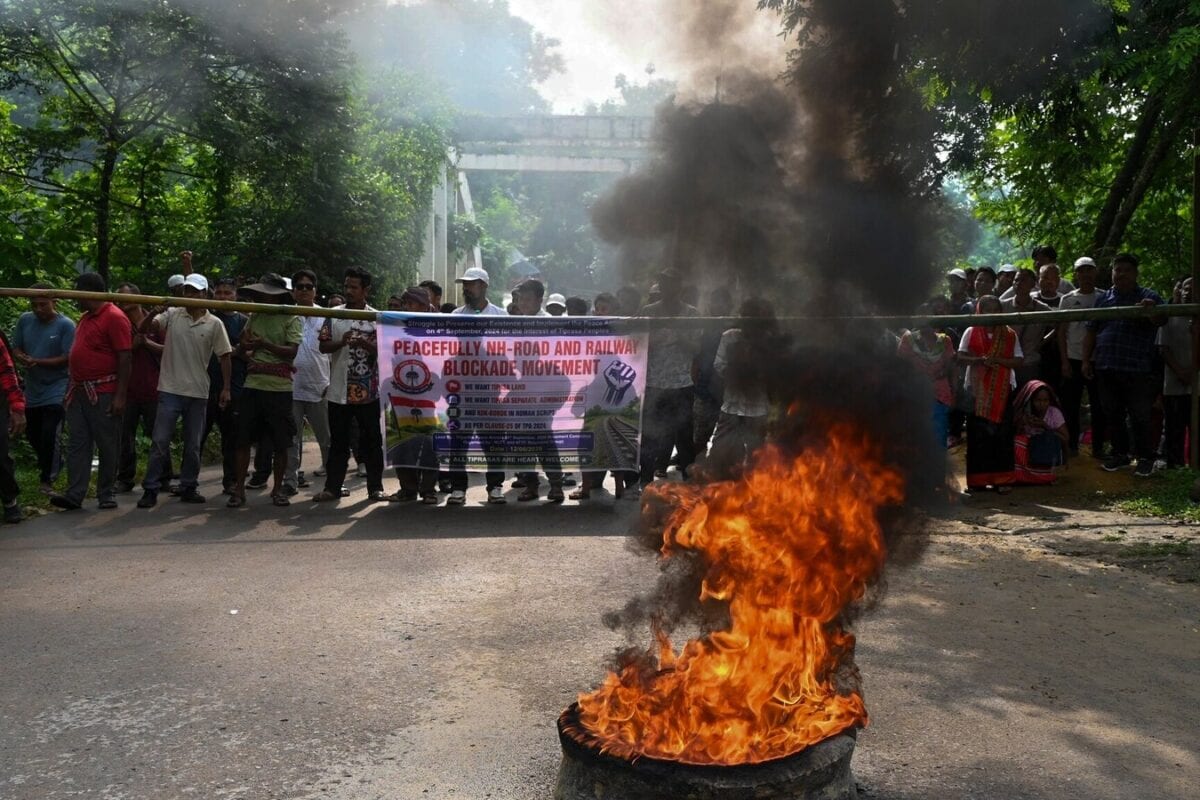
'Laid Down Arms, Got Nothing': Why Militants Have Announced A 72-Hour Blockade In Tripura Published By, Edited By Last Updated: June 12, 2026, 13:43 IST The protesters say they laid down arms under peace accords with the expectation of rehabilitation and reintegration into mainstream society. Rapid Read NLFT, ATTF protest near Agartala Tripura’s 72-hour road and rail blockade, which began today, is not being led by active insurgent groups but by former militants of the now-disbanded Liberation Front of Tripura (NLFT) and All Tripura Tiger Force (ATTF). The protesters say they laid down arms under peace accords with the expectation of rehabilitation and reintegration into mainstream society, but many of the promises made to them remain unfulfilled. The agitation has disrupted movement on key stretches of Highway-8 and railway routes in Khowai and Teliamura, affecting Tripura’s connectivity with the rest of the country. Protest leaders have warned that the movement could intensify if the government does not initiate talks. Who Are The Protesters? The protesters are surrendered cadres of the NLFT and ATTF, two insurgent organisations that were once at the centre of Tripura’s decades-long insurgency. The groups formally ended their armed movement after signing peace agreements with the Centre and the Tripura government.
The most recent landmark accord was signed in September 2024, when the remaining cadres of both organisations surrendered and joined the peace process. According to leaders of the agitation, around 1,200 former militants have surrendered over the years under various agreements and rehabilitation schemes. They argue that many of the commitments made during these peace processes have not been implemented on the ground. What Are They Demanding? The protesters are demanding the implementation of rehabilitation packages promised under surrender and peace agreements. cadres say the government assured them financial assistance, welfare benefits, livelihood opportunities and long-term rehabilitation measures after they abandoned militancy. They allege that these commitments have either been delayed or only partially implemented. Full Implementation of Rehabilitation Packages The protesters claim that the rehabilitation package promised under peace accords has not been executed in a meaningful manner. They want the Centre and state government to honour all commitments made during negotiations. Release of Welfare Funds Representatives of former militants say they were assured a dedicated welfare package and financial support. The Tripura Guerrilla Returnees’ Demand Committee (TGRDC), which represents surrendered militants, has alleged that a package worth around Rs 23 crore was discussed earlier but little progress has been made despite repeated assurances.
Inclusion in Government Welfare Schemes The protesters are demanding that eligible former cadres be included in various state welfare programmes, employment-related schemes and social security initiatives so that they can rebuild their lives after surrendering. Resolution of Pending Rehabilitation Issues militants argue that many surrendered cadres continue to face economic hardship due to delays in housing, livelihood generation, financial support and other rehabilitation measures promised under agreements signed with the government. The blockade comes less than two years after the September 2024 peace accord, which was hailed as a major milestone in ending Tripura’s 35-year insurgency. Under that agreement, hundreds of remaining NLFT and ATTF cadres surrendered, while the Centre announced a Rs 250-crore development and rehabilitation package aimed at ensuring lasting peace. For New Delhi, Tripura has often been projected as one of the Northeast’s biggest counter-insurgency success stories. Violence in the state has declined dramatically over the past decade, and the withdrawal of insurgent groups from armed conflict was seen as the final chapter of a long security challenge. The current agitation therefore highlights a recurring challenge in peace processes across the Northeast: signing an accord is only the first step; implementation and rehabilitation often determine whether former militants remain committed to the peace framework.
Leaders of the agitation have stated that the 72-hour blockade is intended to draw the attention of both the state and central governments. They have indicated that if meaningful discussions begin and concrete steps are announced, the protest could be withdrawn. However, they have also warned of a larger movement if their concerns continue to be ignored. News18 Newsletter Handpicked stories, in your inbox A newsletter with the best of our journalism submit About the Author News Desk The News Desk is a team of passionate editors and writers who break and analyse the most important events unfolding in India and abroad. From live updates to exclusive reports to in-depth explainers,... Read More First Published: June 12, 2026, 13:43 IST News explainers 'Laid Down Arms, Got Nothing': Why Militants Have Announced A 72-Hour Blockade In Tripura Disclaimer: Comments reflect users’ views, not News18’s. Please keep discussions respectful and constructive. Abusive, defamatory, or illegal comments will be removed. News18 may disable any comment at its discretion. By posting, you agree to our Terms of Use and Privacy Policy Loading comments...
 The BriefWire