A tiffin box, a broken sandal: The details I cannot forget from the A1 171 crash
You mostly remember the odd things. And it is almost always completely unintended. Two things have stayed with me since June 12, 2025. On rare
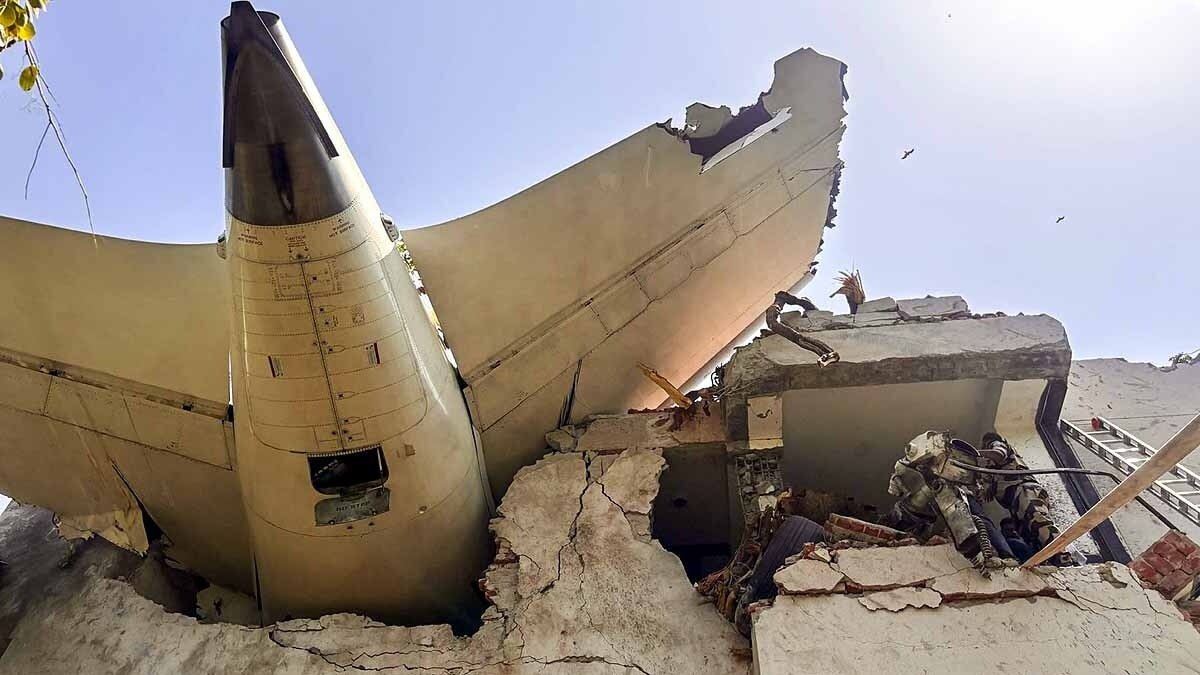
You mostly remember the odd things. And it is almost always completely unintended. Two things have stayed with me since June 12, 2025. On rare days—very rare days—they surface without warning. A plastic tiffin box. And the broken clasp on a black pair of sandals. I have often wondered why, whenever the Air India AI 171 crash is mentioned, my mind returns to those two things. Maybe because sometimes it is the details that survive when the larger horror becomes almost impossible to process. Read Full Story Amid the wreckage at BJ Medical College in Ahmedabad, the lingering smell of aviation fuel and burnt human remains, and the personal belongings strewn across the site, there sat a clear glass tiffin box among the debris of lives abruptly cut short. (Photo: AP) It lay beside a woman's handbag. The box had a blue rubber seal. I remember noticing it while reporting from the crash site. I remember speaking about it on camera. Afterwards, I found myself wondering about it more often than I should have. Who packed it? Who was it meant for? A spouse waiting at home? A child? A parent? Someone had packed a meal believing there would be another ordinary day at the end of that flight. There wasn't.
From the BJ Medical College, the story quickly moved to Ahmedabad Civil Hospital and the mortuary. So did I. The twisted wreckage gave way to casualty lists. The casualty lists gave way to families. (Photo: AP) And the grief only deepened with every relative who arrived through the night and over the days that followed. A mother. A grandparent. A wife. A brother. A daughter. I met her just hours after the crash. She had come looking for her father. She sat waiting for the result of a DNA test. Eventually, the sample matched remains that had been charred beyond recognition. I could not bring myself to ask her name. Perhaps I should have. Perhaps I was afraid of making her pain more real than it already was. I remember crouching beside her and trying to offer comfort to a daughter who had just lost her father. She was devastated. She wanted answers. There were none. In time, she would become one of the faces of the tragedy. Yet her face is a blur in my memory. (Photo: PTI) What remains with startling clarity is something I wish I had forgotten. The broken buckle on one of her sandals. She had clearly not intended to leave home wearing a broken pair.
But when she heard that her father was on the aircraft that had fallen from the sky within seconds of take-off, she must have rushed out wearing the first thing she found. There was no time to think. No time to change. No time to notice. I remember her anger. I remember her high-pitched cries. They cut through the numbness that had settled over many of us standing there, including me. To this day, I cannot fully reconstruct her face. But I can tell you exactly what those sandals looked like. They reminded me of the Bata sandals many of us wore as children—only these were the adult version. Black straps. Silver buckle. And one of the hooks was broken. After the Covid-19 pandemic, reporting on the Air India Ahmedabad-to-London crash that claimed 260 lives became the most difficult assignment of my career. Empathy is a complicated thing in television journalism. It is not that most journalists lack it. It is that our work constantly places us in situations where empathy and intrusion coexist. No matter how sensitively you approach a grieving family, no matter how invisible you try to make yourself, intrusion remains intrusion. The hardest assignment for any journalist is documenting grief. To tell the story, you must approach people on what may be the worst day of their lives.
 The BriefWire